
Migrant hawker
Aeshna mixta
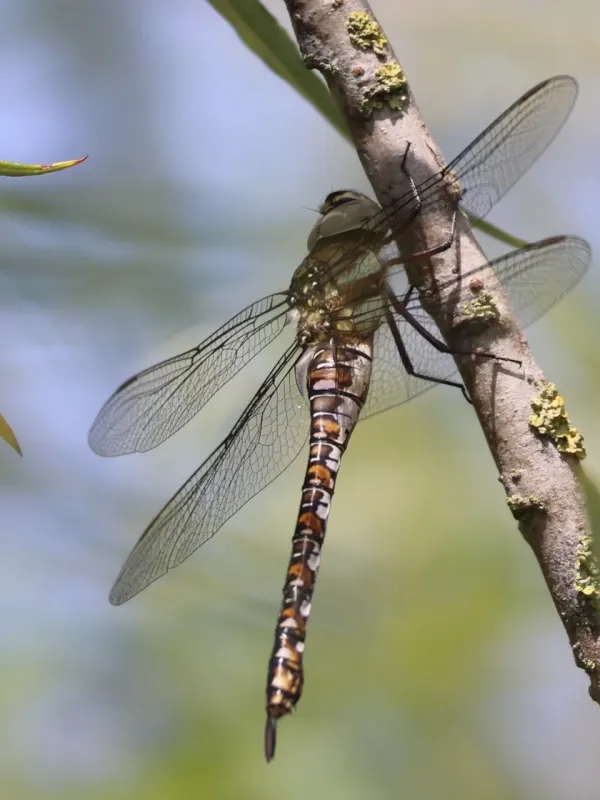
Description
How to identify
The Migrant hawker (Aeshna mixta) is a large dragonfly species belonging to the order Odonata and the family Aeshnidae.
Adult specimens typically possess a brown thorax with distinctive yellow markings and a abdomen featuring blue spots in males.
The larval stage, or nymph, is strictly aquatic and highly adapted for predation, using a specialized labium to capture its prey.
They are known for their exceptional flight agility, allowing them to perform long-distance migrations during their adult phase.
The transition from nymph to adult involves a complex metamorphosis process that occurs predominantly on emergent vegetation near water.
What it damages
The Migrant hawker is not considered a primary agricultural pest as it does not consume crops for nutrition.
However, it can cause minor physical damage to stems of aquatic or wetland plants when females insert eggs into the plant tissue.
In irrigation-heavy farming, the abundance of these insects may impact the maintenance of drainage channels by encouraging vegetative growth.
While the impact is generally negligible, heavy infestations in specific microclimates can occasionally lead to premature lodging of certain water-edge plants.
Its role as a predator of various agricultural fly pests usually outweighs any minimal damage caused to the vegetation during the egg-laying process.
When it appears
Adult Migrant hawkers are most active from late summer through the early autumn months, typically appearing between July and October.
The nymphal stage is long-lived, often lasting one to two years within the aquatic environment before reaching maturity.
The emergence of adults into the air usually peaks during warm, sunny days, which facilitate their dispersal and hunting activities.
Migrations often occur towards the end of the season as populations search for suitable habitats for reproduction and overwintering.
Climate factors such as temperature and humidity significantly influence the survival rates of nymphs and the subsequent adult population density.
Signs of infestation
Visual identification of adults patrolling field edges or irrigation channels is the primary sign of their presence in the area.
The finding of exuviae (cast-off skins) left on plant stems at the water's edge provides evidence of successful metamorphosis.
Small longitudinal slits or abrasions on the stems of marginal vegetation indicate sites where eggs have been deposited by females.
High levels of activity around standing water bodies during the late summer months correlate with the peak reproductive cycle.
Observations of these dragonflies can provide useful insights into the health and biodiversity of the aquatic systems on agricultural land.
Control measures
There is generally no need to control the Migrant hawker, as it acts as a beneficial natural predator against harmful flying insects.
Where plant damage is a concern, mechanical removal of excess marginal vegetation along irrigation canals can limit the preferred egg-laying sites.
Promoting a balanced ecosystem by reducing pesticide runoff into waterways is essential for preserving these natural insect control agents.
Management should focus on maintaining drainage systems without completely eliminating the habitat necessary for this species.
- Clearing stagnant irrigation channels
- Minimizing pesticide exposure in wetlands
- Preserving natural predatory insect populations
- Monitoring dragonfly habitat density
Taxonomy
- Latin name
- Aeshna mixta
- Family
- Aeshnidae
- EPPO code
- AESCMI
Discussion
No discussions yet — be the first.