
Southern hawker
Aeshna cyanea
Description
How to identify
The Southern hawker (Aeshna cyanea) is a large dragonfly species belonging to the family Aeshnidae, order Odonata.
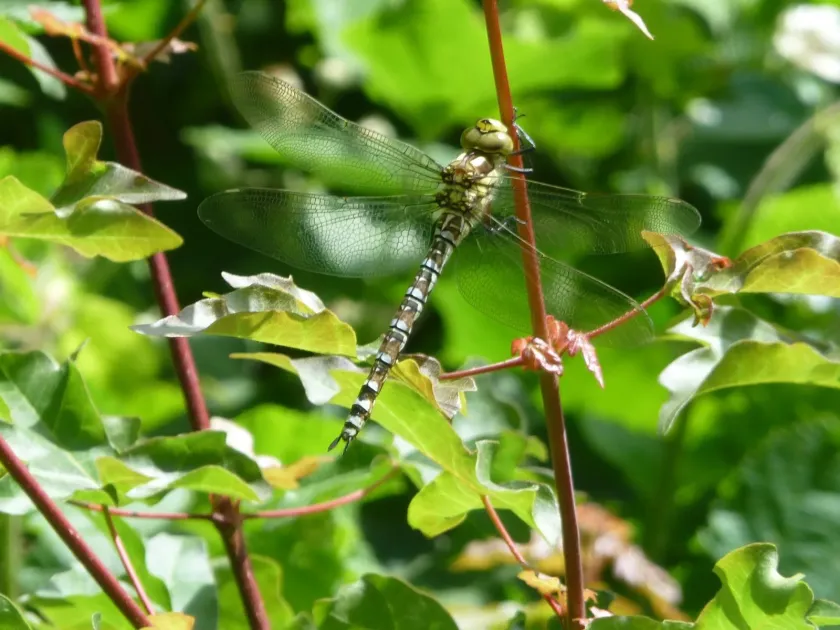
Adults are easily recognized by their dark brown bodies adorned with vibrant green and blue spots on the thorax and abdomen.
The larvae, known as naiads, live underwater, possessing robust bodies and a specialized labium for catching prey.
This species is highly predatory, occupying a top-tier position in the invertebrate food chain within their habitats.
Distinguishing features include the characteristic green thoracic stripes and the size of the wings, spanning up to 110 mm.
What it damages
The Southern hawker is not considered a crop pest; it does not feed on plant tissues or damage agricultural harvests.
As a carnivorous insect, it serves as an effective predator of various flying insects, including those that might harm gardens.
Larvae contribute to the aquatic ecosystem by feeding on mosquito larvae and other small aquatic invertebrates.
Economic damage is non-existent, making this dragonfly an ally for gardeners rather than an enemy.
Occasional punctures from egg-laying are superficial and do not affect the overall health or development of the plants.
When it appears
The flight season of adult Southern hawkers typically spans from July through September.
Mating occurs during the summer, followed by the female depositing eggs into the stems of aquatic or near-water vegetation.
The larval stage is aquatic and generally lasts between one and two years before metamorphosis is complete.
Adult activity peaks during warm, sunny weather when they actively hunt for prey in open garden spaces.
The life cycle is strictly dependent on the availability of stagnant or slow-moving water sources for successful breeding.
Signs of infestation
Presence in the garden is identified by the distinctive high-speed, hovering flight pattern of the adults.
During the breeding season, females may be seen inspecting the water's edge or vegetation to select egg-laying sites.
Larvae remain well-camouflaged at the bottom of ponds or among submerged plants, remaining largely unseen by humans.
The absence of characteristic plant damage is the strongest sign that the insect is harmless to crops.
A stable population of dragonflies indicates a clean water supply and a healthy, biodiverse environment.
Control measures
No pest control measures are required or recommended for the Southern hawker, as it is a highly beneficial insect.
The use of broad-spectrum pesticides should be avoided, as these chemicals are detrimental to dragonflies and other natural predators.
Maintaining local ponds and natural water features helps preserve the species' habitat and supports ecological balance.
Garden management should focus on integrated pest management (IPM) to protect these predatory insects from harmful residues.
Encouraging dragonflies to inhabit your garden is a natural and sustainable way to keep mosquito and fly populations in check.
Taxonomy
- Latin name
- Aeshna cyanea
- Family
- Aeshnidae
- EPPO code
- AESCCY
Discussion
No discussions yet — be the first.