
Moorland hawker
Aeshna juncea
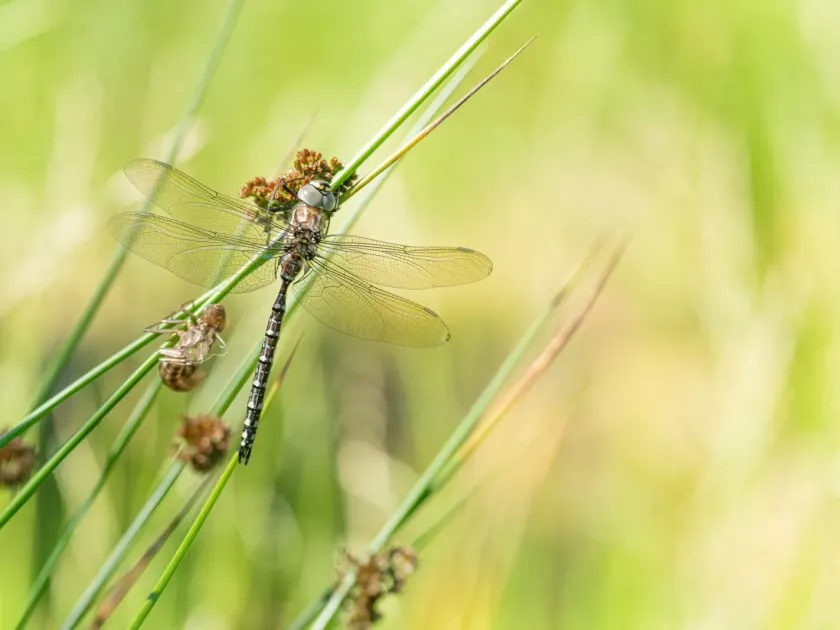
Description
How to identify
The Moorland hawker (Aeshna juncea) is a large species of dragonfly belonging to the Aeshnidae family, widely distributed across the northern hemisphere.
Adults typically reach a length of 70–80 mm with a wingspan of up to 100 mm, making them impressive and noticeable insects in their habitats.
The coloration of the body is dark brown, featuring distinctive blue or yellow spots on the abdomen, which serves as a key identifying mark for this species.
The eyes of the adult dragonfly meet on the top of the head, a common morphological trait for the hawker dragonfly family.
The larvae, known as naiads, are aquatic and possess a specialized labium used to capture prey, living in vegetated ponds and marshes.
What it damages
The Moorland hawker is not a plant pest and does not cause any damage to agricultural crops, ornamentals, or gardens.
As a highly efficient predator, it plays a beneficial role by feeding on various flying insects, including pests like mosquitoes and gnats.
Both adults and larvae are carnivorous; they contribute to the biological balance of their ecosystem by preying on smaller invertebrates.
There is no evidence of this species feeding on plant tissues or damaging crops in any way, as they rely entirely on live prey.
In fact, their presence is often encouraged by gardeners as a form of natural pest control for smaller insect populations.
When it appears
The flight period for the Moorland hawker usually spans from July to October, depending on the local climate and temperature.
During this time, they are most active during sunny days when they hunt and search for suitable habitats to mate and lay eggs.
Females lay their eggs in the stems of aquatic or semi-aquatic plants, often near the edges of wetlands or moorland pools.
The development from egg to adult can take several years, with the majority of the lifecycle spent in the larval stage underwater.
Once the weather turns colder in late autumn, the adult population declines, and the species continues its cycle through overwintering larvae.
Signs of infestation
Since the Moorland hawker does not damage plants, there are no "infestation signs" or symptoms to look for on your crops.
If you see these dragonflies in your area, it is a sign of a clean, healthy environment and high biodiversity rather than a threat.
Gardeners should view their presence as a positive indicator of natural pest management and ecological health.
Any damage seen on plant leaves is strictly due to other insects or environmental factors and should never be blamed on dragonflies.
Observing these dragonflies is harmless to plants and provides an opportunity to support native wildlife and ecosystem services.
Control measures
No control measures are needed or recommended for the Moorland hawker, as it is a beneficial insect species.
Efforts should focus on protecting their habitat, particularly wetlands and ponds, to ensure they continue to thrive and provide pest control.
Avoid using insecticides near water bodies to protect dragonfly larvae and ensure the natural food chain remains intact.
Maintaining a natural, vegetated shoreline at your pond will provide excellent conditions for this dragonfly species to breed.
- Avoid pesticide use near water bodies.
- Preserve natural aquatic and bank vegetation.
- Maintain water quality to support healthy ecosystems.
Taxonomy
- Latin name
- Aeshna juncea
- Family
- Aeshnidae
- EPPO code
- AESCJU
Discussion
No discussions yet — be the first.