
Hemerobius stigmaterus
Hemerobius stigmaterus
Description
How to identify
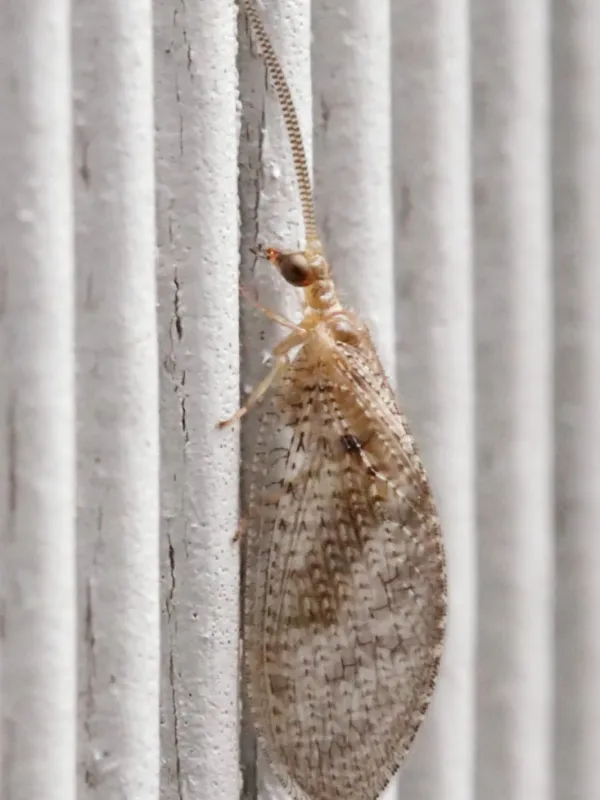
Hemerobius stigmaterus, commonly known as a brown lacewing, belongs to the order Neuroptera and the family Hemerobiidae. Unlike green lacewings, this species is characterized by its duller, brownish appearance.
The name stems from the presence of a distinct stigma spot on the forewings, which serves as a primary diagnostic feature for identification in the field.
Larvae of this species are elongated and possess specialized sickle-shaped mandibles. They are highly mobile and actively roam the surface of branches and leaves.
Eggs are typically laid singly on the undersides of leaves or in crevices of bark. The embryonic stage lasts several days depending on ambient temperatures.
The life cycle consists of egg, three larval instars, pupa, and adult. Multiple generations can occur within a single growing season under favorable conditions.
What it damages
While often considered neutral or even beneficial in some ecological contexts, H. stigmaterus can become a minor pest when populations explode, causing mechanical damage to plant tissues.
The primary concern is the damage caused to terminal buds and young, succulent leaves, which can result in stunted growth for the affected plants.
Fruit trees and nurseries are particularly vulnerable to such infestations, as the damage impacts the aesthetic and commercial value of young saplings.
Feeding sites often create pathways for secondary infections by fungi and bacteria, which may lead to necrosis and localized plant dieback.
The overall vigor of the host plant can decrease if the infestation persists, leading to reduced photosynthetic capacity and diminished crop quality.
When it appears
Adults emerge from hibernation during the early spring, coinciding with the first periods of consistent warm weather in the growing season.
Peak activity generally occurs throughout mid-summer, when overlapping generations contribute to higher population densities in the canopy.
As daylight hours decrease and temperatures drop in the autumn, the insects seek protected hibernation sites to pass the winter.
Effective monitoring should begin during the bud-break stage, as this is when the initial generations start their activity on developing foliage.
Environmental variables, particularly humidity and sudden temperature fluctuations, strongly influence the developmental speed and survival rate of each generation.
Signs of infestation
The most immediate sign of an infestation is the presence of the brownish adults on the undersides of leaves during the early morning or evening hours.
Observation of the stems often reveals fine, dot-like necrotic lesions where the larvae have pierced the epidermis to feed.
Significant infestations often cause the curling or twisting of terminal shoots, which is a stress response to the localized feeding damage.
- Deformed young foliage.
- Retarded growth of new terminal shoots.
- Presence of cast larval skins (exuviae) on the bark.
Stunted development compared to healthy specimens in the same area is a reliable indicator that an active pest population is present.
Control measures
Strong agronomic practices are the first line of defense, including optimal irrigation and balanced fertilization to ensure plant resilience.
Manual control measures involve regular scouting and the targeted removal of severely infested shoots to keep population levels in check.
Biological controls, such as the application of entomopathogenic fungi or the encouragement of natural predators, are highly effective in sustainable systems.
Chemical intervention should be considered only when population thresholds are exceeded, utilizing contact or systemic insecticides in accordance with labels.
Rotation of chemical agents is essential to prevent the development of pesticide resistance in the insect population and to minimize collateral damage.
Taxonomy
- Latin name
- Hemerobius stigmaterus
- Family
- Hemerobiidae
- EPPO code
- HEMBST
Discussion
No discussions yet — be the first.