
Hemerobius stigma
Hemerobius stigma
Description
How to identify
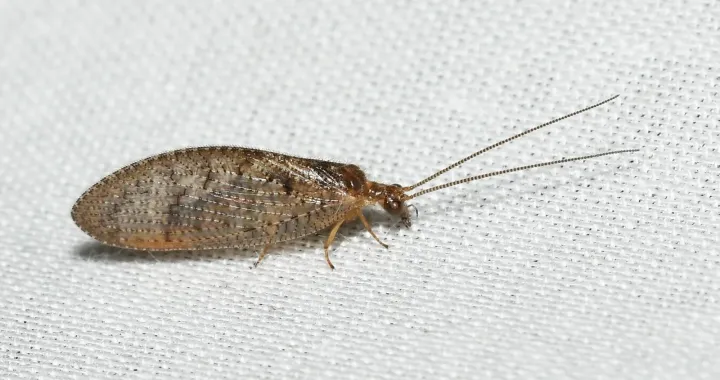
Hemerobius stigma belongs to the Hemerobiidae family, commonly known as brown lacewings. It is a small insect characterized by its brownish coloration and intricately veined, transparent wings.
The adults are relatively elusive and primarily nocturnal, which explains why they are rarely noticed by casual observers in gardens or forests.
Larvae of this species are specialized hunters, possessing long, sickle-like mandibles that allow them to efficiently capture and consume soft-bodied prey.
Eggs are typically laid singly on the needles of conifers or bark, demonstrating a reproductive strategy that ensures larvae have immediate access to food upon hatching.
Unlike many other insects in the same habitat, Hemerobius stigma is a predatory species that plays a vital role in maintaining the balance of the ecosystem.
What it damages
It is crucial to clarify that Hemerobius stigma does not damage plants. It does not feed on leaves, needles, sap, or plant tissues of any kind.
The insect is frequently found on various coniferous trees, such as pines and spruces, but it is only there to hunt for aphids, adelgids, and scales.
Because they act as predators, they provide a significant service to gardeners and foresters by suppressing populations of harmful sucking insects.
There is absolutely no reason to categorize this species as a pest, and any attempts to eliminate it are counterproductive to plant health.
Their presence is a positive indicator of a healthy, functioning environment with sufficient natural checks on pest populations.
When it appears
Adults emerge early in the spring, synchronized with the onset of favorable temperatures that promote the growth of their prey.
The larval stage, which is the most active hunting phase, is most prevalent during late spring and early summer when aphid colonies are expanding.
Depending on local climate conditions, several generations may occur throughout the growing season to ensure continuous population control.
As autumn arrives, the insects seek shelter in bark crevices or under forest litter, entering a period of diapause or hibernation to survive the winter.
The life cycle duration is highly dependent on temperature and prey availability, allowing the species to adapt to varying seasonal pressures.
Control measures
No control measures should be implemented against Hemerobius stigma, as it is a beneficial predator that aids in integrated pest management.
To support its population, it is highly recommended to minimize the use of broad-spectrum insecticides, which often kill beneficial insects along with pests.
Focusing on biological or selective pesticides when dealing with aphids will help preserve the population of lacewings and other natural enemies.
Maintaining diverse vegetation and providing natural shelter sites are excellent ways to encourage these helpful insects to reside in your garden.
- Avoid non-selective insecticide spraying.
- Encourage native plant diversity.
- Monitor for pests but avoid harming natural predators.
Taxonomy
- Latin name
- Hemerobius stigma
- Family
- Hemerobiidae
- EPPO code
- HEMBSG
Discussion
No discussions yet — be the first.