
Pacific brown lacewing
Hemerobius pacificus
Description
How to identify
The Pacific brown lacewing (Hemerobius pacificus) is a member of the Hemerobiidae family within the order Neuroptera. These insects are easily identified by their delicate, net-like wing venation and brownish-gray coloration.
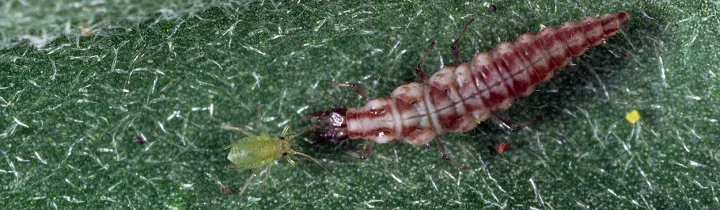
Adults are relatively small, often blending into bark or foliage, which makes them difficult to spot in the field. Their larvae are active hunters, featuring sharp, sickle-shaped mandibles for catching their prey.
The life cycle undergoes complete metamorphosis, including egg, larval stages, pupa, and adult. This biological progression allows the species to occupy various niches within forest and agricultural ecosystems.
In most ecosystems, they are considered beneficial predators that feed on aphids, mites, and scale insects. However, agronomists monitor them to ensure their populations remain balanced within the local environment.
Distinguishing characteristics include their resting posture, where wings are folded tent-like over the abdomen, and their generally slow, fluttering flight behavior during the evening hours.
Control measures
Effective management requires an Integrated Pest Management (IPM) approach, emphasizing the conservation of beneficial lacewing populations to provide natural regulation of pest populations.
Limit the application of broad-spectrum synthetic insecticides, as these chemicals often result in the unintended loss of beneficial insect populations, leading to secondary pest outbreaks.
When chemical intervention is necessary, select targeted products that minimize toxicity to non-target insects, such as lacewings and other natural enemies of crop pests.
Implementing habitat management practices, such as providing flowering strips or preserving shelter habitats, can increase the density of beneficial insects in the vicinity of commercial crops.
Regular monitoring using light traps or systematic foliage inspection helps agronomists make informed decisions about intervention thresholds, ensuring that controls are only applied when strictly required.
Taxonomy
- Latin name
- Hemerobius pacificus
- Family
- Hemerobiidae
- EPPO code
- HEMBPA
Discussion
No discussions yet — be the first.