
Hemerobius nitidulus
Hemerobius nitidulus
Description
How to identify
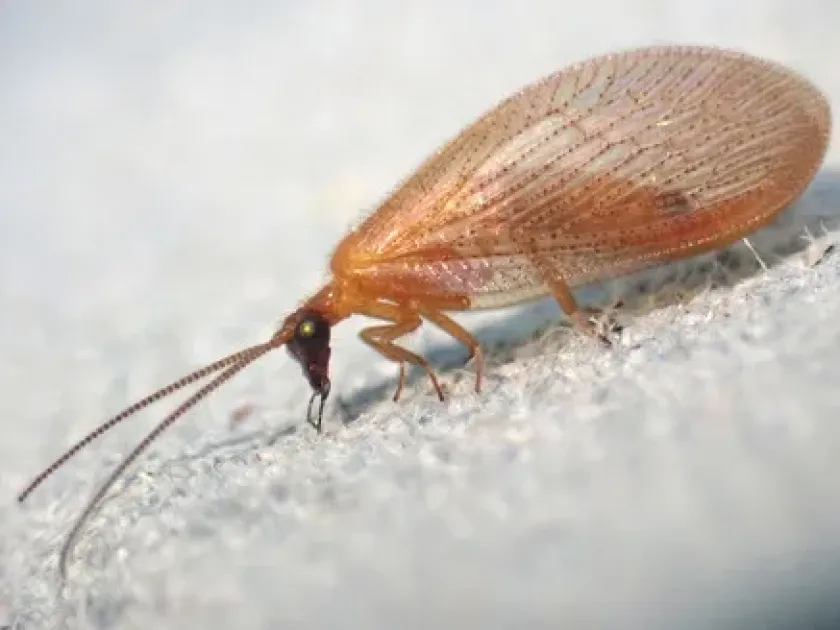
Hemerobius nitidulus is a species of brown lacewing belonging to the family Hemerobiidae within the order Neuroptera. It is characterized by its relatively small size and glossy, brownish appearance.
The adult insect has a wingspan ranging from 12 to 18 mm. Its wings are transparent with a distinct network of veins, which it holds in a tent-like fashion over its body while resting.
The larvae are specialized predators. They possess elongated, spindle-shaped bodies and powerful, sickle-shaped mandibles used for piercing and consuming soft-bodied prey.
Unlike their green lacewing counterparts, these insects are well-adapted to camouflage against tree bark, making them difficult to spot during the day.
Entomologists and agronomists identify this species as a vital predatory insect rather than a threat to agricultural productivity.
What it damages
Hemerobius nitidulus is not a plant pest. It does not feed on vegetation, flowers, or fruit, and thus poses zero threat to crops or garden health.
Instead, this species is highly beneficial to agriculture. Both the larvae and adults feed on various small pests, including aphids, mealybugs, and spider mites.
By consuming large quantities of these pests, they serve as a natural biological control agent, keeping harmful insect populations below the economic injury level.
There is no record of this species causing damage to plants, as their mouthparts are evolved exclusively for a carnivorous, predatory diet.
In modern agricultural practices, protecting this species is considered a best practice for integrated pest management (IPM) strategies.
When it appears
The seasonal activity of H. nitidulus typically begins in early spring, following the first period of sustained warm temperatures.
The species can complete multiple generations within a single growing season, allowing for sustained predation pressure on garden pests.
They hibernate during the winter months, typically as pupae or adults, tucked away in the crevices of tree bark or within organic litter near the base of the trees.
Peak adult activity is observed during the summer months, correlating with the peak development stages of aphid colonies on host plants.
Environmental factors, particularly temperature and humidity, play a significant role in the timing of their emergence and the overall length of their life cycle.
Signs of infestation
The presence of Hemerobius nitidulus is usually indicated by a natural decline in pest populations on trees and shrubs without the use of chemical intervention.
Careful inspection of foliage may reveal the presence of their predatory larvae moving among colonies of aphids or other sap-sucking insects.
Adults are frequently attracted to artificial light sources during the night, where they can be identified by their glossy appearance and characteristic flight pattern.
Because they do not cause injury to plant tissues, the lack of holes, wilting, or structural damage on the plant is a sign of a healthy ecosystem inhabited by predators.
Detection is often aided by using sticky traps or beat-sheeting methods, although visual spotting on coniferous or deciduous trees remains the most common method.
Control measures
Management of H. nitidulus focuses on conservation rather than control, as they are essential allies in plant health maintenance.
- Avoiding the use of broad-spectrum insecticides that inadvertently kill beneficial predators.
- Maintaining hedges and woody trees which provide shelter and wintering sites.
- Using targeted, selective pesticides if pest control is necessary for other reasons.
- Encouraging the presence of natural floral diversity in the orchard to support adult lacewings.
- Minimizing soil disturbance in the orchard to protect overwintering cocoons.
By creating an environment friendly to these predators, gardeners and farmers can naturally reduce the necessity for frequent chemical applications.
Taxonomy
- Latin name
- Hemerobius nitidulus
- Family
- Hemerobiidae
- EPPO code
- HEMBNI
Discussion
No discussions yet — be the first.