
Hemerobius lutescens
Hemerobius lutescens
Description
How to identify
Hemerobius lutescens is a species of brown lacewing belonging to the family Hemerobiidae within the order Neuroptera.
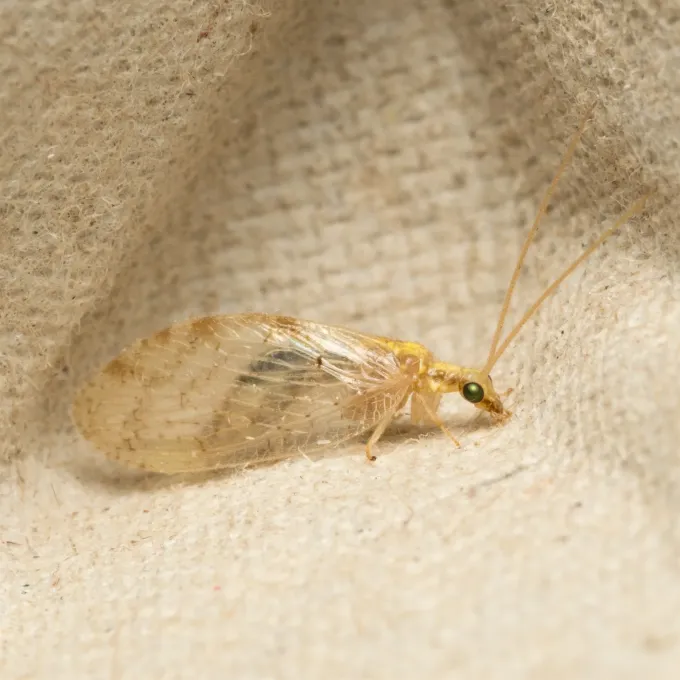
The adult insects are relatively small, typically having a wingspan between 12 and 16 mm, characterized by delicate and heavily veined wings.
The body color is generally light yellowish-brown, allowing for excellent camouflage against tree bark and foliage.
Larvae are elongated and possess specialized, sickle-shaped mouthparts designed for efficient predation on small insects.
As nocturnal predators, they are often overlooked during the day, yet they remain a vital component of integrated pest management.
What it damages
Hemerobius lutescens is not a plant pest; rather, it is a highly beneficial insect that functions as a natural predator of garden pests.
It feeds exclusively on aphids, scale insects, and mites, making it an essential ally for any farmer or gardener.
There is no evidence of this species causing any damage to plants, leaves, or fruits, as their physiology is adapted solely to carnivorous behavior.
Its presence on a plant should be welcomed, as it indicates a natural mechanism of pest suppression is actively taking place.
Misidentifying this species as a pest often leads to unnecessary and counterproductive chemical interventions that disrupt the ecosystem.
When it appears
The activity of Hemerobius lutescens generally aligns with the growing season, starting in late spring as aphid populations begin to surge.
They produce several generations throughout the summer months, depending on local climate conditions and prey availability.
Hibernation typically occurs in the late autumn, with the insects overwintering as larvae or adults in sheltered, hidden environments.
Overwintering sites often include crevices in tree bark, under fallen leaves, or within wooden structures where they are protected from winter elements.
Emergence in spring is triggered by rising temperatures, quickly followed by the search for mating partners and reliable prey sources.
Signs of infestation
The primary sign of a healthy Hemerobius population is a noticeable decline in aphid colonies without the use of synthetic pesticides.
Observing larvae on the underside of leaves among clusters of aphids is a clear sign that they are actively hunting.
While adults are nocturnal and often fly to artificial lights at night, larvae can be spotted by careful inspection of aphid-infested foliage.
Silken cocoons might be found in cracks or under leaves, though they are quite difficult to locate due to their small size and protective coloration.
The presence of empty aphid exuviae or "shriveled" aphid shells on plants is evidence of successful predation by this lacewing species.
Control measures
Strictly speaking, no control measures are required, as Hemerobius lutescens is a beneficial insect that should be conserved.
The most effective strategy is to reduce or eliminate the use of broad-spectrum insecticides that harm both pests and their natural enemies.
Implementing organic farming practices and maintaining natural habitats supports the survival of these predators throughout the year.
Educating growers on identifying beneficial insects is the best way to prevent the accidental killing of these valuable allies.
- Avoid preventative chemical spraying.
- Encourage biodiversity in the garden.
- Use selective pest control methods.
Taxonomy
- Latin name
- Hemerobius lutescens
- Family
- Hemerobiidae
- EPPO code
- HEMBLU
Discussion
No discussions yet — be the first.