
Hemerobius humulinus
Hemerobius humulinus
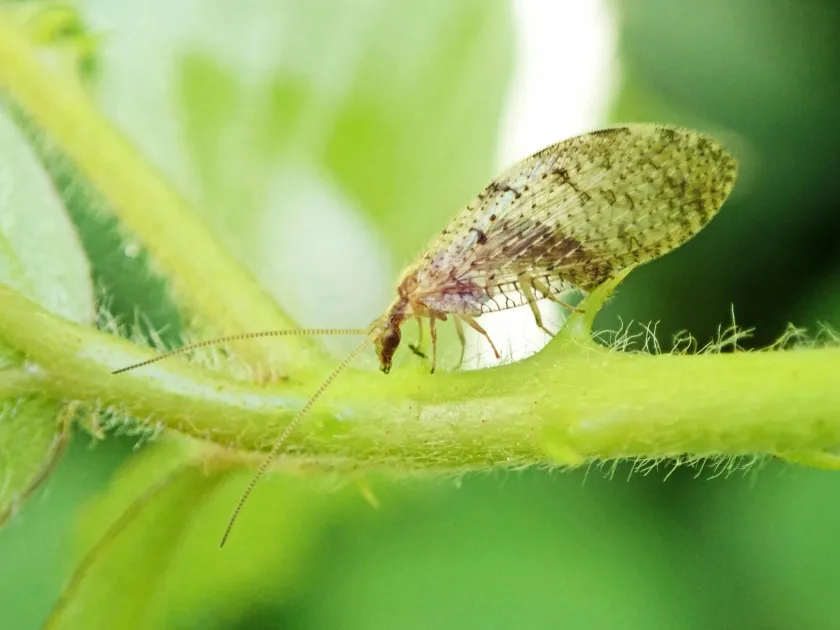
Description
How to identify
Hemerobius humulinus is a species of brown lacewing belonging to the family Hemerobiidae within the order Neuroptera. These insects are characterized by delicate, net-veined wings and a brownish body color.
Adults typically have a wingspan ranging from 15 to 20 mm, allowing them to blend perfectly with the bark of trees and shrubs during resting periods.
The larvae are specialized predators with elongated, spindle-shaped bodies and prominent sickle-shaped mandibles, which they use to grasp and pierce their prey.
The life cycle follows complete metamorphosis, progressing through egg, larval (three instars), pupal, and adult stages, with overwintering occurring as adults or prepupae.
Correct identification requires examining the wing venation pattern, as this species lacks the distinct eyespots often found in other related neuropteran insects.
What it damages
Hemerobius humulinus primarily affects various deciduous trees, shrubs, and hop plants (Humulus lupulus). They are frequently found in nurseries and agroforestry settings.
In high populations, larvae can cause physical damage by consuming young leaf tissues and tender buds, which disrupts the normal development of the plant.
Damage is often localized but can become significant in young plantings where leaf area index is low and any loss of foliage impacts overall growth.
Feeding sites often serve as entry points for pathogens, potentially leading to subsequent fungal or bacterial infections in the damaged plant tissues.
Intensive cropping systems are more susceptible to damage due to the artificial environment which may reduce the presence of competing predators.
When it appears
Adult activity typically begins in early spring, once temperatures consistently stay above the 10°C threshold, aligning with the bud-break phenological stage.
Peak flight and mating activity are observed during late spring and early summer, when females begin laying eggs on the undersides of leaves.
Multiple generations may emerge throughout the growing season, provided that favorable climate conditions and food resources remain available.
As the season progresses toward autumn, the insects prepare for hibernation, moving toward sheltered areas such as crevices in tree bark or leaf litter.
Monitoring for the presence of the first generation in late spring is crucial for assessing potential pressure throughout the remainder of the summer.
Signs of infestation
The first indicator of activity is the presence of curled or wrinkled leaves on the tips of young shoots, often where the larvae are hiding.
Visible feeding damage appears as small, irregular holes or margins missing from leaves, resulting from the larvae's scraping and chewing habits.
One can also observe white, papery cocoon remnants left behind on branches or leaves after the insects have emerged as adults.
Evidence of larval presence can sometimes include frass deposits on the leaf surfaces, which may lead to discoloration of the leaf tissue over time.
- curling and distortion of leaves;
- stunted growth of young terminal shoots;
- presence of silk-like cocoon residues;
- necrotic spots resulting from tissue damage.
Control measures
Biological control is the preferred management strategy, as these insects often act as beneficial predators of aphids and other small pests in balanced ecosystems.
Sanitation practices, such as removing old leaves and thinning out dense shrubbery, help reduce the overwintering sites for the population.
If chemical intervention is necessary due to high infestation levels, select products that have minimal impact on non-target predatory species.
Promoting biodiversity by planting flowering strips encourages natural predators, helping to maintain the population of H. humulinus at non-damaging levels.
Always base control decisions on economic threshold levels to avoid unnecessary applications and preserve the natural ecological balance within the planting area.
Taxonomy
- Latin name
- Hemerobius humulinus
- Family
- Hemerobiidae
- EPPO code
- HEMBHU
Discussion
No discussions yet — be the first.