
Hellinsia
Hellinsia
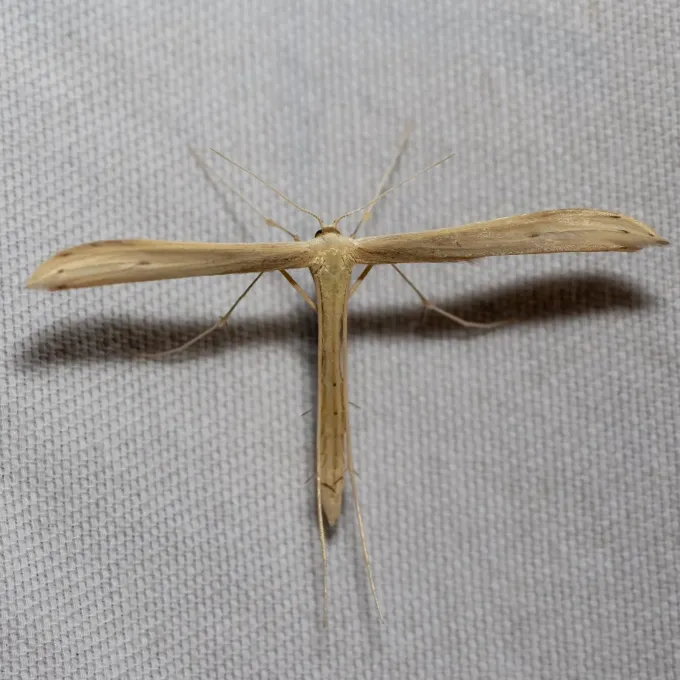
Description
How to identify
The genus Hellinsia belongs to the family Pterophoridae, commonly known as plume moths. These are small, nocturnal moths distinguished by their uniquely split wings that resemble feathers or fingers.
Adults possess slender bodies and exceptionally long, delicate legs, which often lead them to perch with wings folded tightly along the body, mimicking a dry twig.
The coloration of these moths usually ranges from light brown to grey, providing excellent camouflage against vegetation during the daylight hours.
The larvae, or caterpillars, are cylindrical and typically covered in fine bristles or hairs, with colors that blend seamlessly into their host plants.
Species identification within this genus is often complex and frequently requires detailed microscopic examination of genitalia due to the high morphological similarity between related species.
What it damages
Hellinsia species are typically oligophagous, meaning they specialize in feeding on plants within specific families, most notably the Asteraceae family.
The larvae are known to feed on various plant parts including leaves, buds, flower heads, and occasionally stems, which can severely impact the plant's development.
In commercial agriculture, these pests can degrade the market quality of ornamental plants and flowers, leading to significant economic losses if left untreated.
Extensive damage occurs during outbreaks when larvae consume reproductive structures, which prevents successful flowering and can stop seed production entirely.
Some species are internal feeders that tunnel into buds or flowers, causing structural deformation and preventing the normal opening of blossoms.
When it appears
The life cycle of Hellinsia generally includes multiple generations per growing season, though the exact timing is highly dependent on local climatic conditions.
They typically overwinter in the pupal or late larval stage, sheltering within plant debris, soil, or crevices in the bark of surrounding vegetation.
Adult emergence typically begins in the spring once temperatures have consistently reached a threshold required to trigger their metabolic development.
The flight period for these moths is often protracted, meaning that various life stages of the pest may coexist on a single field simultaneously.
Larval feeding activity peaks during the most rapid growth and reproductive phases of their host plants, coinciding with budding and flowering periods.
Signs of infestation
The earliest signs of infestation include small, irregular holes or "window-paning" on leaves, caused by early-instar larvae scraping away the leaf surface.
Affected buds may show premature wilting, failure to open, or irregular growth patterns due to the internal feeding of the larvae within the floral tissue.
The presence of larval frass—small, dark, granular droppings—is a clear indicator that feeding is occurring on the plant's surface or within the canopy.
In cases where larvae bore into stems, plants often exhibit stunted growth, yellowing foliage, and structural weakness at the point of entry.
- Larvae often weave thin silk webbing to tie leaves or petals together, creating a sheltered environment for feeding and protection against predators.
Control measures
Effective cultural control begins with deep autumn plowing, which disturbs the soil and destroys overwintering pupae, significantly reducing the next season's population.
Sanitation practices, such as the removal and destruction of crop residues and surrounding Asteraceae weeds, are crucial to eliminating potential breeding grounds.
Biological control methods, such as the application of Bacillus thuringiensis, are highly effective against younger larval stages while preserving beneficial insect populations.
When pest populations exceed economic thresholds, the application of targeted insecticides, carefully timed with moth flight peaks, remains an essential management tool.
Integrated monitoring using pheromone or light traps allows for precise timing of interventions, minimizing chemical usage and enhancing the efficiency of the control program.
Taxonomy
- Latin name
- Hellinsia
- Order
- Lepidoptera (butterflies)
- Family
- Pterophoridae
- EPPO code
- HLLSSP
Discussion
No discussions yet — be the first.