
Haematoloma
Haematoloma
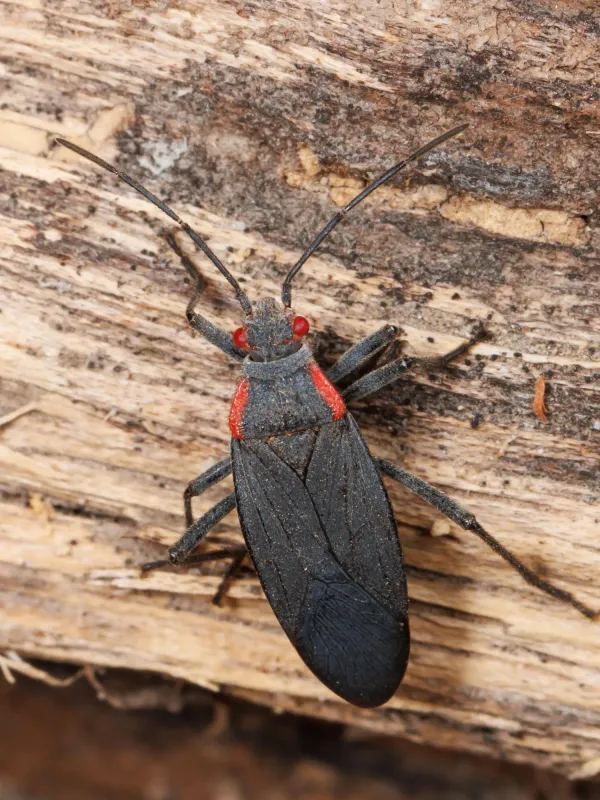
Description
How to identify
Haematoloma is a genus of insects within the family Pyrrhocoridae, known commonly as red bugs. These insects are distinguished by their striking, warning coloration, which typically involves a high-contrast pattern of red and black patches on their pronotum and hemelytra.
The adult body is oval-shaped and slightly flattened. One of the key diagnostic features used by entomologists is the absence of simple eyes (ocelli), which helps to differentiate them from other superficially similar true bugs found in agricultural environments.
The nymphs undergo gradual metamorphosis, passing through several instars. Throughout their development, the nymphs change in size and color, eventually acquiring the vibrant, distinct patterns of the adult bugs.
These insects prefer sunny, well-warmed habitats. They are frequently found in open fields, meadow edges, or vegetable gardens, where the soil temperature is high enough to support rapid development of their populations.
Females lay eggs in small clusters, typically depositing them in the soil or under leaf litter. The rate of embryonic development is highly dependent on ambient temperature, which dictates the number of generations that can occur within a single growing season.
What it damages
The damage caused by Haematoloma is primarily due to their feeding behavior on plant sap. These bugs possess piercing-sucking mouthparts, which they use to puncture plant tissues and extract vital nutrients, causing cellular damage at the site of the puncture.
They target a variety of herbaceous plants, including several species within the Malvaceae and Asteraceae families. Both agricultural crops and common weeds can serve as hosts for these insects.
Mass infestations often lead to significant growth suppression of the host plants. Young seedlings are particularly vulnerable, as feeding can cause stunted growth, severe deformation of leaves, and loss of overall plant vigor.
Beyond the direct depletion of nutrients, the puncture wounds created during feeding serve as entry points for secondary pathogens, such as fungi and bacteria, which can lead to wilting and tissue necrosis.
Economic damage is most pronounced during periods of water stress or drought, when plants are less capable of recovering from the structural and physiological trauma inflicted by the bug's feeding activities.
When it appears
The active season for Haematoloma typically begins in the spring as temperatures rise, signaling the emergence of adults from their winter dormancy. This period usually aligns with the early stages of vegetation growth for many local crops.
The population reaches its peak in mid-summer, providing ideal conditions for both nymphal development and adult feeding. This is when the insects are most visible on the leaves and stems of their host plants.
The number of generations produced annually depends on the regional climate. In warmer climates, the life cycle may be completed faster, leading to multiple, overlapping generations before the onset of cooler autumn weather.
As autumn approaches, the adults begin to seek overwintering sites, such as cracks in the soil, piles of organic debris, or the sheltered bases of perennial plants, where they enter a state of diapause.
Effective monitoring should be conducted throughout the season, with particular attention paid to the edges of cultivated areas and patches of weeds, which often serve as the initial colonization sites for the population.
Signs of infestation
Early signs of an infestation include the appearance of pale or chlorotic spots on leaves, which progressively turn necrotic as the localized plant cells die due to the loss of sap.
Visual identification can be accomplished by inspecting the underside of leaves and the base of plant stems, especially during the cooler parts of the day when the insects are less prone to rapid escape behavior.
- Yellowing or chlorosis of the foliage.
- Distorted or curled leaves in growing tips.
- Small, dark spots of excrement on the surface of plant parts.
- Premature dropping of flower buds.
- General malaise of the plant despite adequate watering.
A distinctive odor, typical of many bugs in the Pyrrhocoridae family, may become apparent in areas with high insect density, especially if the bugs are disturbed or handled.
Control measures
Cultural control is the first line of defense against Haematoloma. Keeping fields and gardens free of host weeds significantly reduces the primary food sources and shelter sites available to the pest population.
Regular soil cultivation, including tilling after the harvest, is highly effective for destroying overwintering adults and exposing their eggs to unfavorable environmental conditions.
If population numbers exceed the economic threshold, targeted insecticide applications may be necessary. Using contact-action insecticides during the evening hours can provide high control efficacy with minimal environmental impact.
Implementing a long-term crop rotation strategy is beneficial, as it disrupts the life cycle of the pest by consistently changing the availability of preferred host plants on a given plot.
Integrated Pest Management (IPM) practices, which incorporate the encouragement of natural predators and the use of eco-friendly biological agents, should be prioritized to maintain long-term ecosystem health.
Taxonomy
- Latin name
- Haematoloma
- Order
- Hemiptera (bugs, aphids, leafhoppers)
- Family
- Cercopidae
- EPPO code
- HAELSP
Discussion
No discussions yet — be the first.