
Gynanisa maja
Gynanisa maja
Description
How to identify
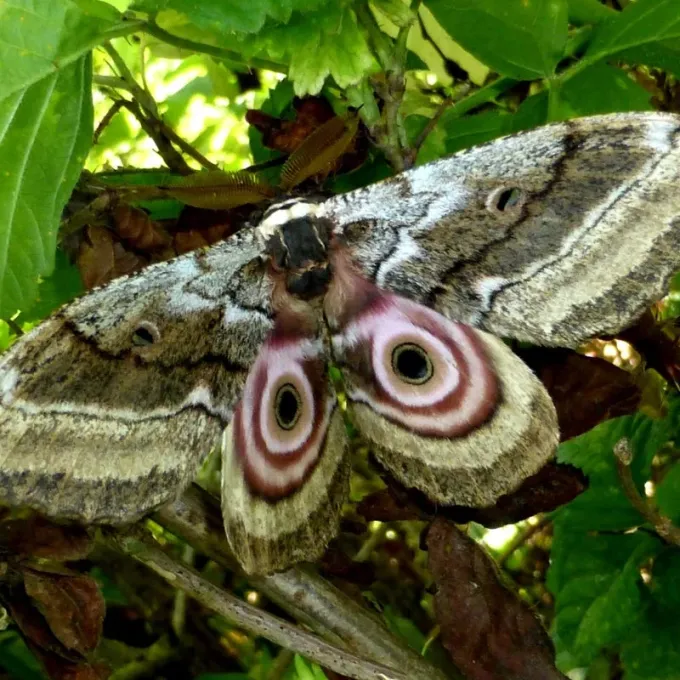
Gynanisa maja, commonly known as the emperor moth, is a large species belonging to the family Saturniidae. The adult moth features a impressive wingspan ranging from 100 to 120 mm, with wings typically displaying brown and orange hues, accented by prominent eyespots intended to deter avian predators.
The larval stage consists of robust, fleshy caterpillars that undergo several instars. In their final development stage, these larvae become quite large and often exhibit vibrant warning colors or spine-like protrusions, signaling their unpalatability to potential threats.
Eggs are typically deposited in clusters on the underside of host plant leaves. This placement strategy ensures that newly hatched larvae have immediate access to a food source, facilitating rapid growth during the early stages of their life cycle.
Pupation takes place within a sturdy, protective cocoon. These cocoons are often constructed in soil litter or hidden within the crevices of tree bark, providing thermal insulation and physical defense against environmental stressors during the winter or dormant period.
The biological cycle of Gynanisa maja is highly dependent on regional climatic patterns. In many habitats, the emergence of adults and the feeding period of larvae are synchronized with the seasonal availability of nutrient-rich foliage in their host plants.
What it damages
The primary damage is caused by the caterpillars, which exhibit voracious feeding habits. During outbreaks, high populations of Gynanisa maja can strip entire trees of their foliage, a process known as defoliation, which can occur over a remarkably short timeframe.
The host plants affected by this pest primarily include various deciduous trees, with a notable preference for species like acacia and other forest or ornamental trees. This can lead to significant aesthetic and economic losses in impacted areas.
Heavy defoliation severely impairs the tree's ability to photosynthesize, which prevents the production of essential carbohydrates. Over repeated seasons, this depletion of stored energy reserves can lead to limb dieback or the eventual death of mature trees.
Beyond foliage loss, the feeding activity can also lead to the scarring of young twigs, which negatively impacts the structural growth and development of the host plant, particularly in young saplings or nursery stock.
Weakened trees are often left susceptible to secondary infections by wood-boring insects and opportunistic fungal pathogens, creating a compounded threat that can alter forest composition if not managed appropriately.
Signs of infestation
A reliable sign of an Gynanisa maja infestation is the presence of frass (caterpillar droppings) accumulating on the ground or on lower branches. These dark, pellet-like droppings are often the first indication of a colony feeding high in the canopy.
Observing progressive canopy thinning is a key indicator. As the caterpillars feed, they move through the tree, resulting in patches of missing leaves and eventually leaving behind bare skeletal veins and empty branches.
Direct sightings of the larvae are common due to their size. During the day, they may be found resting along the branches or under the leaves, and their movement across the bark is often audible in calm, quiet conditions during high infestation levels.
Evidence of cocoons in the surrounding leaf litter or tucked into tree crevices during the off-season serves as a warning for potential future infestations. Monitoring these areas is essential for planning proactive control measures.
Damaged leaves often show irregular, ragged margins. If a branch is heavily infested, the caterpillars will move to adjacent healthy foliage once the current leaf material has been consumed, following a clear pattern of spread.
Control measures
Biological control represents a sustainable approach, utilizing naturally occurring pathogens such as Bacillus thuringiensis (Bt). This bacterium specifically targets lepidopteran larvae while remaining safe for beneficial insects, birds, and other wildlife.
Manual intervention, such as the physical removal and disposal of caterpillars and their cocoons, is highly effective for localized infestations in smaller gardens or nursery settings, preventing the need for chemical applications.
Chemical control using systemic or contact insecticides should be reserved for severe outbreaks where tree survival is at immediate risk. It is imperative to use products that are as selective as possible to minimize collateral damage to non-target pollinators.
Sanitary practices, including the removal and destruction of infested leaf litter from under trees, can significantly disrupt the pest’s lifecycle by eliminating overwintering sites, thereby reducing the population size for the following season.
Integrated pest management also emphasizes encouraging natural predators. Bird boxes and creating habitats for predatory wasps can provide natural regulation of Gynanisa maja populations, keeping them below the economic injury threshold.
Taxonomy
- Latin name
- Gynanisa maja
- Order
- Lepidoptera (butterflies)
- Family
- Saturniidae
- EPPO code
- GYNSMA
Discussion
No discussions yet — be the first.