
Gynanisa
Gynanisa
Description
How to identify
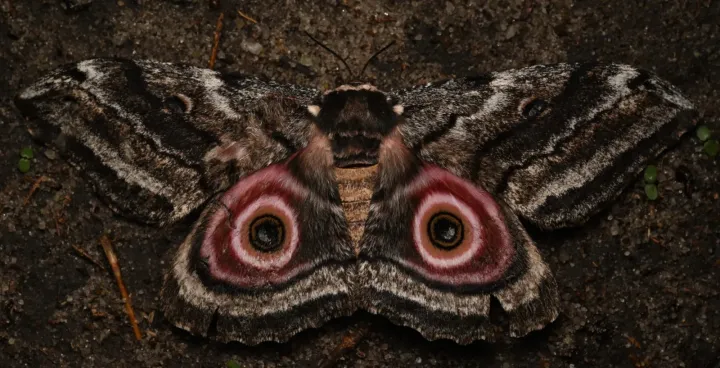
Gynanisa is a genus of large night-flying moths belonging to the Saturniidae family. Adult moths feature a significant wingspan, often exceeding 10–12 cm, with distinct eye-spots on their hindwings.
The larvae (caterpillars) of this genus are known for their large size and vibrant coloration, often displaying spines or tubercles that serve as defensive mechanisms against predators.
Systematically, these insects are classified under the order Lepidoptera. While they are fascinating from an entomological perspective, they can become significant pests in their native distribution areas.
Their life cycle consists of a complete metamorphosis: egg, larva, pupa, and imago (adult moth). The duration of these stages is strictly dependent on the environmental and climatic conditions.
Pupae generally undergo a period of dormancy, surviving the off-season in the soil or within dense cocoons hidden among leaf litter or on host plant branches.
What it damages
Gynanisa caterpillars are polyphagous, meaning they feed on a wide variety of tree and shrub foliage. In several African regions, they are recognized as major defoliators of forest and ornamental trees.
The primary damage occurs during the larval feeding stage, where large colonies are capable of stripping entire branches or young trees of their leaves within a short timeframe.
This massive defoliation weakens the host plant, significantly reducing its photosynthetic capacity, growth rate, and overall vigor, which can eventually lead to plant death.
Besides foliage, heavy infestations may affect the plant's reproductive organs, causing secondary damage to flower buds or developing fruits in various woody species.
The weakened state of trees following an outbreak often makes them susceptible to secondary infections, such as wood-boring insects or fungal pathogens.
When it appears
Imago activity typically peaks during warm and humid periods, which are conducive to mating and successful egg-laying processes for the next generation.
The emergence of larvae is highly synchronized with the plant's vegetative flush, ensuring that the young caterpillars have immediate access to fresh, succulent leaves for rapid growth.
In regions with distinct seasonal changes, these insects often follow a univoltine or bivoltine lifecycle, with the pupal stage serving as the overwintering or aestivating mechanism.
Monitoring efforts should ideally begin early in the season, focusing on the undersides of leaves where egg clusters are often deposited by the females.
Temperature fluctuations and rainfall patterns are critical parameters that determine the success of the larval population and the intensity of the infestation in any given year.
Signs of infestation
The most visible sign of an infestation is heavy defoliation, where leaves are consumed down to the main veins, often leaving the canopy looking thin or skeletonized.
The presence of large amounts of frass (caterpillar droppings) on the ground or on lower foliage is a clear indicator that a colony is feeding in the canopy above.
Caterpillars can be identified by conducting a thorough inspection of the stems and leaf stalks, where they may rest during the day to avoid daytime predators.
The discovery of tough, fibrous cocoons attached to twigs or hidden in the debris layer at the base of the plant confirms the presence of the pupal stage.
In some cases, light silk webbing may be present, which the caterpillars use to secure themselves to leaves during adverse weather or high winds.
Control measures
Manual collection of larvae is highly effective for smaller gardens or young plantations where the infestation is localized and can be visually managed.
Biological control agents, particularly microbial insecticides like Bacillus thuringiensis, are highly effective against young larval stages with minimal environmental impact.
Pheromone traps serve as an excellent monitoring tool to track adult moth flights, allowing growers to time their protective interventions before the egg-laying phase.
Agricultural practices, such as clearing leaf litter from beneath trees at the end of the season, can reduce the number of overwintering pupae in the area.
- Strategic spacing of trees to reduce the speed of pest spread between individual hosts.
- Encouraging natural enemies, including birds and predatory wasps, to reside in or near the garden or forest plots.
- Applying systemic insecticides as a last resort when the population exceeds the economic threshold of damage.
Taxonomy
- Latin name
- Gynanisa
- Order
- Lepidoptera (butterflies)
- Family
- Saturniidae
- EPPO code
- GYNSSP
Discussion
No discussions yet — be the first.