
Madagascar hissing cockroach
Gromphadorhina portentosa
Description
How to identify
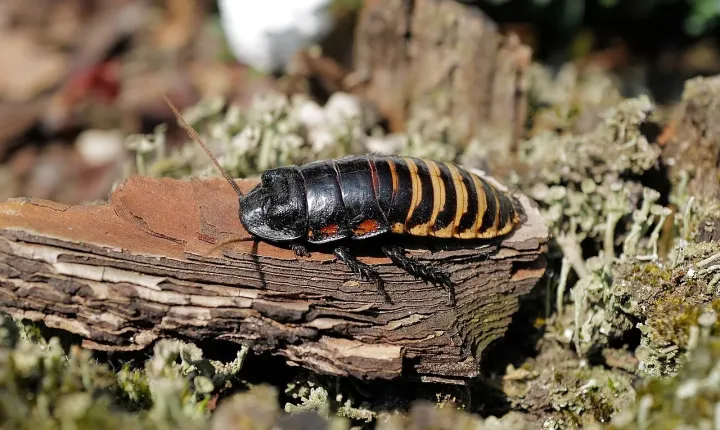
The Madagascar hissing cockroach (Gromphadorhina portentosa) is a large insect belonging to the order Blattodea and the family Blaberidae. Adults can reach lengths of up to 8 centimeters.
This species is native to the forests of Madagascar, where it dwells in the leaf litter. It is completely wingless, but it possesses strong, spined legs that allow it to climb vertical surfaces efficiently.
The name comes from its unique ability to emit a hissing sound by forcing air through its abdominal spiracles when threatened or disturbed, which acts as a defense mechanism.
The life cycle is characterized by ovoviviparity, where the female carries the egg case internally until the nymphs are ready to hatch. This reproductive strategy ensures a high survival rate for the offspring.
In greenhouse settings, these cockroaches can thrive in tropical conditions and may transition from feeding on detritus to consuming live plant tissue if alternative food sources are scarce.
What it damages
While primarily scavengers, in horticultural environments, they can cause significant damage to crops by feeding on tender plant tissues when preferred food is unavailable.
They target young leaves, seedlings, and succulent stems. The damage is often severe, characterized by large, jagged holes eaten into the foliage, which can devastate young plant collections.
By consuming leaves and stalks, they interfere with the plant's ability to photosynthesize, leading to stunted growth, wilting, and in some cases, the death of the plant.
The wounds left by the insects become entry points for secondary pathogens, including fungi and bacteria, which cause further decay and rot in the injured areas.
Their presence also contributes to the accumulation of frass (excrement), which degrades the hygiene of the growing area and encourages the growth of harmful molds.
Signs of infestation
Visible signs of infestation include large, irregular holes in leaves that appear to have been chewed by a large, strong mouthpart, often affecting multiple plants in a group.
The presence of dark, granular fecal pellets in and around plant pots or underneath greenhouse benches is a classic indicator of a cockroach presence.
Finding shed exoskeletons (exuviae) among the pots is a clear sign that the cockroach population is growing and active in the immediate vicinity.
Observing the insects during nighttime checks with a flashlight is the most reliable way to identify them, as they are nocturnal and become very active after dark.
Distorted growth in developing shoots or seedlings that seem to be disappearing rapidly during the night are strong indicators of active feeding by this pest.
Control measures
The most effective cultural control is rigorous sanitation, including the removal of decaying organic material, leaf litter, and debris that provides food and harbor for the insects.
Glue traps should be strategically placed throughout the greenhouse to monitor population levels and identify hotspots of activity before the infestation becomes severe.
Gel-based insecticide baits are highly effective, as they target the cockroaches directly while minimizing the exposure of plants to chemical residues.
Ensuring that greenhouse structures are sealed properly helps prevent the migration of insects from outdoor environments or adjacent storage areas into the main growing space.
In cases of heavy infestation, integrated pest management programs may require professional extermination services to ensure the population is eliminated without damaging the crops.
Taxonomy
- Latin name
- Gromphadorhina portentosa
- Family
- Blaberidae
- EPPO code
- GROMPO
Discussion
No discussions yet — be the first.