
Grammotaulius atomarius
Grammotaulius atomarius
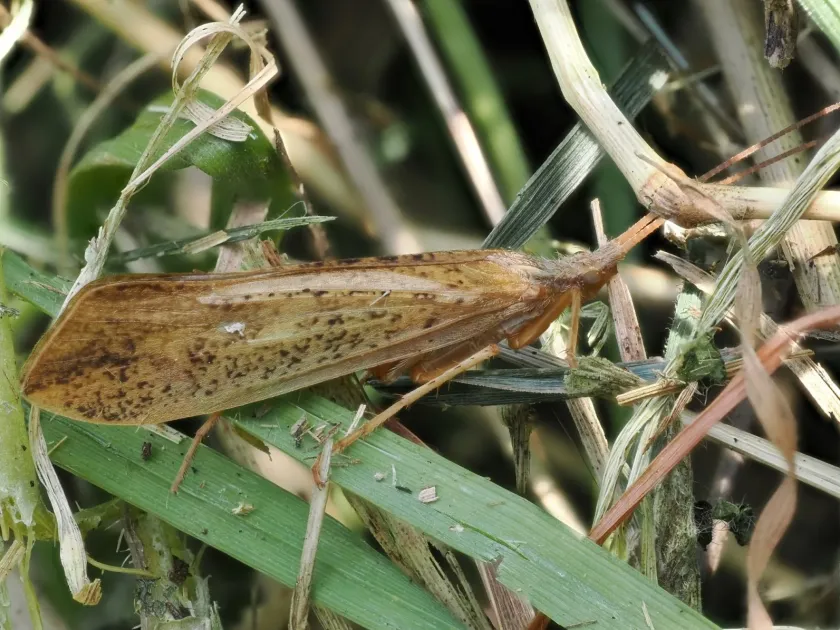
Description
How to identify
Grammotaulius atomarius is a species of caddisfly belonging to the order Trichoptera and the family Limnephilidae. These insects are known for their complex lifecycle involving a distinct aquatic larval stage.
Adults resemble moths with mottled brown wings, which provide excellent camouflage against tree bark or dry vegetation during the day. Their wingspan typically ranges between 35 and 45 millimeters.
The larvae are exclusively aquatic, inhabiting shallow, slow-moving or stagnant water bodies such as ditches, marshes, and ponds located near agricultural lands.
A defining characteristic of these larvae is the construction of portable cases, which they build from gravel, sand, or plant debris to protect their soft bodies.
The taxonomic classification places them among the more common species of Limnephilidae, often found in temperate regions where water sources are abundant.
What it damages
The damage is primarily caused by larvae, which can become agricultural pests when fields become waterlogged or flooded during the growing season.
Larvae feed on young shoots, roots, and decaying organic matter found in the mud, often damaging the base of emerging crop seedlings.
Cereals and vegetable crops planted in low-lying, poorly drained areas are the most susceptible to larval activity during wet conditions.
In cases of high infestation, the consumption of plant tissues can lead to stunted growth and reduced crop density across the affected patches.
While usually not considered a major agricultural pest, their presence can create significant localized losses in specific environmental contexts.
When it appears
Adult caddisflies are typically active during the summer and autumn months, when they disperse to locate suitable water bodies for egg deposition.
The larval stage is active throughout the year, as many species overwinter in water, resuming intensive feeding activity in early spring.
Increased humidity and heavy rainfall, which result in temporary field flooding, are the primary triggers for larval movement toward crop areas.
Temperature fluctuations significantly influence the growth rate of larvae, with warmer spring conditions accelerating their development.
The lifecycle is closely synced with the hydrological cycles of their habitat, making them a recurring factor in high-moisture agricultural environments.
Signs of infestation
The main sign of infestation is visible feeding damage to the roots or basal stems of plants located in standing water or mud.
The discovery of characteristic portable cases (made of sand or plant matter) in the soil near damaged seedlings confirms the presence of larvae.
A thinning of the plant stand in low-lying field corners often serves as an early indicator of pest activity in adjacent drainage systems.
Affected plants may show signs of yellowing, chlorosis, or wilting, reflecting the damage inflicted on their root systems by feeding larvae.
During the evening, the presence of adult insects near irrigation canals or stagnant ponds can indicate a potential risk for nearby crops.
Control measures
Effective management focuses on water control and land management to prevent the formation of stagnant water pockets near fields.
Regular maintenance of irrigation and drainage ditches, including the removal of excess weeds, effectively destroys the larvae's primary habitats.
Cultural practices, such as proper land leveling and deep plowing, are highly effective in disrupting the lifecycle of the pest.
Chemical control is rarely required, as pest management is typically achieved through preventative drainage and habitat modification strategies.
- Improved soil drainage systems.
- Removal of aquatic weeds in drainage ditches.
- Monitoring of field edges during wet seasons.
Taxonomy
- Latin name
- Grammotaulius atomarius
- Family
- Limnephilidae
- EPPO code
- GMTAAT
Discussion
No discussions yet — be the first.