
Pine emperor moth
Gonimbrasia tyrrhea
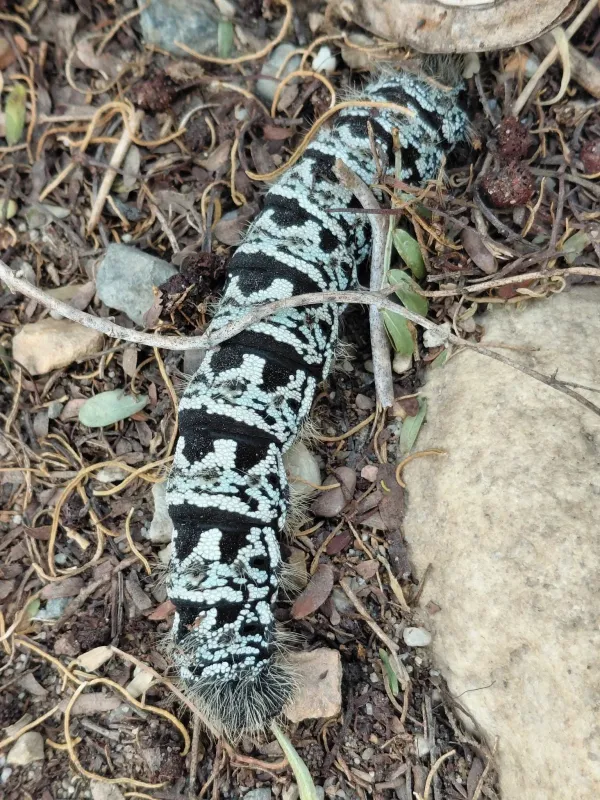
Description
How to identify
The Pine emperor moth (Gonimbrasia tyrrhea) is a member of the Saturniidae family, known for its large size and impressive appearance. The adults are moths with a wide wingspan and distinctive brownish-ochre patterns on their wings.
The larvae, or caterpillars, are the primary focus for pest control specialists as they grow significantly throughout their development and possess a voracious appetite.
Their life cycle consists of four distinct stages: egg, larva, pupa, and adult. The pupal stage is spent in the soil or leaf litter, where the insect remains protected within a tough cocoon.
The biology of this species is closely tied to climatic patterns, which dictate the timing of adult emergence and subsequent egg-laying activities on host trees.
Adult moths do not feed, as their primary biological function is to locate a mate and reproduce, relying entirely on the energy reserves built up during the larval stage.
What it damages
Gonimbrasia tyrrhea is a notorious defoliator, causing damage to a wide range of host plants, particularly coniferous trees and several types of broad-leaved trees like wattle and eucalyptus.
Mass infestations of these larvae can strip an entire tree of its foliage within a very short period, leaving branches bare and unable to perform photosynthesis.
Repeated defoliation cycles drastically reduce the tree's health, often leading to secondary infections by wood-boring beetles and fungal pathogens that capitalize on the weakened state of the tree.
In forestry, this pest is economically significant due to the loss of growth increments and the potential for long-term stand degradation or mortality.
Even in amenity or park settings, the presence of these large caterpillars can cause severe aesthetic damage to landscape plantings.
Signs of infestation
The accumulation of larval frass (droppings) on the ground underneath tree canopies is one of the most reliable early indicators of an active infestation.
Visible defoliation is the most obvious sign, characterized by ragged edges on needles or leaves, progressing to the total stripping of foliage from branches.
The presence of cast-off larval skins (exuviae) on tree trunks or lower branches indicates that the caterpillars have been actively growing in that specific tree.
In high densities, the sound of active feeding—a clicking or crunching noise—may be audible in the quiet of the forest, indicating a large population.
Dying or stressed-looking tree crowns during the peak growing season are strong visual clues that a defoliation event is currently underway.
Control measures
Biological control is the most recommended approach, utilizing microbial insecticides such as Bacillus thuringiensis, which target the caterpillars without harming beneficial species.
Pheromone traps are essential tools for monitoring population density and timing intervention efforts precisely when they are most needed.
Integrated Pest Management (IPM) strategies emphasize protecting natural enemies, including predatory insects and birds, which naturally regulate pest populations.
Chemical intervention should be considered a last resort, used only in extreme cases of outbreak to prevent large-scale forest damage.
- Regular monitoring of larval activity in early spring.
- Use of targeted bio-insecticides for larvae.
- Promoting forest health to increase tree resistance.
- Sanitation removal of highly infested trees.
Taxonomy
- Latin name
- Gonimbrasia tyrrhea
- Order
- Lepidoptera (butterflies)
- Family
- Saturniidae
- EPPO code
- ANGETY
Discussion
No discussions yet — be the first.