
Gluphisia crenata
Gluphisia crenata
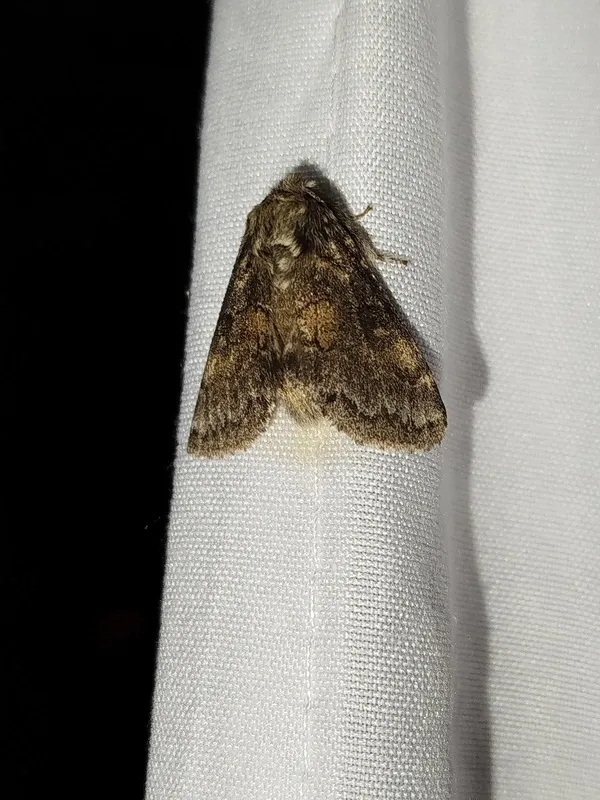
Description
How to identify
Gluphisia crenata is a species of moth belonging to the family Notodontidae. It is a small to medium-sized insect known for its cryptic coloration.
The forewings of the moth are characterized by a dark grey to brownish hue with intricate wavy lines, which provide excellent camouflage against tree bark.
The larvae are distinctively marked, often featuring bright longitudinal stripes that serve as a warning to predators, though they primarily rely on hiding.
The life cycle undergoes complete metamorphosis: egg, larva, pupa, and adult moth. Each stage is adapted to the seasonal changes of their host environment.
This species is widely distributed throughout temperate forest regions, often found in habitats where willow and poplar trees are abundant.
What it damages
The primary hosts for Gluphisia crenata larvae are plants within the Salicaceae family, specifically poplars, including aspens and various willow species.
The larvae prefer feeding on young, tender leaves, making saplings and nursery plants particularly vulnerable to high-density infestations.
As they feed, the larvae cause significant defoliation, which reduces the tree's ability to perform photosynthesis, thereby hindering its annual growth cycle.
Repeated or severe attacks can severely weaken trees, making them susceptible to secondary stressors such as fungal infections or other wood-boring pests.
In ornamental settings, the aesthetic value of the trees is significantly compromised by the ragged appearance of the canopy after larval feeding.
When it appears
Adult moths typically emerge from late spring through mid-summer, depending on the local temperature and the specific microclimate of the region.
Eggs are laid in batches on the underside of host leaves, providing the neonate larvae with an immediate food source upon hatching.
Larval development occurs throughout the summer months. In warmer regions, the species may produce two generations per year, leading to prolonged pest pressure.
The species overwinters in the pupal stage, encased in a durable silken cocoon hidden within leaf litter or deep crevices in the bark of host trees.
The emergence of the next generation of moths is generally synchronized with the budding and leaf expansion of poplar and willow trees.
Signs of infestation
Visible signs of infestation include irregular holes in the leaves, often starting from the margins and progressing toward the veins as the larvae mature.
Frass (larval droppings) accumulating on the lower branches or the ground beneath the tree serves as a clear indication of a resident population.
The presence of fine silk webbing, used by larvae to bind leaves together for shelter, is a common observation in moderately infested trees.
Heavy infestations result in a noticeably thinned canopy, where premature yellowing of leaves becomes evident before the end of the summer season.
Physical inspection of the trunk and branches during the day may reveal larvae resting in sheltered areas, though they are often camouflaged quite well.
Control measures
Cultural control measures, such as the removal and destruction of fallen leaves, are effective in reducing the overwintering pupal population.
For smaller areas, manual removal of larvae and their leafy retreats during the early stages of infestation can keep population numbers at a manageable level.
Biological control using microbial insecticides based on Bacillus thuringiensis is a highly effective and environmentally friendly option for larval management.
Chemical applications should be reserved for high-threshold infestations and must be applied by professionals using registered systemic or contact insecticides.
- Always follow label instructions for application timing and safety.
- Monitor trees regularly during the peak larval growth period.
- Encourage local bird populations, as they are natural predators of these larvae.
Taxonomy
- Latin name
- Gluphisia crenata
- Order
- Lepidoptera (butterflies)
- Family
- Notodontidae
- EPPO code
- GLUPCR
Discussion
No discussions yet — be the first.