
Eurasian pygmy owl
Glaucidium passerinum
Description
How to identify
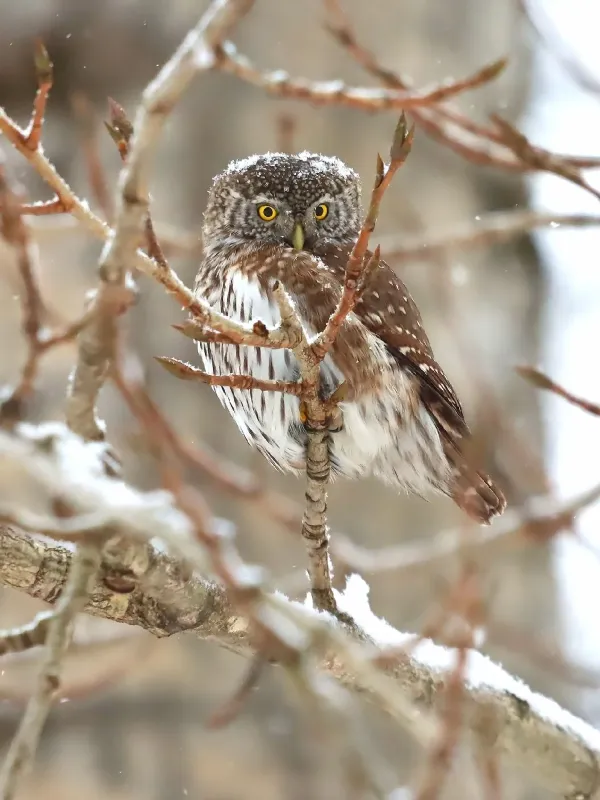
The Eurasian pygmy owl (Glaucidium passerinum) is the smallest owl species found in Europe, belonging to the family Strigidae. Despite its small size, it is a highly skilled predator that mimics the behavior of larger raptors.
Adults typically measure between 15 and 19 centimeters in length with a wingspan of approximately 35 to 40 centimeters, making them similar in size to a common sparrow or thrush.
They are characterized by a round head without ear tufts, bright yellow eyes, and a brownish plumage with white spots that provides perfect camouflage in coniferous forests.
The flight of the pygmy owl is fast and undulating, allowing it to navigate through dense vegetation with extreme agility and near-total silence.
Unlike many other owl species, the Eurasian pygmy owl is frequently active during daylight hours, especially at dawn and dusk, which allows it to hunt during the peak activity of its prey.
What it damages
From an agronomic perspective, the Eurasian pygmy owl affects local ecosystems by preying on insectivorous birds, which can potentially lead to an imbalance in the control of garden and field pests.
In poultry farming, particularly for those keeping quails or ornamental birds in outdoor pens, this small owl can represent a significant threat if facilities are not properly secured.
The removal of natural insect-eating bird populations from an orchard area can result in a higher incidence of damage to crops by various insect species, requiring closer observation.
While the owl itself does not damage crops, its presence as a top predator in small-scale environments requires consideration within the framework of integrated pest management.
The primary concern for farmers is the protection of vulnerable domestic birds, as the pygmy owl is persistent and capable of finding ways into poorly shielded enclosure structures.
When it appears
The peak activity of the pygmy owl occurs during the spring breeding season when they are most aggressive and frequent in their hunting activities to support their growing offspring.
During the winter, these birds are known for storing food in tree cavities, which encourages them to hunt more actively near human settlements and farm buildings to build their reserves.
In the summer months, activity is focused on raising young, though the presence of the species remains constant throughout the year as they are sedentary birds.
Since the species does not migrate, the potential for interactions with agricultural sites persists across all four seasons, requiring year-round monitoring of poultry safety.
The period following harvest, when foliage density decreases, makes pygmy owls more visible and active as they adjust their hunting territories for the upcoming colder season.
Signs of infestation
A primary indicator of a pygmy owl's presence is the accumulation of pellets — compressed indigestible remains of feathers and bones that the bird regurgitates after meals.
The distinctive, high-pitched whistling call, often repeated in a rhythmic pattern, is the most reliable sign of a male owl marking its territory during the breeding season.
Predatory evidence, such as remnants of small birds (feathers, skeletal parts) found at specific caching sites or «larders», indicates that the owl is hunting in the immediate area.
Disturbed behavior of smaller songbirds, characterized by alarm calls and defensive swarming, is a strong indicator of a predator nearby.
Physical evidence of small-scale intrusion, such as holes in netting or stressed poultry within pens, highlights the need for structural improvements to the farm's defenses.
Control measures
To protect poultry effectively, use high-strength, small-mesh wire netting that prevents even the smallest raptor from squeezing through or attacking the birds inside.
Utilize visual deterrents, such as reflective tape or spinning holographic disks, which are often effective in deterring raptors from lingering near pens or sensitive nursery areas.
Maintaining cleanliness around farm facilities by removing food waste and controlling rodent populations reduces the overall attraction of the area to small predators.
Regular inspection of the property to remove potential nesting hollows or artificial nest sites located too close to poultry pens can significantly decrease the risk of proximity.
Always ensure that control measures are non-lethal, as the Eurasian pygmy owl is often protected by wildlife conservation laws and should be managed with environmental consciousness.
Taxonomy
- Latin name
- Glaucidium passerinum
- Family
- Strigidae
- EPPO code
- GLUCPA
Discussion
No discussions yet — be the first.