
Eurasian pygmy owl
Glaucidium
Description
How to identify
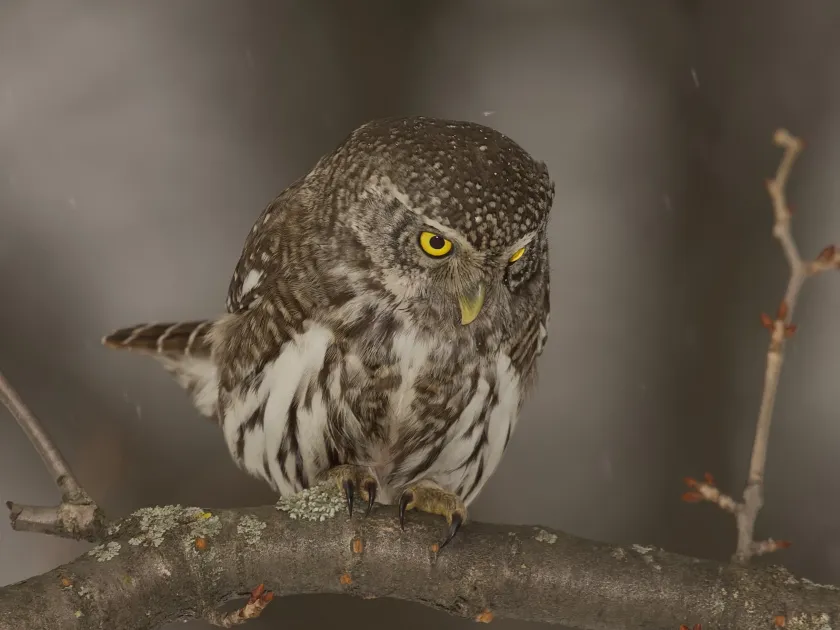
The Eurasian pygmy owl (Glaucidium passerinum) belongs to the Strigidae family and is the smallest owl species found in Europe. It is comparable in size to a common sparrow.
The bird has a rounded head without prominent ear tufts and a relatively long, often elevated tail. Its plumage is brown with white spotting, providing excellent camouflage against tree branches.
Although they are primarily crepuscular, pygmy owls are active during the day as well. Their flight is silent, allowing them to effectively hunt small birds and rodents in woodland margins.
A distinctive behavioral trait is their tendency to sit on branches with their tails cocked upright. This pose is a reliable identification marker for agronomists observing field borders.
Identification is further supported by their vocalization, which consists of a high-pitched, rhythmic whistle that can be heard over significant distances in quiet environments.
What it damages
From an agronomic perspective, the Eurasian pygmy owl is not a crop pest. It does not consume fruits, grains, or vegetative plant parts, making it neutral regarding direct damage to harvests.
However, the species can exert indirect influence on orchards by preying upon small insectivorous birds. By reducing the population of these beneficial birds, the owl may disrupt natural pest control.
In intensive fruit production, the presence of an active predator can lead to a localized imbalance, necessitating an increased reliance on conventional plant protection measures.
Conversely, pygmy owls also hunt small rodents, which are common pests that damage root systems of saplings and consume stored seeds. This provides a clear benefit to the farmer.
Ultimately, the net impact of the pygmy owl on agriculture depends on the specific ecosystem balance and the relative density of beneficial insectivorous birds versus crop-destroying rodents.
When it appears
The activity of the pygmy owl increases significantly during the autumn and winter months. During this period, the owls often move closer to orchards and farm structures in search of food.
The spring season is marked by breeding behavior, where owls are highly territorial and focused on finding nesting sites. Their presence becomes more noticeable during these months.
Summer is dedicated to rearing young, a period when the hunting intensity peaks to meet the caloric demands of the growing owlets in the vicinity of their nesting trees.
Seasonal migration or shifts in distribution are highly dependent on prey availability. A decline in rodent numbers in adjacent forests typically draws owls toward more open agro-ecosystems.
Farmers should conduct regular monitoring of owl presence throughout the year, with a focus on pre-harvest periods to assess potential pressure on local beneficial avian populations.
Signs of infestation
A primary sign of presence is the establishment of food caches in tree cavities or deep crevices, where the owl stores surplus prey. These caches are often visible during orchard inspections.
The discovery of pellets at the base of trees is a definitive sign of an owl's roosting site. These pellets contain undigested fur, feathers, and bone fragments.
Auditory signs include the sharp, whistled call that is repeated regularly, especially during dawn and dusk. This is the most efficient way to confirm their presence in the area.
Agitated behavior of small passerine birds, such as alarm calling and mobbing, often indicates the location of a nearby pygmy owl that is actively hunting or watching from a perch.
Visual observation of a small, compact silhouette in the canopy during low-light conditions is the most direct method to confirm the species within the orchard boundaries.
Control measures
Control measures must be non-lethal, as the Eurasian pygmy owl is often protected by regional wildlife conservation laws. Management focuses on deterrence rather than eradication.
- Deployment of reflective visual deterrents to discourage owls from settling in sensitive areas.
- Use of ultrasonic devices designed to interfere with the auditory comfort of predatory birds.
- Strategic placement of nesting boxes for beneficial birds in areas less frequented by the owls.
- Maintenance of dense shrubbery to provide safe cover and escape routes for smaller, beneficial birds.
- Selective pruning of high vantage points in the orchard to make it less attractive for hunting perches.
The overall goal of management is to maintain ecological equilibrium by fostering a habitat that supports natural pest control while minimizing potential threats to beneficial species.
Taxonomy
- Latin name
- Glaucidium
- Family
- Strigidae
- EPPO code
- GLUCSP
Discussion
No discussions yet — be the first.