
Greater roadrunner
Geococcyx
Description
How to identify
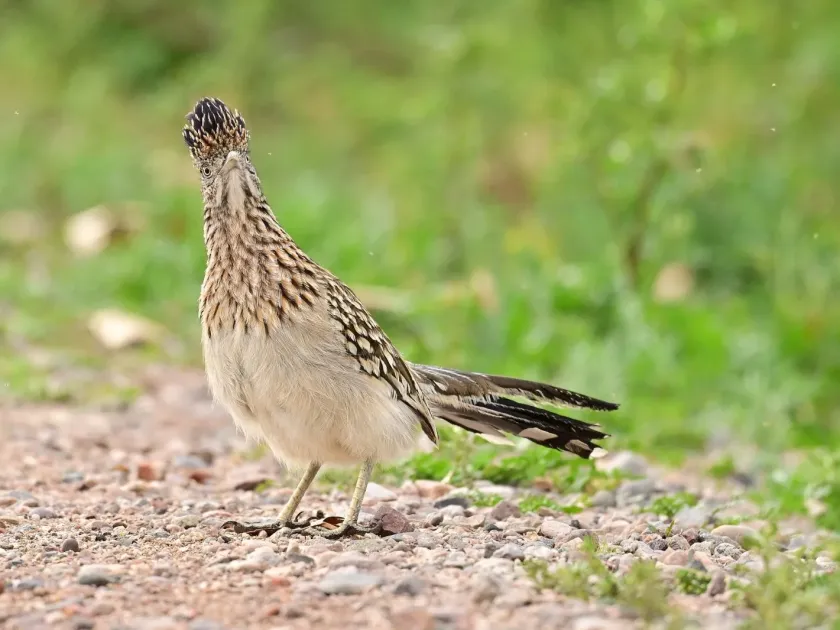
The Greater Roadrunner (Geococcyx californianus) belongs to the family Cuculidae. It is a large, ground-dwelling bird characterized by its long legs, long tail, and distinctive crest.
Taxonomically, it is classified as a predator rather than a phytophagous pest. Its biology is centered on hunting terrestrial insects, small reptiles, and rodents rather than foraging on agricultural crops.
The species is well-adapted to arid environments, possessing a sleek, camouflaged plumage that helps it hide in brush and shrubby edges near agricultural fields.
From an agronomist's perspective, it is critical to distinguish this species from actual crop-destroying birds or insects. The Greater Roadrunner poses no threat to vegetative growth.
Its identification in the field is usually associated with its fast, running behavior, which is a clear sign that it is actively hunting for prey within the field boundaries.
What it damages
The Greater Roadrunner is not a crop pest. It does not cause damage to leaves, grains, fruits, or any other plant parts, as it is strictly carnivorous by nature.
Farmers often mistakenly identify birds in fields as pests, but in this case, the Greater Roadrunner serves as a natural biological control agent against various agricultural pests.
It feeds on grasshoppers, beetles, caterpillars, and small rodents—pests that cause significant economic losses to farmers annually.
There is no evidence of damage to crops by this species. Therefore, it should never be targeted for eradication or management as a crop-damaging entity.
Recognizing the beneficial role of this species is essential for integrated pest management (IPM) practices, which prioritize natural control over chemical intervention.
Control measures
Since the Greater Roadrunner is not a pest, there are no control measures recommended. On the contrary, its presence is a positive indicator of a functional ecosystem within the farm environment.
To support natural biological control, farmers should maintain shrubby field borders and reduce the use of broad-spectrum pesticides that can affect these predatory birds.
Managing fields to encourage such predators can naturally keep rodent and insect populations below economic injury levels, reducing the need for chemical inputs.
Agro-ecological strategies should focus on habitat preservation rather than eradication of beneficial wildlife, which contributes to the long-term health of the soil and crops.
Observation and monitoring programs should ensure that agricultural practices remain friendly to these natural allies, promoting a sustainable and balanced farming landscape.
Taxonomy
- Latin name
- Geococcyx
- Family
- Cuculidae
- EPPO code
- GECXSP
Discussion
No discussions yet — be the first.