
Common cuckoo
Cuculus
Description
How to identify
The Common Cuckoo (Cuculus canorus) belongs to the order Cuculiformes and the family Cuculidae. It is a medium-sized bird known for its mimicry.
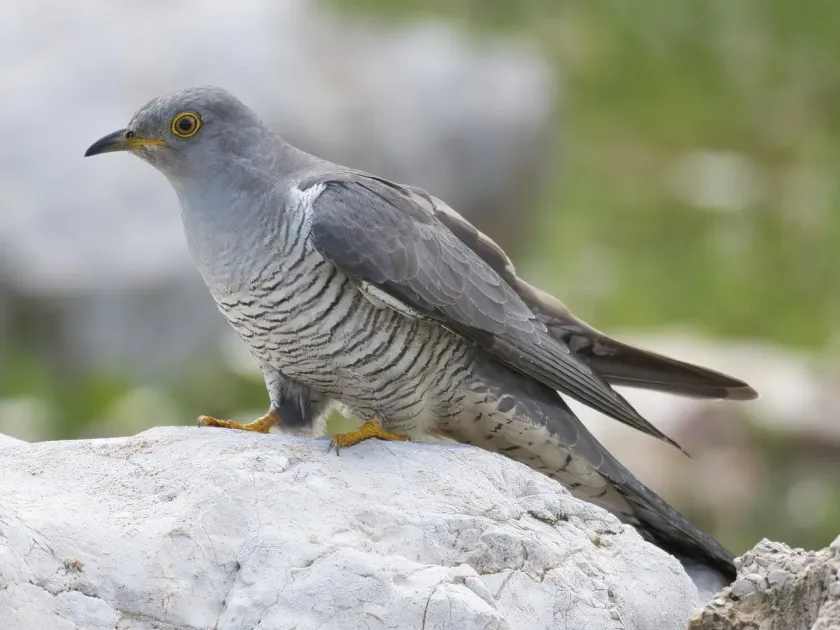
Adults possess a grey back, head, and breast, with barred underparts, and a long tail. Their silhouette in flight is strikingly similar to that of a sparrowhawk.
The species exhibits sexual dimorphism, although it is subtle. Females sometimes show a rufous-brown wash on the breast and have a slightly different pattern.
The bird's most recognizable feature is the resonant 'cuck-oo' call produced by the male, which is typically heard during the spring breeding season.
They are migratory birds that spend the winter in sub-Saharan Africa and return to Europe and Asia to breed during the warmer months.
What it damages
The Common Cuckoo is not a primary pest that consumes crops; rather, it is a brood parasite that affects local bird communities.
By laying its eggs in the nests of smaller insectivorous birds, it reduces the reproductive success of these birds, which are essential for natural pest control.
The cuckoo chick, once hatched, typically expels the host's eggs or chicks, thereby eliminating the natural insect-eating potential of that nest.
In orchards and fields where natural pest control depends on songbirds, the presence of cuckoos can lead to a localized decline in beneficial bird populations.
As a result, the indirect 'damage' to agriculture is the disruption of the natural balance that keeps insect pests, like caterpillars, under control.
When it appears
Common cuckoos arrive in their northern breeding grounds from late April, coinciding with the peak nesting period of various songbird species.
The breeding season, during which the cuckoo actively searches for host nests, extends through May, June, and part of July.
This is the most critical time for agricultural ecosystems, as the presence of the cuckoo interferes with the vital period of avian chick-rearing.
By late summer, specifically in August, adult cuckoos begin their migration back to warmer climates, leaving the agricultural landscape.
Seasonal occurrences are predictable and are highly correlated with the temperature and the availability of insects for the host species.
Signs of infestation
A primary sign of cuckoo presence is observing small birds behaving aggressively, such as mobbing or alarm calling, near their nesting sites.
Discovering an egg within a nest that differs in size, shape, or pattern from the host’s clutch is a clear indicator of successful brood parasitism.
Finding a single, oversized chick in a nest belonging to a much smaller bird species is a definitive diagnostic sign of a cuckoo infestation.
Observed changes in the insect population in a garden may indicate that the local songbird population has been impacted by brood parasitism.
The sudden abandonment or failure of nests in an orchard, despite environmental conditions being favorable, can sometimes be linked to brood parasite interference.
Control measures
Direct control measures are not recommended, as the Common Cuckoo is a protected species in many jurisdictions and plays a role in the natural ecosystem.
The most effective strategy is to support overall biodiversity in agricultural environments, ensuring a stable population of both hosts and other bird species.
Providing nesting boxes or maintaining hedgerows can help maintain high populations of insectivorous birds that are resilient to environmental pressures.
Avoiding the use of broad-spectrum pesticides is vital, as it allows natural avian predators to thrive and keeps the farm ecosystem self-regulating.
Promoting a mosaic landscape with various habitats can reduce the concentration of cuckoos in specific areas, protecting nesting populations from intense parasitism.
Taxonomy
- Latin name
- Cuculus
- Family
- Cuculidae
- EPPO code
- CCLSSP
Discussion
No discussions yet — be the first.