
Great spotted cuckoo
Clamator glandarius
Description
How to identify
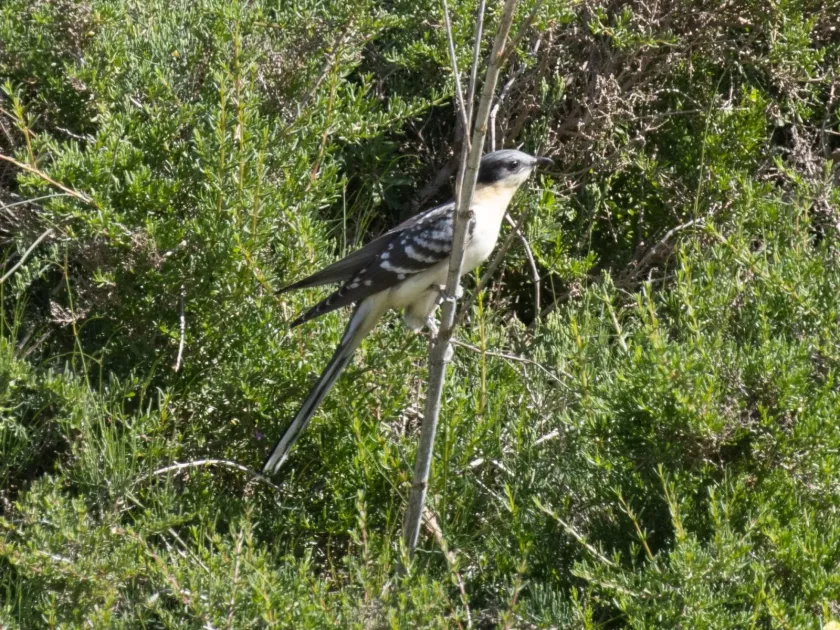
The Great spotted cuckoo (Clamator glandarius) is a bird species belonging to the order Cuculiformes and the family Cuculidae. It is recognized by its prominent crest and elegant, elongated shape.
Adult birds measure between 35 and 40 cm in length. They are characterized by a grey upper body adorned with white spots on the wings and a creamy-white underbelly.
The tail is notably long and graduated, featuring distinct white tips on the rectrices. Its flight pattern is swift and agile, typical of birds adapted to open woodland landscapes.
Juvenile birds possess reddish-brown flight feathers, which serves as a key identifying characteristic compared to the more muted coloration of the adults.
The species primarily inhabits regions with scattered trees, including orchards, vineyards, and agricultural buffer zones across the Mediterranean basin and surrounding areas.
What it damages
The Great spotted cuckoo does not consume crop plants directly; its impact is purely indirect, related to its status as a specialized brood parasite of corvid birds, particularly magpies.
Corvids are effective predators of agricultural pests, including various insects and larvae. By parasitizing their nests, cuckoos can reduce the local population of these beneficial insectivorous birds.
The cuckoo chick often displaces the host's offspring, which causes a local decline in the number of birds that would otherwise control pest outbreaks in orchards and fields.
This ecological interaction can lead to a temporary imbalance in the pest-predator ratio within agricultural lands, potentially increasing the risk of insect-related crop damage.
As such, farm management strategies must account for the natural biodiversity of avian populations and ensure that other insectivorous species are supported alongside local corvid populations.
When it appears
The activity period for the Great spotted cuckoo aligns with the spring breeding season of its hosts. They typically arrive at their nesting grounds in March and April.
The egg-laying period is strictly synchronized with the nesting cycle of magpies and related corvid species, requiring a high degree of stealth from the adult cuckoos.
Fledglings are primarily reared during May and June. During this peak period, the demand for food by the growing cuckoo chick is significant, which puts pressure on local bird resources.
Once the breeding cycle concludes, the birds become nomadic as they prepare for their autumn migration to wintering grounds.
The migratory departure generally occurs in August, signaling the end of their ecological influence on the local agro-landscape for the remainder of the year.
Control measures
There are no direct control measures for the Great spotted cuckoo, as it is a natural part of the ecosystem and is protected by various wildlife conservation laws.
The most effective strategy is to promote a diverse avian community by providing nesting sites for a wide range of insectivorous birds, thereby reducing the dependency on corvids.
Maintaining ecological corridors and diverse plant hedges around fields provides habitats for various bird species, which helps to buffer the agro-ecosystem against the loss of individual predators.
Implementing integrated pest management (IPM) practices minimizes the reliance on broad-spectrum pesticides, preserving the overall health of the bird population in the agricultural area.
Consistent monitoring of pest pressure and avian activity allows farmers to adapt their agricultural practices to maintain productivity while fostering a balanced ecological environment.
Taxonomy
- Latin name
- Clamator glandarius
- Family
- Cuculidae
- EPPO code
- CLAMGL
Discussion
No discussions yet — be the first.