
Common cuckoo
Cuculus canorus
Description
How to identify
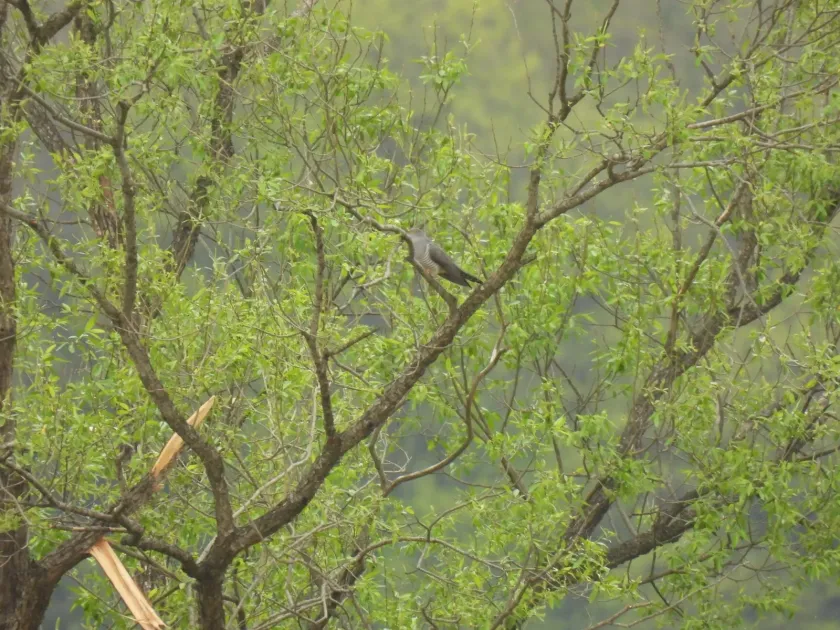
The Common Cuckoo (Cuculus canorus) belongs to the order Cuculiformes and the family Cuculidae. It is a medium-sized bird with a slender build, pointed wings, and a long tail, often resembling a bird of prey in silhouette.
Males are typically grey with barred underparts, a pattern that mimics the plumage of a sparrowhawk, providing a form of aggressive mimicry.
Females may appear in grey or hepatic (reddish-brown) morphs, with more prominent markings that assist in concealing them while searching for host nests.
The male's distinct "cuck-oo" call is the most reliable identification trait during the spring and early summer breeding season.
The species is a specialized brood parasite, meaning it lacks the parental instinct to build nests or raise its own young, relying entirely on other species.
What it damages
The primary agricultural impact of the Common Cuckoo is the indirect reduction of beneficial insectivorous bird populations that provide natural pest control for crops.
By destroying eggs or displacing the chicks of smaller passerine birds, the cuckoo reduces the number of predators that consume harmful insects like caterpillars and beetles.
This disruption of natural avian guilds can lead to localized pest outbreaks, necessitating increased reliance on chemical crop protection measures.
While the Cuckoo does not feed on crops itself, its role as a parasite creates a negative feedback loop within the agro-ecological balance.
Its presence is considered a factor that influences the overall phytosanitary stability of orchards and agricultural landscapes.
When it appears
Common Cuckoos are migratory birds that arrive in their breeding range during late spring, aligning with the nesting period of their host species.
Peak activity is observed during May and June, which is the critical period for egg-laying and the maintenance of their parasitic life cycle.
As the summer progresses, adult cuckoos become less active in host territories, gradually preparing for their southward migration.
They are rarely seen in agricultural fields once the breeding season concludes, limiting their long-term impact on the growing cycle of crops.
Autumn migration typically begins in August, marking the end of their presence in temperate agricultural regions until the following spring.
Signs of infestation
The characteristic call of the male is the most obvious sign of the bird's presence in or near agricultural areas, especially near wooded field boundaries.
Behavioral changes in smaller birds, such as aggressive chasing or alarm calls directed at a cuckoo, indicate an active threat to local nests.
Direct evidence of parasitism includes the presence of eggs with atypical size or pattern within the nests of common garden or field birds.
Visual observation of a bird flying low and swiftly between trees, often in a manner mimicking a hawk, is a common sign of its searching behavior.
The sudden abandonment of a nest or the disappearance of a clutch by smaller passerines during the breeding season often points to successful cuckoo parasitism.
Control measures
Control methods for the Common Cuckoo must be non-lethal, as the species is protected under various conservation laws in many countries.
The most effective strategy involves fostering a healthy habitat for host bird species by providing nesting boxes and planting dense hedgerows.
Using acoustic deterrents or bird-safe sonic devices can help reduce cuckoo activity in specific areas where the population of beneficial insectivorous birds is critical.
Minimizing pesticide use allows for a more diverse ecosystem, which naturally helps host birds recover and manage cuckoo threats through collective behavior.
Long-term management focuses on maintaining landscape biodiversity, ensuring that the agro-ecosystem remains resilient enough to balance the pressures of brood parasitism.
Taxonomy
- Latin name
- Cuculus canorus
- Family
- Cuculidae
- EPPO code
- CCLSCA
Discussion
No discussions yet — be the first.