
Great spotted cuckoo
Clamator
Description
How to identify
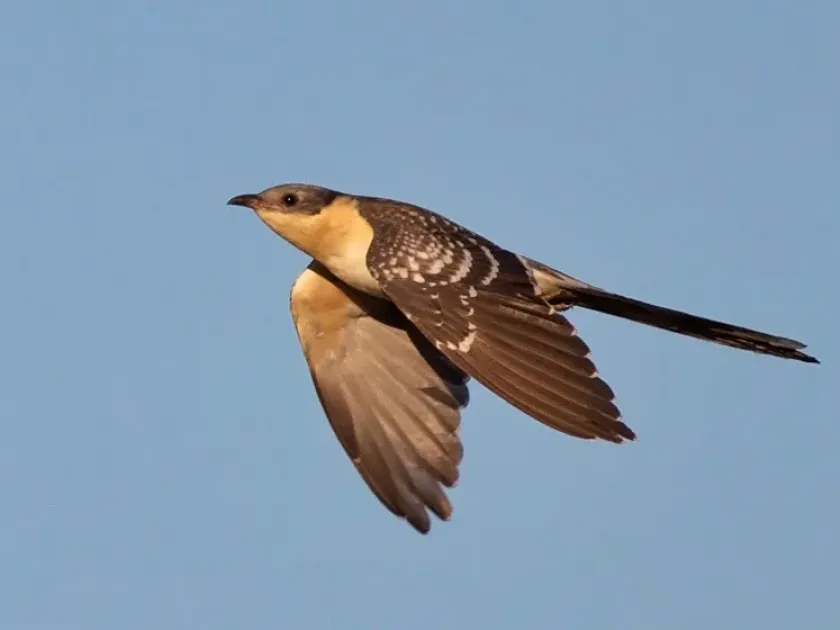
The Great spotted cuckoo (lat. Clamator glandarius) is a member of the Cuculidae family, belonging to the Cuculiformes order. It is characterized by a prominent, pointed crest on its head and a long, graduated tail with distinctive white tips, making it visually distinct.
The upper body feathers are brownish-grey with prominent white spots, which provides camouflage against tree foliage. The underparts are creamy or whitish. The head is grey, and the combination of this color with the crest allows for easy identification in the field.
The biology of this species is based on brood parasitism. Unlike the common cuckoo, it often parasitizes corvids, particularly magpies. This behavior dictates their presence in habitats adjacent to farmlands, orchards, and shelterbelts.
The birds are elusive during egg-laying but become more vocal and active during the breeding season. Their flight is rapid and agile, often accompanied by loud, harsh calls that alert farmers and researchers to their presence within the local ecosystem.
Adult individuals grow up to 40 centimeters in length. Observing their interaction with host birds during the breeding season is a key method for monitoring their population density and potential impact on local ecological balance.
What it damages
Although the Great spotted cuckoo does not consume agricultural crops directly, its presence negatively impacts the agro-ecosystem by disrupting natural pest control. By parasitizing host birds like magpies, it reduces the population of natural insect predators.
Magpies and other corvids are essential for controlling populations of caterpillars, beetle larvae, and other pests that feed on vegetables and fruits. The reduction in host bird numbers leads to an explosion of pest populations that would otherwise be contained.
The resulting imbalance forces farmers to rely more heavily on chemical insecticides to protect their harvests. This increases the total cost of production and places a greater burden on the environment due to the increased chemical load on crops.
In orchards, the birds may cause minor mechanical damage to young shoots while using branches as perches. While not a primary threat to structural integrity, repeated activity in high-density areas can cause localized stress to young saplings.
The disruption of local bird fauna also alters the ecological dynamics, potentially attracting different predatory species and creating unpredictable conditions for beneficial pollinators and organisms that support plant health.
Control measures
Management of the Great spotted cuckoo must prioritize non-lethal, eco-friendly methods. The use of acoustic deterrents that mimic predator calls or distress signals is highly effective in keeping these birds away from sensitive areas like nurseries.
Visual repellents, including reflective ribbons and hawk decoys, can discourage cuckoos from frequenting specific orchard sections. To maintain high efficiency, these tools must be moved or rotated periodically to prevent bird habituation.
Promoting biodiversity within shelterbelts and hedgerows helps create a resilient environment. A stable bird community with diverse species is less susceptible to parasitic pressure, which serves as a natural form of biological defense against the cuckoo.
Integrated pest management (IPM) practices should account for local bird activity. By ensuring the health of host bird populations through habitat improvement, farmers can mitigate the negative side effects of brood parasitism within their ecological zone.
Regular monitoring of the breeding season is crucial for planning protective measures. Deploying deterrents before the peak of the egg-laying period helps minimize the impact of the species on the farm while maintaining a balanced ecological environment.
Taxonomy
- Latin name
- Clamator
- Family
- Cuculidae
- EPPO code
- CLAMSP
Discussion
No discussions yet — be the first.