
Freshwater shrimp
Gammarus pulex
Description
How to identify
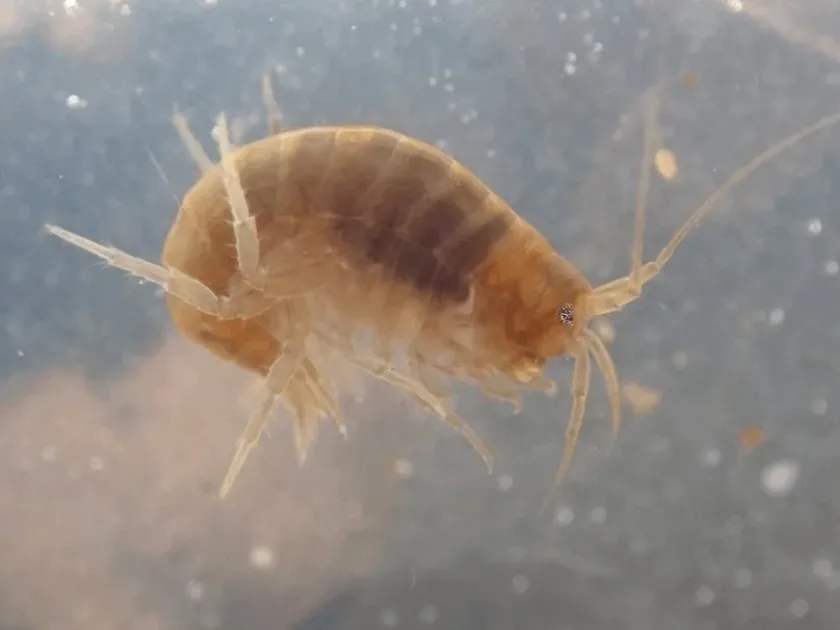
The freshwater shrimp (Gammarus pulex) belongs to the order Amphipoda, family Gammaridae. It is a small aquatic crustacean with a laterally compressed body reaching 10–20 mm in length.
Visually, the pest resembles a tiny shrimp, typically grey-green or brownish in color. It possesses strong mouthparts adapted for grinding organic matter and soft plant tissues.
Its life cycle is closely linked to water; it inhabits standing or slow-moving bodies of water but can migrate into soil zones during greenhouse flooding or over-irrigation.
These crustaceans are nocturnal, hiding during the day under soil clumps or in damp substrates, which makes them difficult to detect during daylight inspections.
Reproduction occurs in water, where the female carries eggs in a brood pouch, and the hatchlings subsequently emerge into the environment to begin feeding on organic debris.
What it damages
Gammarus poses a threat primarily to young seedlings grown in hydroponic systems or in greenhouses with excessively moist soil conditions.
The pest feeds on tender root hairs and underground stems, which disrupts plant nutrient uptake and leads to premature wilting and stunted growth.
The most significant damage occurs in greenhouses with automatic irrigation systems, where high soil moisture creates favorable conditions for migration from drainage ditches.
Beyond direct tissue consumption, these crustaceans can vector fungal spores, facilitating the development of root rots and necrosis in susceptible crop varieties.
If primary food sources are scarce, they may damage the lower leaves of cucumber, tomato, or lettuce plants that maintain direct contact with the damp substrate.
Signs of infestation
The primary sign of infestation is the sudden wilting of seedlings in the morning, despite adequate soil moisture levels in the growing containers.
Inspection of the root system reveals characteristic gnawed areas, appearing as small cavities or jagged edges on the roots and lower stems.
During the night, activity of small, jumping organisms on the soil surface can be observed, confirming the presence of an amphipod population.
A specific smell of dampness and decomposing organic matter in areas where the crustaceans congregate is also an indirect indicator of colonization.
- Damage to the root collar of seedlings
- Feeding marks on lower leaves
- Presence of active crustaceans in drainage trays
- Unexplained death of young plants
Control measures
The primary control measure is the strict regulation of water regimes: preventing soil saturation and eliminating water-stagnant zones around beds and racks.
It is essential to regularly clean drainage systems and reservoirs in greenhouses, as these are the main breeding sites for Gammarus pulex populations.
Utilizing physical barriers, such as elevating seedling trays above the ground, effectively prevents these pests from reaching the plant roots.
Chemical control should focus on using crop-safe insecticides, although proper agronomic hygiene is usually sufficient to manage the population.
In cases of severe infestation, substrate disinfection and drying out the areas adjacent to greenhouse structures are recommended to eliminate the moisture source.
Taxonomy
- Latin name
- Gammarus pulex
- Family
- Gammaridae
- EPPO code
- GAMMPU
Discussion
No discussions yet — be the first.