
Gammarus
Gammarus locusta
Description
How to identify
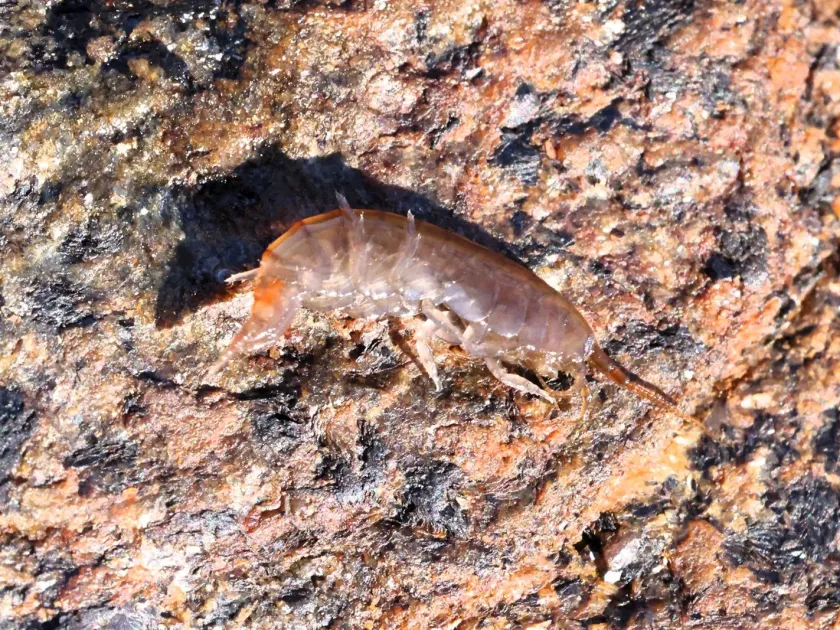
Gammarus (Gammarus locusta) belongs to the order Amphipoda and the family Gammaridae, consisting of small crustaceans that typically inhabit aquatic environments but can thrive in damp soils.
Their bodies are laterally compressed and curved, which facilitates their characteristic jumping movement across moist surfaces when they are displaced from the water.
The coloration ranges from greenish-grey to brown, providing effective camouflage among decaying organic matter and damp soil particles in their natural habitats.
Biologically, they are primarily detritivores, meaning they prefer to feed on decomposing plant tissues, algae, and organic debris found in wet, shaded areas.
These organisms exhibit complex parental care, with females carrying their eggs in a specialized brood pouch until the young are fully developed and ready for independent life.
What it damages
Gammarus becomes a pest mainly in environments with excessive moisture, such as hydroponic systems, flooded greenhouses, or low-lying agricultural fields.
They can cause damage by feeding on the tender roots and root collars of young seedlings when their primary sources of organic food are depleted.
Mechanical damage caused by their mouthparts can weaken the structure of the root system, making the plants highly susceptible to various root rot pathogens.
Seedlings and young transplants are at the highest risk, as their tissues are soft and easily penetrated by the crustaceans during the initial stages of establishment.
Economic damage is generally localized and occurs mostly when sanitary conditions are poor and drainage is inadequate, allowing for rapid population growth.
Signs of infestation
The presence of Gammarus can be detected by observing their activity near the base of stems or in moist drainage channels, especially during the early morning hours.
Unexplained wilting of plants in well-watered conditions may point towards root damage, which should be verified by examining the root zone for small lesions.
The presence of granular excrement near the base of the plant is another indicator that crustaceans are active within the immediate growing medium.
A musty or stagnant water smell often accompanies areas where these crustaceans have established a population, signaling an urgent need for better ventilation.
Physical inspection of the soil or medium often reveals the organisms hiding under wet debris or near the margins of water-holding pots and containers.
Control measures
The most effective strategy for managing Gammarus is the implementation of proper drainage to ensure that soil moisture levels remain optimal rather than saturated.
Maintaining a clean growing environment by removing dead leaves, organic debris, and standing water is crucial to preventing the buildup of their populations.
Improving greenhouse ventilation and air circulation helps to dry out the soil surface, creating an inhospitable environment for these moisture-loving crustaceans.
For high-value crops, sterile substrates and controlled irrigation systems should be used to eliminate any risk of introduction via contaminated water sources.
Biological control agents may be considered in closed systems, focusing on maintaining a balanced microbial environment that reduces the availability of preferred detritus.
Taxonomy
- Latin name
- Gammarus locusta
- Family
- Gammaridae
- EPPO code
- GAMMLO
Discussion
No discussions yet — be the first.