
Gammarus fasciatus
Gammarus fasciatus
Description
How to identify
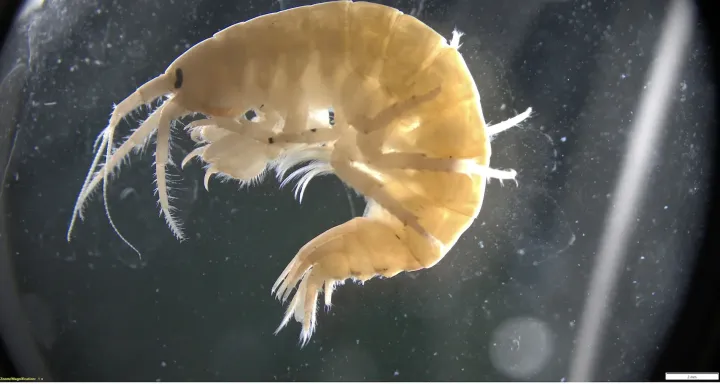
Gammarus fasciatus is a species of freshwater amphipod belonging to the family Gammaridae. Often referred to as a sideswimmer, it resembles a small shrimp with a laterally compressed, curved body and multiple pairs of legs adapted for rapid movement.
Adult specimens typically reach lengths of 10 to 15 mm. Their coloration ranges from translucent grey to greenish-brown, providing excellent camouflage against organic debris and aquatic substrates, making them difficult to detect at first glance.
These crustaceans are highly adaptable to various water conditions. While they play a beneficial role in natural ecosystems as scavengers, they can become a significant nuisance in closed-loop agricultural systems like hydroponics.
Identification is based on specific morphological traits, including the structure of the antennae and the arrangement of segments on the body. Under field conditions, a magnifying glass is often required to distinguish them from other small aquatic invertebrates.
Amphipods are highly mobile and tend to inhabit crevices, dark corners of water tanks, and the root zones of plants. They are sensitive to light and will hide immediately when an inspection light is turned on.
What it damages
In hydroponic and greenhouse environments, Gammarus fasciatus acts as an opportunistic feeder. While they primarily consume detritus, they will aggressively target plant roots, especially fine root hairs and young, tender tissues.
Root damage caused by these crustaceans is often severe. By feeding on the root system, they create wounds that significantly reduce the plant's ability to uptake water and essential nutrients, leading to stunted growth.
The feeding sites often serve as entry points for secondary infections. Pathogenic fungi and bacteria commonly colonize the damaged roots, resulting in systemic root rot that can compromise the entire plant's health.
Visible signs of infestation include wilting of the plants during peak daylight hours, despite optimal moisture levels. In severe cases, the plant may lose turgor pressure and show significant yellowing of the leaves due to nutrient deficiencies.
Beyond root destruction, the presence of these crustaceans causes physical maintenance problems. They can clog filtration systems, interfere with pumps, and obstruct nutrient delivery lines, forcing growers to shut down operations for cleaning.
When it appears
Gammarus fasciatus does not follow a strict seasonal pattern in climate-controlled environments. Because greenhouses and indoor hydroponic setups maintain stable temperatures, these pests can thrive and breed year-round.
The optimal temperature range for their development is between 20°C and 25°C, which perfectly aligns with the temperature requirements for many vegetables and ornamental crops.
The reproductive cycle is continuous. Females carry eggs in a brood pouch, and upon hatching, the juveniles immediately begin feeding. This leads to a rapid increase in population density if not properly managed.
Infestations typically begin when eggs or adult individuals are introduced into the system via untreated water sources or contaminated substrate. Once established, they can persist indefinitely as long as food and moisture are available.
Their activity is restricted to aquatic zones. They cannot survive for long outside of water, so their presence is strictly confined to reservoirs, irrigation lines, and moisture-rich root substrates.
Signs of infestation
The most reliable sign of an infestation is the visual observation of small, shrimp-like organisms swimming or crawling along the walls of the reservoir or within the root mass of the plants.
Damaged roots appear frayed or brown, rather than the healthy white color expected in a standard hydroponic system. Microscopic examination may show characteristic bite marks on the root surface.
Plant distress is a primary indicator. If plants start wilting or yellowing without obvious reasons like nutrient deficiencies or light stress, checking the reservoir for Gammarus presence is highly recommended.
Accumulated debris, including fecal pellets and fragments of dead plant tissue at the bottom of the water tanks, is a clear sign that a population of amphipods is active within the system.
Equipment malfunction is another warning sign. If pumps or drip lines frequently clog with organic material and slime, it is likely that crustaceans are residing within the pipes and contributing to the blockage.
Control measures
Preventative measures are the most effective strategy. Using fine-mesh filters or UV sterilization on water intake lines significantly reduces the risk of introducing Gammarus into the hydroponic system.
Sanitation is critical. Between growing cycles, completely drain, scrub, and disinfect all reservoirs, pumps, and delivery pipes to ensure that no eggs or individuals survive to infect the next crop.
Maintain high levels of system cleanliness by removing dead plant matter and algae buildup. Eliminating the detritus they feed on reduces their ability to sustain a large population and encourages them to vacate or perish.
If an infestation is already present, look for biological or soft chemical treatments safe for your specific crop. Avoid harsh substances that could damage plant roots or the beneficial microbiome of the system.
- Install micron-rated intake water filters.
- Perform rigorous end-of-cycle system disinfection.
- Remove dead roots and debris daily.
- Use UV sterilization for recycled water.
- Cover reservoir openings to prevent accidental entry.
Taxonomy
- Latin name
- Gammarus fasciatus
- Family
- Gammaridae
- EPPO code
- GAMMFA
Discussion
No discussions yet — be the first.