
Carinogammarus
Carinogammarus
Description
How to identify
Carinogammarus belongs to the order Amphipoda and the family Gammaridae. These are small crustaceans that can inhabit waterlogged soils and damp terrestrial environments.
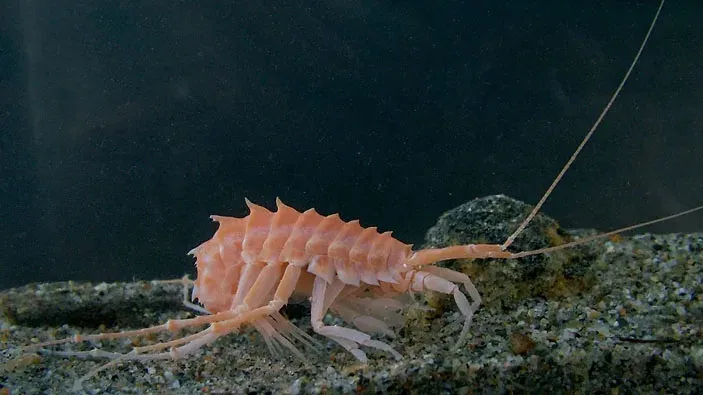
Physically, they resemble miniature shrimp, reaching lengths of up to 10–15 mm, with a body compressed laterally. A key identification feature is the presence of keel-like protrusions on the abdominal segments.
The coloration typically ranges from grayish to brownish, helping them blend into decaying plant material in moist soil.
They move using powerful hind legs, performing distinctive jumps, which makes them highly agile in damp conditions.
The presence of this pest in an agricultural environment often signals poor drainage and excessive moisture saturation.
What it damages
This organism primarily feeds on decaying organic matter but will switch to young shoots and roots of cultivated plants when organic food is scarce.
Carinogammarus causes significant damage to vegetable seedlings planted in open fields with high water tables or poor drainage.
The greatest threat involves damage to the root collar and underground stem parts, which can lead to wilting and death of young plants.
Crops grown in hydroponic systems or greenhouses with inadequate drainage are also at high risk of infestation.
The pest may also gnaw on the epidermis of tender leaves resting on the damp soil, creating characteristic small holes.
When it appears
The activity of Carinogammarus is directly correlated with periods of high humidity and heavy rainfall.
Spring is the most critical period, as snowmelt keeps the soil saturated, creating optimal conditions for population expansion.
In autumn, rainy months trigger a second wave of activity as they prepare for overwintering in moisture-rich soil layers.
In greenhouses, the development cycle can continue throughout the year if substrate moisture is poorly managed.
The temperature range most favorable for their metabolic activity is between 10 and 20 degrees Celsius.
Signs of infestation
The first sign of infestation is observing the specimens themselves in soil samples or under layers of mulch.
Sudden wilting of seedlings without obvious signs of fungal infection on the aerial parts of the plant is a common indicator.
Inspection of the root system reveals superficial gnawing marks typical of the chewing mouthparts of crustaceans.
Damage at the stem base can lead to girdling, eventually killing the plant as nutrient transport is disrupted.
A persistent smell of decay combined with excessively wet soil serves as an indirect indicator of potential pest proliferation.
Control measures
The primary control strategy is to improve field drainage to prevent water stagnation and soil saturation.
Deep cultivation is recommended, as it causes the upper soil layer to dry out, which is lethal to these moisture-dependent crustaceans.
Employing agronomic practices such as raised beds can significantly reduce the risk of infestation by keeping plants away from saturated zones.
In cases of severe infestation, insecticides registered for soil pests may be used, provided all regulatory guidelines are followed.
- Implement proper crop rotation.
- Remove excess plant debris.
- Maintain optimal greenhouse humidity.
Taxonomy
- Latin name
- Carinogammarus
- Family
- Gammaridae
- EPPO code
- CNOGSP
Discussion
No discussions yet — be the first.