
Gammarus lacustris
Gammarus lacustris
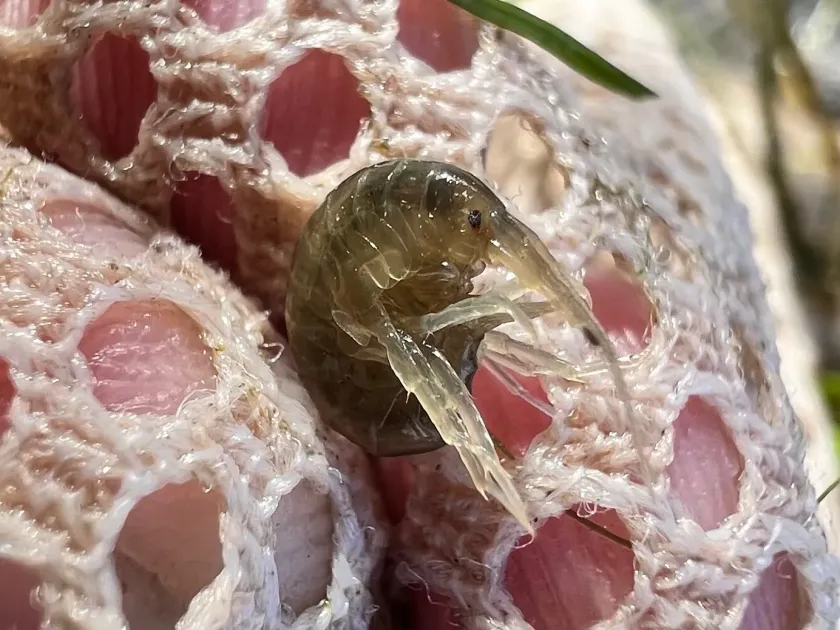
Description
How to identify
Gammarus lacustris is a species of freshwater amphipod within the family Gammaridae, commonly known as a scud or freshwater shrimp.
The organism has a laterally compressed body, typically reaching 15–20 mm in length, and is characterized by a grey-green to brownish coloration.
They possess two pairs of antennae and seven pairs of walking legs, which allow them to move effectively across the bottom of water bodies.
Reproduction occurs throughout the spring and summer, with females carrying eggs in a brood pouch until they are fully developed.
While primarily a detritivore, the species is adaptable and can thrive in various aquatic environments including drainage ditches and irrigation systems.
What it damages
In agricultural settings, especially in flooded field crops like rice, Gammarus lacustris can cause significant damage to young seedlings.
They feed on tender tissues, stems, and root systems, effectively severing parts of the plant and hindering normal growth and development.
Dense populations of these crustaceans can lead to thin crop stands, causing economic loss due to reduced yields and failed germination.
Feeding activities often create entry points for secondary infections, such as bacterial or fungal pathogens, further weakening the crop.
The impact is most severe during the early stages of plant growth when seedlings are highly vulnerable to mechanical damage.
When it appears
The activity of Gammarus lacustris is highly dependent on water temperature, typically beginning as it rises in the early spring.
Peak population densities usually occur in the summer months, correlating with the active growth stage of sensitive aquatic crops.
As water temperatures drop in the autumn, these organisms migrate to deeper areas to hibernate until the following spring season.
Warm, wet spring seasons often accelerate their life cycle, leading to early population spikes that threaten newly planted fields.
Monitoring seasonal patterns is crucial for timing agricultural interventions effectively before the pest numbers reach critical thresholds.
Signs of infestation
Signs of infestation include the presence of fragmented plant matter floating on the water surface near the affected areas.
Patches of sparse seedlings in flooded fields often indicate feeding by these crustaceans on the underground parts of the plants.
Direct inspection of the roots may reveal gnawed tissue or the presence of scuds hiding in the sediment around the crop bases.
Visual confirmation involves using fine-mesh nets to sample the water in areas where crop loss is detected.
Increased turbidity at the base of the plants, caused by the movement and feeding of the crustacean population, can also serve as an indicator.
Control measures
Water management is the most effective control method, involving temporary drainage of fields to eliminate the pest's habitat.
Biological control methods, such as introducing fish species that feed on crustaceans, can help keep population numbers naturally low.
Regular maintenance and cleaning of irrigation channels reduce the available habitat and organic matter necessary for population growth.
Chemical control should be used sparingly and only when necessary, ensuring the chosen pesticides are safe for the surrounding aquatic ecosystem.
A proactive monitoring program allows farmers to assess density levels early, enabling targeted interventions before damage becomes widespread.
Taxonomy
- Latin name
- Gammarus lacustris
- Family
- Gammaridae
- EPPO code
- GAMMLA
Discussion
No discussions yet — be the first.