
Roesel's amphipod
Carinogammarus roeselii
Description
How to identify
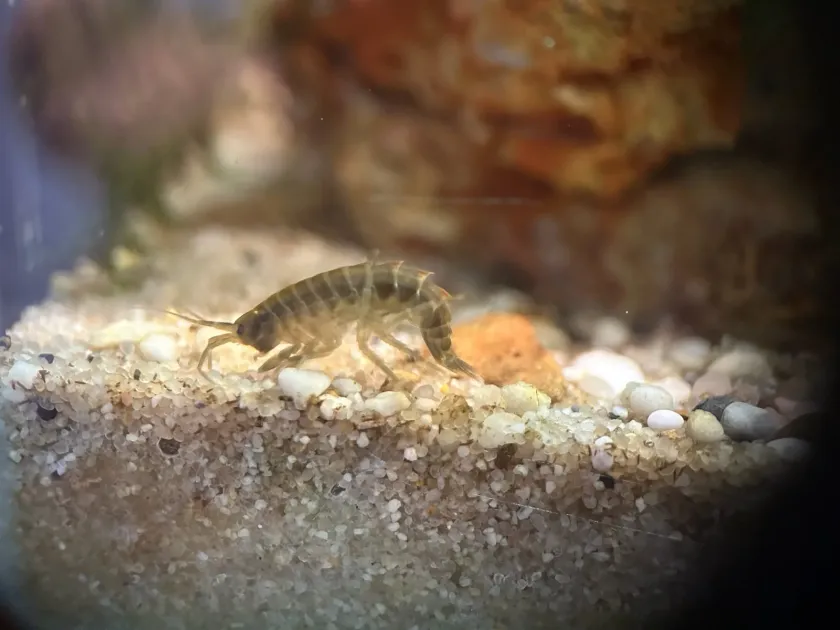
Roesel's amphipod (Carinogammarus roeselii) is a small crustacean of the order Amphipoda, distinguished by its laterally compressed body and a prominent keel on the dorsal segments.
These organisms typically grow to 15–20 mm in length and display a greenish-brown coloration that provides excellent camouflage within aquatic vegetation and bottom sediments.
They move laterally using their thoracic and abdominal appendages, allowing for efficient navigation both in open water and on the substrate of flooded fields.
The species prefers stagnant or slow-moving water bodies, such as flooded rice paddies, where organic matter is abundant and provides a steady food supply.
Reproduction occurs directly in the water, with females carrying developing eggs in a brood pouch, which significantly enhances the survival rate of the offspring.
What it damages
The primary agricultural damage occurs during the germination phase of rice, as these amphipods aggressively feed on delicate sprouts and emerging root systems.
High population densities can lead to the total destruction of young seedlings, necessitating replanting and causing significant economic losses for farmers.
Beyond direct consumption, their activity physically disrupts root growth, making the plants more susceptible to secondary fungal pathogens and soil-borne diseases.
The risk is most acute during the first few weeks after field flooding, when rice tissues are soft, nutrient-rich, and easily accessible to the crustaceans' mandibles.
While mature rice plants are generally more resilient due to tougher, lignified stems, severe early-season root damage can still impact overall plant vigor and yield potential.
When it appears
The peak activity period of Carinogammarus roeselii is closely tied to the flooding of rice fields and the water temperature, typically from late spring to early summer.
Water temperatures between 15°C and 25°C provide the optimal conditions for their metabolic processes, rapid growth, and reproductive cycles.
As water temperatures rise during mid-summer and oxygen levels potentially decrease, the surface activity of these amphipods may decline, though they persist in bottom layers.
Autumn brings a decline in activity, as the crustaceans prepare for winter by burrowing into bottom silts or seeking refuge within dense aquatic vegetation.
The warming of the water in spring acts as a biological trigger for overwintering individuals to emerge and resume their foraging activities in the newly flooded paddies.
Signs of infestation
The most immediate sign of infestation is the sudden appearance of sparse or missing rice seedlings in specific sections of the flooded field.
Upon closer inspection of the soil-water interface, one can often find remnants of seeds that show characteristic mechanical gnawing marks left by the amphipods.
The presence of the pest is confirmed by sampling the water with a standard dip net, which usually yields a high number of these crustaceans in infested areas.
Damage to the roots, which appear trimmed or shredded, is a clear indicator of crustacean activity rather than insect-related or microbiological disease.
Increased turbidity in the water column, caused by the amphipods digging in the sediment for organic debris, is another common visual sign of a high population density.
Control measures
Short-term drainage of the rice paddies is one of the most effective cultural control methods, as it leads to the desiccation and subsequent mortality of the amphipods.
Applying water-compatible insecticides or acaricides can significantly reduce the population, though this must be managed carefully to minimize environmental impact.
Proper field maintenance, including the removal of crop residues and organic waste from previous seasons, reduces the food source available for the pests.
Biological control can be enhanced by introducing fish species that naturally predate on small crustaceans, helping to keep their population growth in check.
Optimizing planting dates to allow for faster germination and early growth helps rice plants bypass the most vulnerable phase of their development more successfully.
Taxonomy
- Latin name
- Carinogammarus roeselii
- Family
- Gammaridae
- EPPO code
- CNOGRO
Discussion
No discussions yet — be the first.