
Furcula
Furcula
Description
How to identify
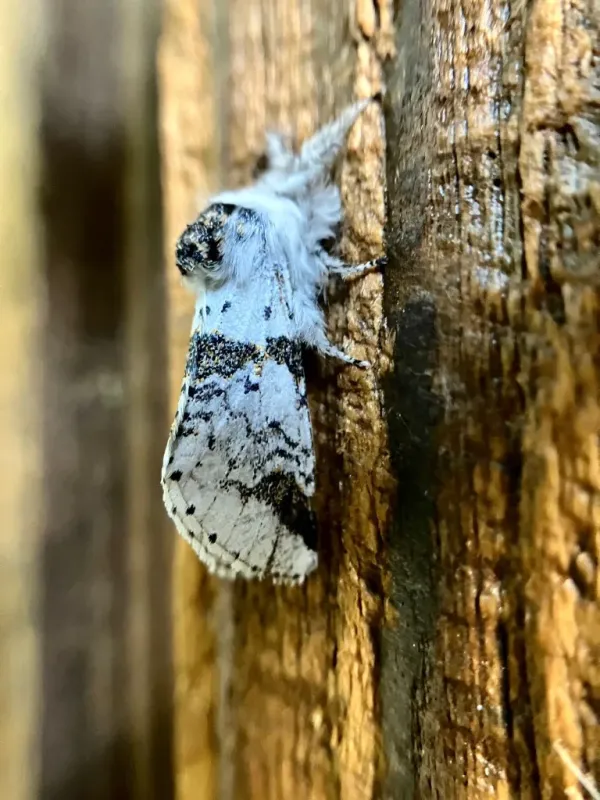
The Furcula, often known as the puss moth or related species, belongs to the Notodontidae family. These moths are nocturnal and possess a remarkable ability to camouflage themselves against tree bark.
Adult moths typically have greyish or whitish wings with dark patterns that mimic the texture and coloration of bark, helping them blend in perfectly during the daylight hours.
The caterpillars are highly distinctive, featuring two long, flexible tails at the end of their abdomen. When threatened, they can extend bright red threads from these tails to deter predators.
The larvae are usually brightly colored, often with a saddle-like mark on their back, which makes them stand out despite the moth's overall strategy of blending into the environment.
As members of the order Lepidoptera, they undergo complete metamorphosis, progressing through egg, larval, pupal, and adult stages to complete their biological cycle.
What it damages
Furcula caterpillars primarily feed on plants from the Salicaceae family, specifically poplars, aspens, and willows, which are their preferred host trees in both forests and gardens.
The larvae consume the leaf tissue, often starting from the edges and progressing to skeletonizing the leaves, which significantly reduces the tree's photosynthetic capacity.
Severe infestations can lead to the defoliation of young trees, causing stunted growth, increased susceptibility to secondary pests, and potential decline of the plant's health.
In urban settings or plantations, mass outbreaks of these caterpillars can lead to aesthetic damage to trees used for landscaping, ruining the appearance of the canopy.
Although the damage is rarely lethal to a fully mature, healthy tree, repeated defoliation over several seasons can weaken the tree, making it vulnerable to pathogens.
When it appears
The adult moths typically emerge in late spring or early summer, usually around May or June, to mate and lay their eggs on the leaves of host trees.
Larval activity reaches its peak during the mid-summer months, specifically July and August, as the caterpillars consume vast amounts of foliage to support their growth.
Pupation generally occurs in late summer or early autumn, with the caterpillars constructing hard, camouflaged cocoons on the bark of trees to survive the upcoming winter.
The winter is passed in the pupal stage, encased within the cocoon, waiting for the warmer temperatures of the following spring to resume the life cycle.
In regions with longer growing seasons, it is possible for the species to complete two generations, leading to prolonged feeding periods that extend into the autumn.
Signs of infestation
The primary sign of an infestation is the presence of eaten foliage, where leaves appear skeletonized or have ragged edges, indicating that larvae have been grazing on them.
You may also observe the unique caterpillars themselves on the leaves, especially if you inspect the branches in the late afternoon or early morning when they are active.
Droppings (frass) on the ground or on the leaves underneath the canopy are a clear indication of a caterpillar population living and feeding in the tree above.
In the autumn, look for hard, bark-colored cocoons attached to the trunk of the tree, which are often overlooked due to their exceptional camouflage.
- Ragged or skeletonized leaves on poplar or willow trees.
- Presence of caterpillars with distinctive dual tails.
- Camouflaged cocoons found on tree trunks.
Control measures
For small-scale infestations on young or ornamental trees, manual removal of the caterpillars is an effective and environmentally friendly method of control.
If the population is large, applying biological insecticides based on Bacillus thuringiensis is a safe way to manage the larvae without harming beneficial insects.
In more severe cases, conventional systemic or contact insecticides may be necessary; however, they should be used carefully to minimize impact on non-target species.
Regular maintenance, such as clearing debris and removing loose, old bark from tree trunks in early spring, can help eliminate pupation sites and reduce future populations.
Encouraging natural predators like birds and parasitic wasps is a sustainable approach to maintaining a balance and preventing large-scale outbreaks in the landscape.
Taxonomy
- Latin name
- Furcula
- Order
- Lepidoptera (butterflies)
- Family
- Notodontidae
- EPPO code
- FRCLSP
Discussion
No discussions yet — be the first.