
Exelastis plume moth
Exelastis
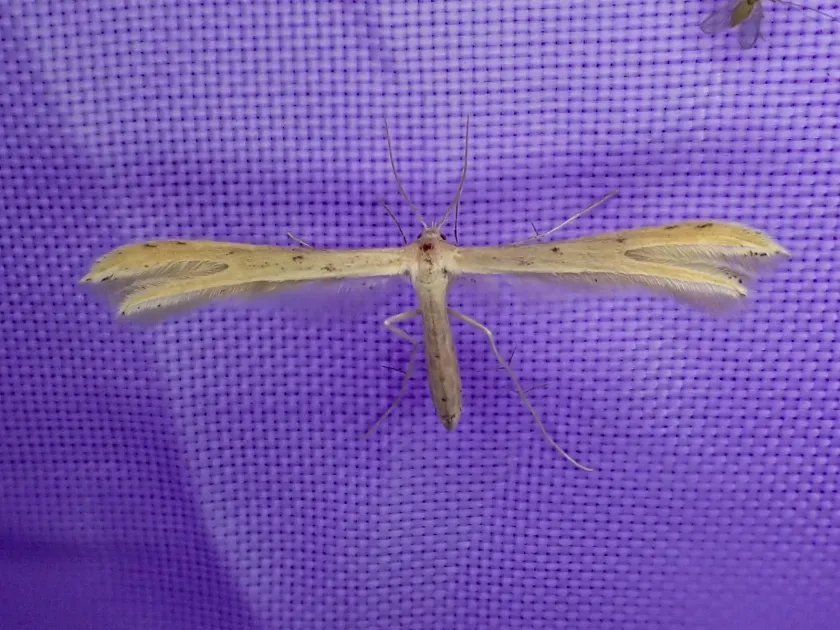
Description
How to identify
The Exelastis plume moth belongs to the family Pterophoridae, order Lepidoptera. These insects are distinguished by their unique wing structure, consisting of narrow, feather-like lobes that give them a distinctive appearance.
Adult moths have slender bodies and long legs, often held straight out when at rest. When the wings are spread, they form a characteristic "T" shape, which is a key diagnostic feature for this family.
The coloration of adults typically ranges from grayish-brown to ochre, providing excellent camouflage on stems and leaves. Larvae are spindle-shaped and sparsely covered with fine hairs.
The life cycle follows a complete metamorphosis: egg, larva (caterpillar), pupa, and adult. Females lay eggs directly on the plant's vegetative parts or flower buds to ensure immediate food access for emerging larvae.
Precise species identification within the Exelastis genus often requires microscopic examination of genitalia, as many species share similar external morphological traits.
What it damages
Damage is primarily caused by Exelastis larvae, which feed on both reproductive and vegetative plant parts. Legume crops, particularly species of Vigna and Cajanus, are significantly impacted.
Caterpillars feed on flower buds, blooms, and developing pods by hollowing out the interior. This behavior leads to massive flower and pod drop, severely reducing total crop yield.
In cases of high infestation, larvae may skeletonize leaves or bore into young shoots, causing deformation and subsequent necrosis of the plant tissue.
Larval feeding creates entry points for secondary infections, including fungal and bacterial diseases, which further degrade harvest quality and storage potential.
The economic impact of the pest is driven by its ability to multiply rapidly under favorable conditions, necessitating proactive field monitoring during flowering and pod-setting stages.
Signs of infestation
A primary sign of infestation is the presence of frass (small granular excrement) on leaves beneath damaged buds or within webbed flower clusters.
Infected flowers often show signs of premature wilting and drying. Opening a damaged bud typically reveals the caterpillar or distinct feeding tunnels inside.
Deformation of young pods, characterized by curvature or dark spots at larval entry points, serves as evidence of pest activity during late developmental stages.
The presence of adult moths during twilight or when disturbing the foliage indicates the onset of the egg-laying period, signalling a need for protective measures.
Unexplained shedding of buds and pods, combined with the presence of small larvae inside, provides the most reliable indicator of plume moth activity in the field.
Control measures
Cultural control methods include crop rotation and the thorough removal or destruction of crop residues after harvest, which may harbor overwintering pupae.
The use of pheromone traps is an effective tool for monitoring adult population dynamics, helping growers make informed decisions regarding the timing of interventions.
Biological control involves the use of natural enemies, particularly parasitic wasps, which can significantly suppress larval populations of Exelastis in the field.
Chemical control should target early larval instars before they bore into protected plant tissues such as buds or closed pods.
Systemic insecticides are generally the most effective, as they are translocated within plant tissues to target caterpillars living in concealed environments.
Taxonomy
- Latin name
- Exelastis
- Order
- Lepidoptera (butterflies)
- Family
- Pterophoridae
- EPPO code
- EXELSP
Discussion
No discussions yet — be the first.