
Elm prominent
Exaereta ulmi
Description
How to identify
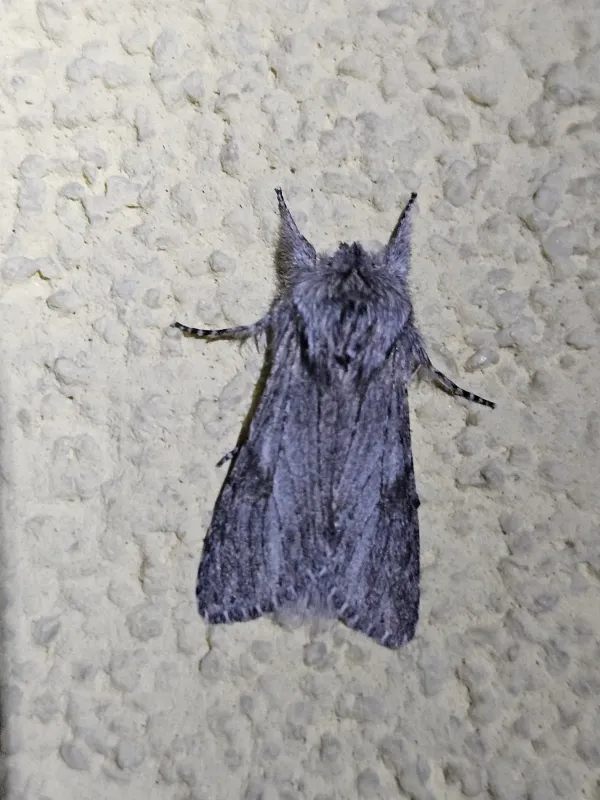
The Elm prominent (Exaereta ulmi) is a moth species belonging to the family Notodontidae. Adult moths possess a wingspan ranging from 45 to 50 mm, with cryptic greyish-brown coloration that mimics tree bark.
The caterpillars can reach lengths of up to 50 mm. They exhibit a distinct greenish or yellowish-grey body with longitudinal stripes, which provide effective camouflage on host leaves.
A morphological hallmark of the larvae is a characteristic hump on the eleventh abdominal segment, common to many species within the Notodontidae family.
The pupae are dark brown, compact, and highly resilient, allowing the insect to survive the winter successfully within the soil or leaf litter.
Adult moths are nocturnal and rarely seen during the day, as they rest motionless on tree trunks, perfectly blending in with their surroundings.
What it damages
The primary host plants for this pest are members of the Ulmaceae family, particularly smooth elm (Ulmus laevis) and wych elm (Ulmus glabra).
In cases of high population density, the larvae may expand their diet to include other deciduous trees like linden or even some fruit species, though elm remains the preferred host.
The damage is caused by the voracious feeding of caterpillars on foliage, which can lead to severe defoliation during the peak growth season.
Extensive defoliation significantly impairs the tree's photosynthetic capacity, leading to reduced annual growth and overall physiological stress.
Trees weakened by recurrent infestations become highly susceptible to secondary attacks from wood-boring beetles and various fungal pathogens.
When it appears
The life cycle typically consists of one generation per year, with adult moths emerging in late spring, usually between May and June.
After mating, females deposit eggs in batches on the underside of host tree leaves, ensuring protection from predators and environmental factors.
Larval development occurs throughout the summer months, with the most intensive feeding observed from July to August as they prepare for pupation.
By late summer, the fully grown caterpillars descend from the canopy to the ground to pupate in the soil or leaf litter.
The species overwinters exclusively in the pupal stage, successfully surviving freezing temperatures protected within the upper layers of the substrate.
Signs of infestation
The first indicator of an infestation is the presence of skeletonized leaves, which soon progress to complete consumption of the leaf blades by larger caterpillars.
Large quantities of larval frass (droppings) accumulate at the base of infested trees, serving as a clear warning sign of a significant colony in the canopy.
Sparse, thin crowns in mid-summer, characterized by the loss of most foliage, are the most prominent visual symptom of an Elm prominent outbreak.
In severe infestations, the sound of falling frass or chewing larvae may even be audible in quiet, windless conditions under the canopy.
Regular inspection of the foliage during the summer months is crucial to detect caterpillars in their earlier, more vulnerable stages of development.
Control measures
Biological control using Bacillus thuringiensis-based products is highly effective for targeting young larvae while minimizing impact on beneficial insects.
In large-scale forest or parkland management, systemic or contact insecticides are applied during the peak emergence of larvae to protect the foliage.
Cultural practices, such as removing leaf litter and lightly cultivating the soil under the tree canopy in autumn, can destroy overwintering pupae.
Encouraging natural bird populations and other insectivorous predators by providing habitats helps maintain the pest population at a non-damaging level.
Proactive monitoring and the maintenance of diverse forest stands are essential for long-term management and prevention of widespread outbreaks.
Taxonomy
- Latin name
- Exaereta ulmi
- Order
- Lepidoptera (butterflies)
- Family
- Notodontidae
- EPPO code
- EXAEUL
Discussion
No discussions yet — be the first.