
Satellite sphinx moth
Eumorpha satellitia
Description
How to identify
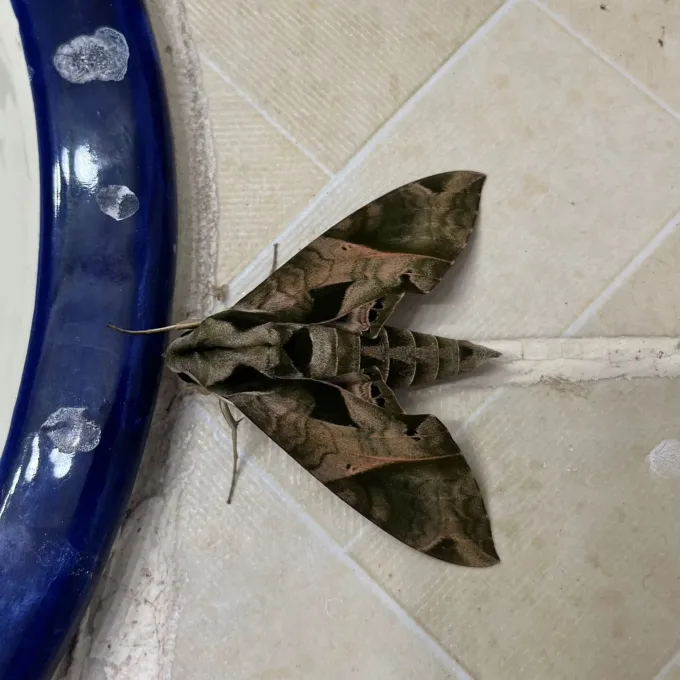
The satellite sphinx moth (lat. Eumorpha satellitia) belongs to the family Sphingidae, known for their powerful flight and streamlined bodies.
Adult moths possess forewings with specific patterns and spots, which aid in camouflage against bark and plant debris during their daytime resting period.
The larvae, or caterpillars, are large and striking, typically featuring a distinctive horn at the rear end, which is a signature characteristic of sphinx moths.
The life cycle encompasses a complete metamorphosis, starting from an egg laid on the host plant to the pupation stage, which typically occurs in the soil.
These insects are primarily nocturnal, making them elusive, although they are frequently observed in vineyards and orchards during the summer months.
What it damages
The caterpillars are voracious feeders that consume significant amounts of foliage, which can lead to rapid defoliation of host plants.
The primary hosts include plants from the Vitaceae family, making this insect a potential threat to commercial and backyard vineyards.
Extensive leaf damage impairs the plant's ability to photosynthesize, resulting in weakened vines and reduced nutrient storage for the following season.
Severe infestations can lead to a significant decline in grape production, impacting both the yield and the overall health of the vineyard plantation.
Beyond vineyards, these larvae may feed on various shrubs and wild host plants, allowing the pest to maintain its population density in the surrounding environment.
Signs of infestation
Visible signs of infestation include jagged leaf margins and skeletonized foliage, where only the main veins remain after the caterpillar has fed.
The presence of large, pellet-like droppings beneath the foliage serves as a reliable indicator that the caterpillars are active in the canopy.
During the day, caterpillars may be found resting along the stems or on the underside of leaves, often blending in with the plant structure.
Sudden thinning of the leaf canopy on specific vines can highlight localized activity, even before the caterpillars have completely defoliated a branch.
In cases of high infestation, you might notice secondary infections or dieback on the damaged branches, as the plant becomes more vulnerable to stress.
Control measures
Hand-picking caterpillars during the early morning or evening hours is an effective and environmentally friendly control strategy for small-scale plantings.
Tilling the soil around the base of host plants in late autumn can help expose and destroy pupae, significantly reducing the population for the next year.
Biological control agents, such as formulations containing beneficial bacteria, are highly effective against larval stages while remaining safe for predators.
Chemical insecticides should be reserved for severe outbreaks, ensuring they are applied according to safety guidelines to protect non-target beneficial insects.
- Regular monitoring of the foliage.
- Encouraging natural bird populations in the vineyard.
- Keeping the area clear of excessive weeds and host plants.
Taxonomy
- Latin name
- Eumorpha satellitia
- Order
- Lepidoptera (butterflies)
- Family
- Sphingidae
- EPPO code
- POLUSA
Discussion
No discussions yet — be the first.