
Achemon sphinx
Eumorpha achemon
Description
How to identify
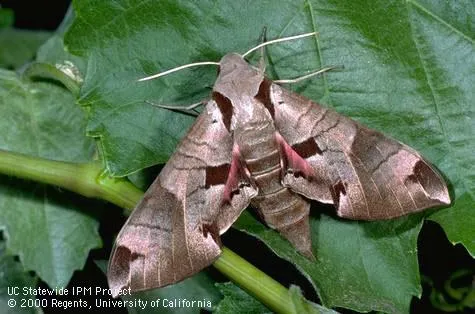
The Achemon sphinx (Eumorpha achemon) is a large moth belonging to the Sphingidae family, with a wingspan reaching up to 10 centimeters. Adults are characterized by brownish-gray forewings with dark patches and bright pink hindwings with black spots.
The larvae progress through several instars. Young caterpillars are typically light green, while mature ones turn reddish-brown or burgundy with distinctive white lateral spots.
A key morphological feature of the mature larva is the absence of the typical caudal horn found in other sphingids; instead, it possesses a dark, flat disc or shield on the anal segment.
Pupation occurs in the soil at depths of 10 to 15 centimeters. The species typically overwinters in the pupal stage, emerging as adults in late spring or early summer depending on regional temperatures.
The moths are nocturnal and crepuscular, active primarily during dusk and night hours, which makes them difficult to observe during standard daytime inspections.
What it damages
The primary hosts for Achemon sphinx larvae are plants in the Vitaceae family, most notably cultivated grapevines and Virginia creeper, which is often used in landscaping.
The larvae are voracious feeders. In the early stages, they consume the leaf tissue between the veins, while later instars can consume entire leaves, leaving only the main stems behind.
Significant defoliation reduces the plant's ability to photosynthesize, which can negatively impact fruit yield and sugar accumulation in grapes during the critical ripening period.
While damage is usually localized, large outbreaks can severely stress the vine, potentially reducing its overall vigor and overwintering capacity.
In ornamental settings, heavy feeding can destroy the aesthetic value of vines used for decorative coverings on fences and building facades.
Signs of infestation
The most prominent sign of an infestation is the rapid disappearance of leaf blades, often resulting in skeletonized foliage where only large veins remain intact.
The presence of large, pellet-shaped frass (excrement) on the ground or on the leaves underneath the canopy is a definitive indicator of caterpillar activity.
Careful inspection of the undersides of leaves can reveal small, oval, light-green eggs, indicating that the moth has laid eggs and a new generation is developing.
Stunted growth of new shoots and premature yellowing of the leaves in the absence of disease may also signal an active infestation by larvae.
Spotting adult moths near outdoor lights at night indicates the presence of the population and suggests that egg-laying is likely occurring in the vicinity.
Control measures
Early monitoring is essential. Regularly checking the vines, especially the undersides of the leaves near the base of the plant, can help identify and remove larvae before they cause extensive damage.
Hand-picking remains the safest and most effective method for controlling the population in small home gardens or organic vineyards.
Biological control using Bacillus thuringiensis (Bt) is highly effective against young larvae and provides an environmentally friendly alternative to traditional pesticides.
If chemical intervention becomes necessary due to high pest pressure, choose products labeled for vineyard use and strictly follow the pre-harvest interval guidelines.
- Cultivating the soil beneath vines in the late autumn to disrupt pupae and expose them to natural predators.
- Maintaining a clean vineyard floor to discourage moths from laying eggs near the host plants.
- Installing light traps to capture adults and monitor population trends throughout the season.
Taxonomy
- Latin name
- Eumorpha achemon
- Order
- Lepidoptera (butterflies)
- Family
- Sphingidae
- EPPO code
- POLUAC
Discussion
No discussions yet — be the first.