
Eufriesia
Eufriesia
Description
How to identify
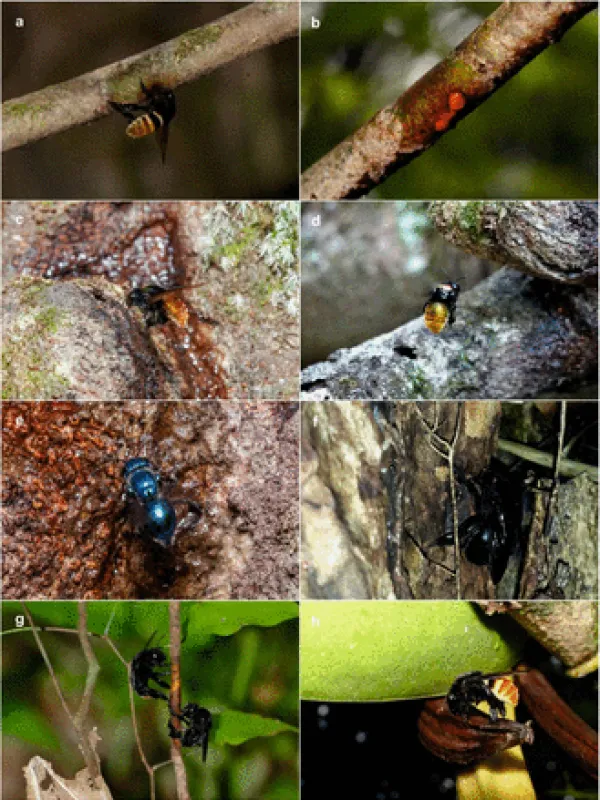
Eufriesia is a genus of orchid bees in the family Apidae. They are known for their vibrant metallic colors, typically shimmering in shades of green, blue, and gold.
These bees are easily identified by their robust bodies and specialized hind legs in males, which are adapted for collecting aromatic substances from flowers.
They are widely recognized by entomologists for their unique behavior of collecting floral scents, which they store in pouches on their hind legs to attract mates.
In an agricultural context, they are strictly beneficial insects, acting as effective pollinators for a wide variety of plants within their natural habitats.
They are distinct from honey bees or bumblebees and are typically found in tropical and subtropical regions of the Americas.
What it damages
Eufriesia species are not agricultural pests. They do not feed on leaves, stems, fruits, or roots, and they do not cause any physical damage to crops.
Their presence in an orchard or field is generally beneficial, as they contribute significantly to the pollination of flowering plants, leading to increased fruit sets.
There are no known reports of Eufriesia acting as vectors for plant diseases or causing stress to plants, as their interaction with flora is limited to nectar and pollen foraging.
Gardeners and farmers should distinguish these bees from true pests that chew leaves or suck sap, as no action is required to control or eliminate them.
Their role in the ecosystem is that of a specialized pollinator, making them a valuable asset to both natural and managed landscapes.
When it appears
The seasonal activity of Eufriesia is largely dictated by the flowering cycles of the specific plants they visit and local climate conditions.
In tropical environments, they can be active throughout most of the year, provided there is a constant supply of floral resources for their nutritional needs.
Their life cycle involves the development of larvae within constructed nests, often located in cavities such as hollow logs or crevices in wood.
Adult bees are most active during the warmest parts of the day when they forage for nectar and the essential aromatic compounds required for their courtship rituals.
Seasonal fluctuations in population size are usually linked to the availability of orchids and other specific plants that provide the scents the males require.
Signs of infestation
The primary sign of Eufriesia presence is the sighting of large, metallic-colored bees flying between flowers. They are often seen buzzing around blooming plants.
There are no signs of damage on the plants, such as skeletonized leaves, sap drainage, or wilting, which are common indicators of actual pest infestations.
The presence of these bees is often signaled by their loud, characteristic buzzing, which is a normal aspect of their flight activity.
No special monitoring is required for this genus in agricultural settings, as they do not threaten crop integrity or yield.
If they are observed in a garden, it is an indicator of a healthy, biodiverse environment that supports native pollinator populations.
Control measures
There is no need for control measures against Eufriesia, as they are not pests. They are ecologically important pollinators that deserve protection.
The use of broad-spectrum insecticides should be avoided, as it would cause unnecessary harm to these beneficial insects and negatively impact the pollination of the crops.
Farmers are encouraged to maintain areas of native vegetation to support the local pollinator population, including orchid bees, to ensure the health of the ecosystem.
Educational awareness is the best way to handle concerns about these bees, helping growers understand the difference between pests and valuable wild bees.
- Avoid the use of harmful pesticides in flowering zones.
- Preserve natural nesting habitats like old wood and trees.
- Promote biodiversity to support pollinator populations.
- Educate field workers on the benefits of orchid bees.
- Focus on sustainable farming practices.
Taxonomy
- Latin name
- Eufriesia
- Order
- Hymenoptera
- Family
- Apidae
- EPPO code
- EUFRSP
Discussion
No discussions yet — be the first.