
Eucera bee
Eucera
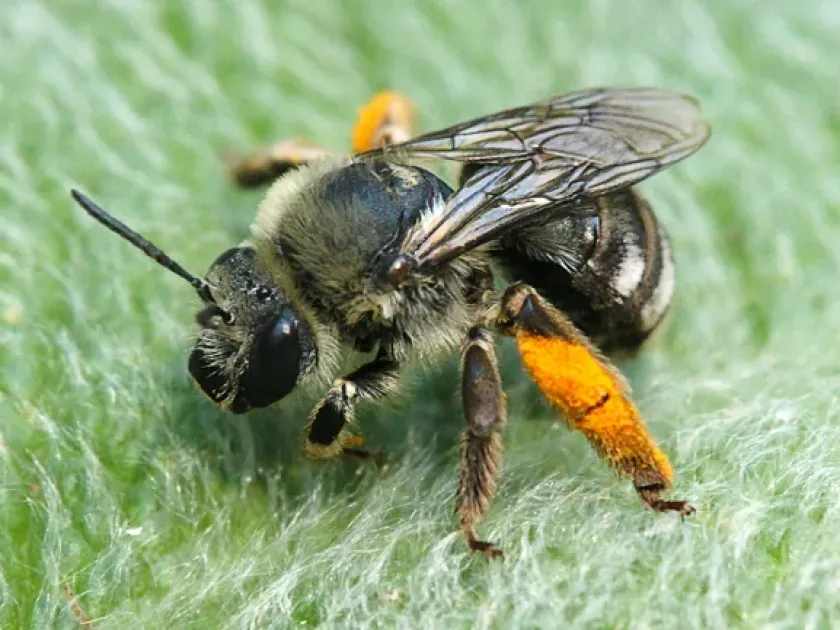
Description
How to identify
The Eucera genus belongs to the Apidae family, representing a group of solitary ground-nesting bees known for their role in natural pollination.
The most distinctive feature of Eucera males is their exceptionally long antennae, which are often much longer than their own body, making them easy to recognize.
These bees are covered in dense hairs, giving them a fuzzy appearance that allows them to efficiently collect and transport pollen from flowers to their nests.
Unlike honey bees, they do not live in colonies; each female is entirely responsible for constructing and provisioning her own nest in the soil.
Their size typically ranges from 10 to 18 millimeters, and they are usually seen flying during warm, sunny spring days when flowers are in full bloom.
What it damages
Eucera bees are not agricultural pests; in fact, they are highly valued allies in increasing crop yields through efficient cross-pollination.
They specialize in pollinating leguminous plants such as alfalfa, clover, and vetch, which are vital for seed production in many farming operations.
There is no evidence of these bees causing damage to crops. They do not feed on plant tissues, nor do they carry diseases that impact the health of vegetation.
Any concerns regarding their ground-nesting habits are unfounded in a productive agricultural context, as the minor soil disturbance is negligible.
Protecting Eucera populations is considered a best practice in sustainable agriculture, as they provide free and effective pollination services to the farm.
When it appears
The life cycle of Eucera is strictly synchronized with the flowering period of their host plants, typically occurring in late spring and early summer.
Males emerge from the soil first, patrol the area in search of females, and focus their daily activity on gathering nectar for energy.
Following the mating season, females dedicate their time to digging tunnels and provisioning brood cells with a mixture of pollen and nectar.
The developmental phases, including egg, larval, and pupal stages, occur underground within these protected cells throughout the warmer months.
These bees have one generation per year, meaning their presence above ground is short-lived but highly impactful for the pollination of early-season crops.
Signs of infestation
Presence of Eucera can be identified by spotting small, circular holes in bare or sparsely vegetated soil, often located in sunny, undisturbed areas.
You may observe males flying low and rapidly over the ground or resting on the tops of flower stalks while waiting for potential mates.
During peak hours of the day, these bees can be seen actively visiting the flowers of leguminous crops, making them a common sight on healthy fields.
The absence of plant damage or wilting in areas with high bee activity confirms that these insects are not harmful to the crop or the soil structure.
A high density of Eucera nests is a reliable bioindicator of a healthy ecosystem and low pesticide impact on the surrounding landscape.
Control measures
There is no need for control measures against Eucera, as they are beneficial pollinators that contribute significantly to the economic success of farming.
The main priority for farmers should be the conservation of these insects by reducing the use of harmful chemical pesticides during peak bloom.
If pesticide applications are necessary, they should be performed late in the evening when the bees have returned to their nests and are not active.
Maintaining small, unsprayed, and untilled margins around agricultural fields provides the necessary habitat for Eucera to nest and flourish.
- Avoid insecticide application during crop flowering stages
- Create wildflower strips to support pollinator biodiversity
- Minimize deep soil tillage in known nesting zones
Taxonomy
- Latin name
- Eucera
- Order
- Hymenoptera
- Family
- Apidae
- EPPO code
- EUCRSP
Discussion
No discussions yet — be the first.