
Eublaberus distanti cockroach
Eublaberus distanti
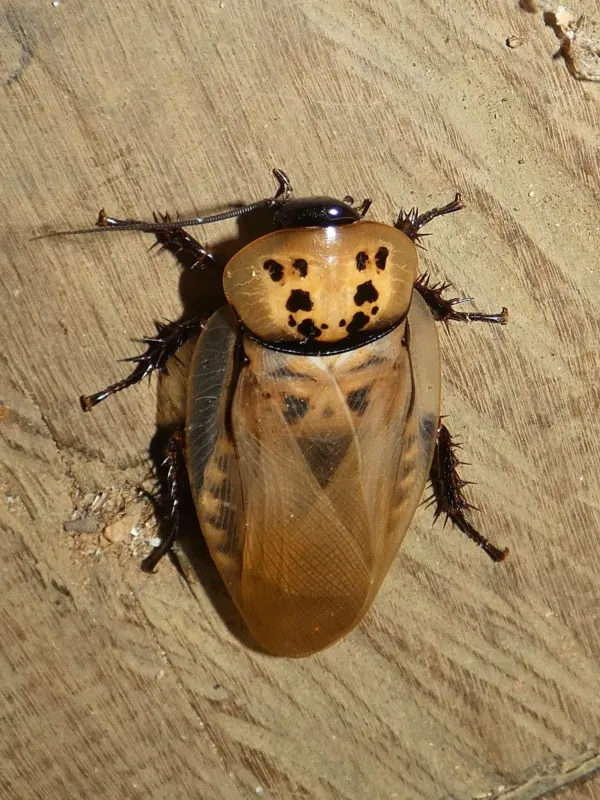
Description
How to identify
The Eublaberus distanti cockroach belongs to the family Blaberidae. These large insects have adapted to thriving in human-made structures, including greenhouses and nurseries.
Adult insects have a flattened, oval-shaped body, allowing them to squeeze into narrow cracks, crevices, and deep within the potting soil or organic substrates used for crop cultivation.
The coloration of Eublaberus distanti is typically dark brown or black, often featuring specific markings on the pronotum that distinguish them from other common synanthropic cockroaches.
These insects are nocturnal and thrive in warm, humid environments, making greenhouse conditions highly suitable for their development and rapid population growth.
The lifecycle consists of stages where the female carries the ootheca internally, which protects the nymphs until they emerge, giving them a survival advantage in indoor ecosystems.
What it damages
Eublaberus distanti acts as a generalist feeder that can cause significant damage to young vegetable and ornamental crops grown in greenhouses.
The insects feed on succulent plant tissues, including roots, stems, and seedlings, often severing the plants at the base, leading to complete plant mortality.
In addition to physical feeding damage, these cockroaches are vectors for pathogens that cause secondary fungal and bacterial rot in crop roots and stems.
When present in large numbers, they cause serious losses to seed banks and nursery transplants, leading to uneven stands and stunted growth that reduces overall crop quality.
The presence of their excrement and shedding residues can further contaminate greenhouse surfaces, creating unsanitary conditions that attract other secondary pests or diseases.
Control measures
Management of Eublaberus distanti requires an integrated approach focusing on sanitation and the targeted application of control agents to minimize infestation levels.
Rigorous sanitation practices, such as removing old plant debris and organic waste, are essential to deprive the cockroaches of the food sources they rely on for survival.
The use of insecticide-baited traps placed near hiding spots is highly effective for reducing adult and nymph populations without contaminating the growing crops.
Monitoring for signs of activity during nocturnal hours allows for precise application of localized treatments, preventing the need for broad-spectrum chemical sprays.
Maintaining proper substrate management and controlling excessive humidity in the greenhouse environment can suppress the reproduction rates of these pests effectively.
Taxonomy
- Latin name
- Eublaberus distanti
- Family
- Blaberidae
- EPPO code
- EUBLDI
Discussion
No discussions yet — be the first.