
Banana leaf folder
Erionota torus
Description
How to identify
The banana leaf folder (Erionota torus) is a member of the Hesperiidae family of butterflies. The adult is a stout-bodied butterfly with a wingspan of approximately 70–80 mm, characterized by dark brown wings with prominent yellow spots.
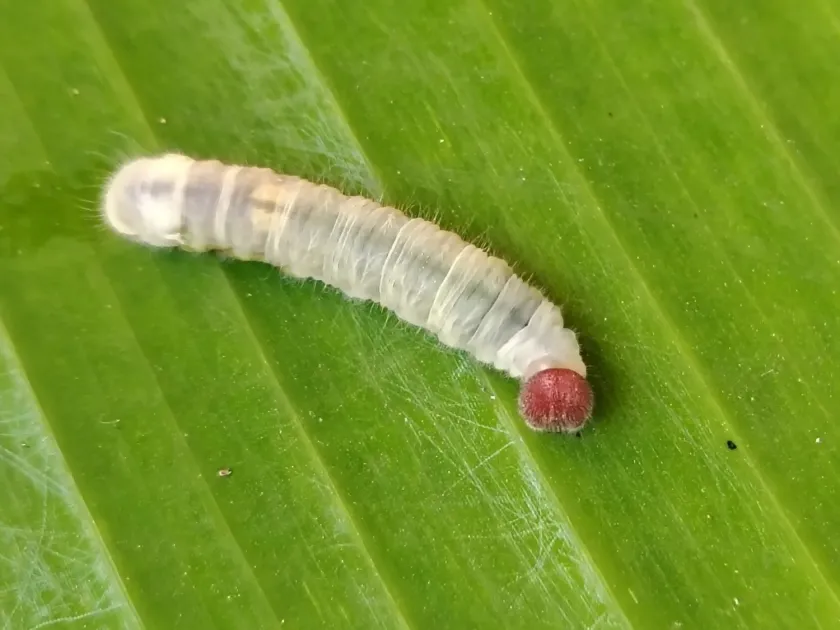
Life history stages include eggs, larvae, pupae, and adults. Eggs are usually laid singly on the leaf surface, which hatch into caterpillars that eventually develop into distinct, wax-covered larvae.
The larvae progress through several instars. Mature caterpillars can reach 60 mm in length and possess a pale green body with a white waxy secretion and a distinctive, prominent black head capsule.
Pupation occurs within a rolled-up leaf shelter. The pupa is protected by a thick, white, waxy cocoon, providing an effective barrier against predators and adverse environmental conditions like rainfall or heat.
The species is highly mobile in the adult stage. The butterflies are capable of flying significant distances, allowing them to colonize new banana plantations and propagate rapidly under favorable tropical conditions.
What it damages
The primary host plants for Erionota torus are members of the Musaceae family, particularly cultivated varieties of bananas. It can also affect certain wild and ornamental banana species.
Damage is caused exclusively by the larval stage. Caterpillars feed on the leaf tissue, starting from the edges and progressing inwards, which creates large, ragged holes and consumes the leaf lamina.
The larvae build unique shelters by folding and tying leaf margins together with silk. This protective habit significantly hinders the leaf's photosynthetic ability and promotes premature leaf senescence.
Severe infestations result in extensive leaf tissue loss, which directly correlates to reduced fruit bunch weight and overall yield reduction. In heavy pressure scenarios, the entire foliage may be decimated.
Young banana suckers are particularly vulnerable. Heavy feeding activity on young plants can cause severe stunting and may even lead to the death of the plant if left unchecked.
Signs of infestation
The most diagnostic sign of an infestation is the presence of rolled leaf tubes. Unfolding these structures will typically reveal a larva or signs of its presence, such as fecal pellets inside the fold.
Noticeable leaf margin damage, starting with irregular notches and progressing to large areas of missing tissue, indicates the presence of actively feeding larvae within the canopy.
The presence of white, waxy, powdery deposits on the leaves or inside the rolled sections is a key characteristic of Erionota torus activity, helping distinguish it from other leaf-feeding pests.
The presence of the adult butterflies around the plantation during the early morning or evening hours provides an early warning of potential future egg-laying activities.
Yellowing and subsequent browning of the leaves are secondary signs that become visible as the infestation progresses and the foliage fails to sustain its physiological functions.
Control measures
Manual removal of infested, rolled leaves is the most effective control method for small-scale plantations or early-stage infestations, as it directly eliminates the larvae and pupae.
Biological control agents, including various species of parasitic wasps (Hymenoptera), are known to suppress the population of the banana leaf folder naturally in many growing regions.
In cases of high pest pressure, the application of chemical insecticides may be necessary. Products targeting caterpillars, such as certain pyrethroids or biological insecticides, should be used with precision.
Cultural management, such as maintaining proper spacing between banana plants and ensuring the removal of heavily infested older leaves, helps reduce the population density and improve airflow.
Integrated Pest Management (IPM) strategies, which combine regular monitoring, biological control, and targeted interventions, are recommended for long-term control of this pest in commercial operations.
Taxonomy
- Latin name
- Erionota torus
- Order
- Lepidoptera (butterflies)
- Family
- Hesperiidae
- EPPO code
- ERNTTO
Discussion
No discussions yet — be the first.