
Banana leaf roller
Erionota thrax
Description
How to identify
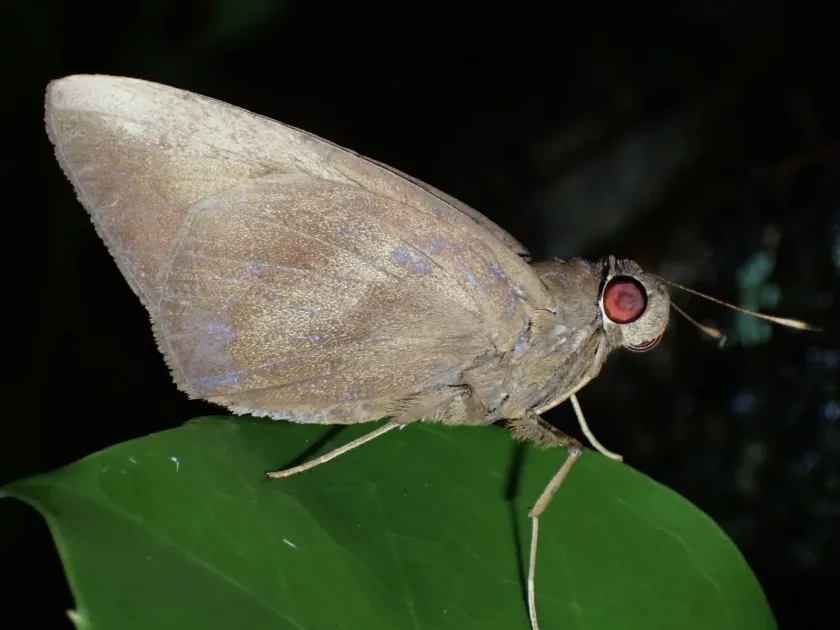
The Banana leaf roller (Erionota thrax) is a member of the Hesperiidae family within the Lepidoptera order. The adult butterfly is characterized by a dark chocolate-brown color and a wingspan reaching 70–80 mm.
A key visual identifier is the presence of three distinct yellow spots on the forewings of the adult. The body is robust, which is a common trait for species within this insect family.
The larvae progress through several instars, shifting from pale yellow to green with a waxy coating. The head of the caterpillar exhibits noticeable dark markings, which are useful for early identification.
Female butterflies lay eggs individually or in small clusters on the leaves of the host plant. The life cycle length varies depending on temperature and humidity, but it is continuous in tropical zones.
Being a highly adaptive species, the Banana leaf roller can complete multiple generations in a single year, making it a persistent threat in suitable climatic conditions.
What it damages
The primary hosts for this pest are members of the Musaceae family, specifically the cultivated banana. It poses a significant economic threat to plantations globally.
Beyond bananas, the larvae are known to feed on various species of palms, including coconuts. Their polyphagous nature makes them a major concern for diversified tropical farming operations.
The pest has expanded its range significantly due to the international trade of plant material. Strict adherence to phytosanitary protocols is essential to prevent its introduction into new regions.
The larvae possess strong chewing mouthparts and consume large sections of the leaf surface. This loss of photosynthetic area severely impacts the vigor of the plant and the quality of the banana fruit.
Heavy infestations lead to widespread defoliation, which causes physiological stress in the banana plant and can result in significant yield losses in commercial production.
Signs of infestation
The most diagnostic sign of infestation is the formation of leaf rolls. The caterpillar secures the edges of the leaf with silk threads, creating a protective tunnel or roll to hide during the day.
At night, the larvae emerge from these shelters to consume the surrounding leaf tissue. This results in ragged, shredded edges on the banana leaves, which is a clear indicator of their activity.
Scouting for these rolled leaves is the most effective way to monitor the presence of the pest. Opening a roll usually reveals either the caterpillar itself or signs of its frass (waste).
High densities of these leaf rolls significantly reduce the overall leaf area of the plant, leading to stunted growth and yellowing of the foliage as the plant struggles to produce nutrients.
Early detection through regular field inspections is critical, as a small number of larvae can quickly reproduce and escalate into a severe outbreak if left unchecked.
Control measures
Mechanical control, such as manually removing and destroying rolled leaves, is highly effective in small-scale plantings or home gardens to stop the spread of the pest.
Biological control remains the preferred method for commercial plantations. The use of Bacillus thuringiensis sprays has proven very effective in managing larval populations.
Encouraging the presence of natural enemies, including parasitic wasps and predatory insects, helps regulate the pest population density in a sustainable and environmentally friendly manner.
Chemical intervention should be restricted to outbreaks where damage thresholds are exceeded. Always choose selective insecticides that minimize harm to beneficial organisms in the plantation ecosystem.
- Monitor adult activity using light traps.
- Integrate biological control agents into the routine program.
- Ensure clean farming practices to reduce potential shelters.
Taxonomy
- Latin name
- Erionota thrax
- Order
- Lepidoptera (butterflies)
- Family
- Hesperiidae
- EPPO code
- ERNTTH
Discussion
No discussions yet — be the first.