
Banana skipper
Erionota
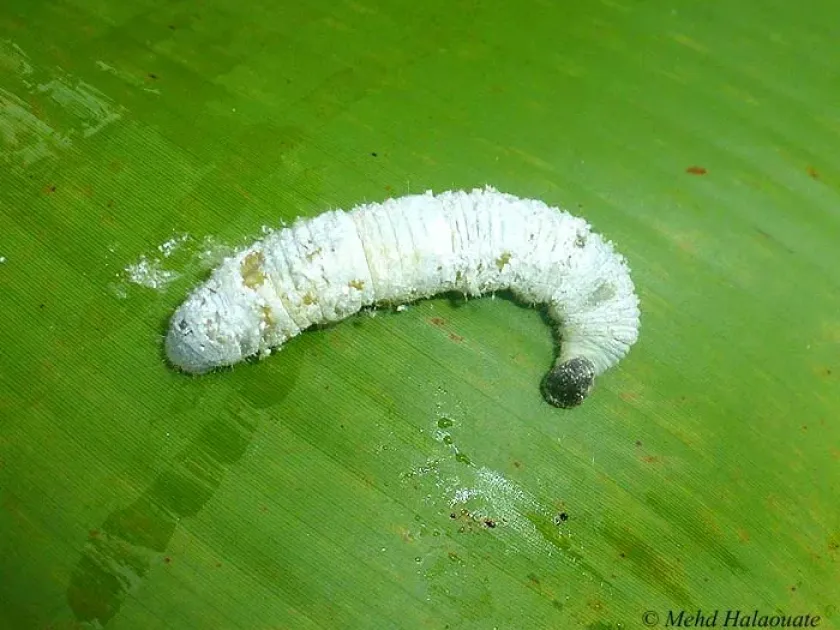
Description
How to identify
The banana skipper (Erionota) is a butterfly belonging to the Hesperiidae family, commonly known as skippers. Adult specimens have a wingspan of approximately 7 to 8 centimeters.
The wings are typically dark brown or nearly black, featuring distinctive yellow or translucent spots on the forewings, which are a key identification feature for this species.
The larvae are pale green caterpillars with a large, dark head. They are known for their habit of creating protective shelters by folding banana leaves, within which they reside.
The life cycle involves four distinct stages: egg, larva, pupa, and adult. The duration of this cycle is highly influenced by temperature and humidity levels in tropical climates.
These pests are particularly active during the twilight hours and early morning, although they may be encountered resting during the hotter parts of the day.
What it damages
The banana skipper is a primary pest of banana plants (Musa species). The larvae feed voraciously on the leaves of the host plant, causing significant tissue loss.
Beyond commercial banana varieties, the pest can affect ornamental banana plants and other plants within the order Zingiberales, including certain types of palms and ginger.
Damage occurs primarily in the larval stage, as caterpillars consume leaf blades, often leaving behind only the midribs in cases of severe infestation.
Heavy defoliation prevents the plant from performing photosynthesis efficiently, which stunts growth and leads to significant reductions in fruit yield and quality.
Secondary infections often follow the primary mechanical damage, as the open wounds on the leaves serve as entry points for various pathogens and fungi.
Signs of infestation
The most visible sign of an infestation is the appearance of rolled banana leaves. The caterpillars use silk threads to fold the leaf edges inward, forming a secure tube-like structure.
Closer inspection of these rolled leaves often reveals piles of frass (caterpillar excrement), which confirms that the area is currently being used as a feeding shelter.
Ragged edges on the leaves, combined with the presence of larvae or pupae tucked inside the leaf rolls, are definitive indicators of the banana skipper's presence.
Adult butterflies may be seen in the vicinity of the plantation, particularly during the transition between day and night, indicating an active population.
- Rolled or folded leaf edges.
- Presence of caterpillar frass inside shelters.
- Significant loss of leaf surface area.
- Pupae hidden within the rolled foliage.
Control measures
For smaller infestations, manual removal and destruction of the rolled leaves containing the caterpillars and pupae is a highly effective and environmentally friendly control method.
Biological control agents, such as parasitoid wasps that prey on the larvae and eggs, play a vital role in keeping populations below the economic injury level.
When infestation levels exceed the threshold, targeted application of selective insecticides can be employed to minimize damage to banana plants.
Maintaining proper plantation hygiene, including the removal of debris and weed control, helps to reduce the availability of alternative hosts and breeding sites.
Continuous scouting of the crops allows growers to identify and treat early outbreaks before they develop into large-scale infestations across the plantation.
Taxonomy
- Latin name
- Erionota
- Order
- Lepidoptera (butterflies)
- Family
- Hesperiidae
- EPPO code
- ERNTSP
Discussion
No discussions yet — be the first.