
Obscure sphinx moth
Erinnyis obscura
Description
How to identify
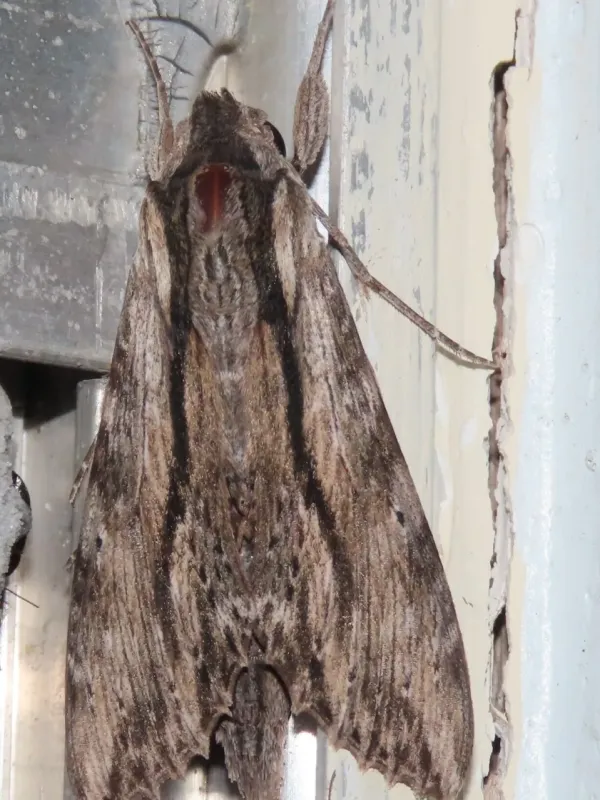
The Obscure sphinx moth (Erinnyis obscura) is a species of moth belonging to the Sphingidae family, order Lepidoptera. The adult moth has a wingspan of approximately 7–9 cm and possesses cryptic coloration in grey-brown shades, making it well-camouflaged against tree bark.
The imago features a streamlined body typical of the family, with narrow forewings adapted for rapid and sustained flight. Antennae in females are slender, while males have more pronounced, feathery antennae that aid in long-distance mate detection.
Larvae of this species exhibit high color variability, ranging from bright green to almost black, depending on population density and developmental stage. A distinct horn on the posterior end is a characteristic feature of most sphinx moth caterpillars.
Pupation occurs in leaf litter or the upper layers of soil, with the pupa having a smooth, dark brown chitinous shell. This stage allows the pest to survive unfavorable weather conditions in a protected state.
The life cycle undergoes complete metamorphosis: egg, larva (caterpillar), pupa, and imago. Depending on regional climatic conditions, the species may complete one or several generations within a single growing season.
What it damages
The primary hosts for the Obscure sphinx moth are plants of the Solanaceae family. Caterpillars pose a significant threat to agricultural crops, including papaya (Caricaceae) and various types of tobacco.
Larvae are characterized by extremely high voracity, actively feeding on the leaf lamina. During outbreaks, they can completely skeletonize leaves, leaving only the primary veins, which critically reduces the photosynthetic surface area.
Damage to the foliage leads to overall plant weakening, stunted growth, and decreased yield. In cases of massive infestation, young seedlings may perish due to the inability to sustain the root system.
Beyond direct tissue consumption, damaged areas serve as entry points for secondary infections, including fungal and bacterial pathogens, complicating the phytosanitary status of the field.
Feeding occurs primarily at night, as moths are crepuscular, and caterpillars often hide on the underside of leaves during the day, making them difficult to detect at early developmental stages.
Signs of infestation
The first sign of pest presence is the accumulation of frass (dark pellets) beneath the plant or on the surface of healthy leaves. This is a clear indicator of larval activity within the canopy.
Visual inspection reveals chewed leaf margins and characteristic holes in the leaf blades. With high population density, leaves appear ragged and torn.
The presence of caterpillars themselves is the primary indicator, though their camouflage makes them hard to spot. Inspection should be conducted at dusk or using a flashlight at night.
Wilting of individual shoots or a loss of turgor pressure may indicate significant foliage damage caused by mature caterpillars preparing for pupation.
During periods of mass adult flight, moths may be observed near light sources at night, which serves as a signal to begin monitoring for eggs and young larvae on susceptible host plants.
Control measures
Mechanical control is most effective for small areas through hand-picking caterpillars during early morning hours. Regular weeding of Solanaceae-family weeds reduces the pest's alternate host base.
The use of biological insecticides based on Bacillus thuringiensis shows high efficacy against young larvae. These products are environmentally friendly and selectively target the pest.
Chemical control involves applying broad-spectrum insecticides during peak activity periods. It is critical to follow application guidelines to prevent harm to beneficial entomophagous insects that act as natural predators.
Cultivating the soil around the base of plants and between rows can disrupt pupation sites and destroy a portion of the pupal population, significantly reducing the risk of subsequent generations.
- Regular nighttime monitoring of crop stands
- Installation of light traps for adult moth control
- Encouraging natural predators such as predatory bugs and birds
- Implementing crop rotation to prevent pest buildup
Taxonomy
- Latin name
- Erinnyis obscura
- Order
- Lepidoptera (butterflies)
- Family
- Sphingidae
- EPPO code
- ERINOB
Discussion
No discussions yet — be the first.