
Erinnyis ello
Erinnyis ello
Description
How to identify
Erinnyis ello, commonly known as the cassava hornworm, is a species of moth in the family Sphingidae. The adult moth is characterized by a strong, streamlined body and a wingspan that allows for efficient, long-distance flights.
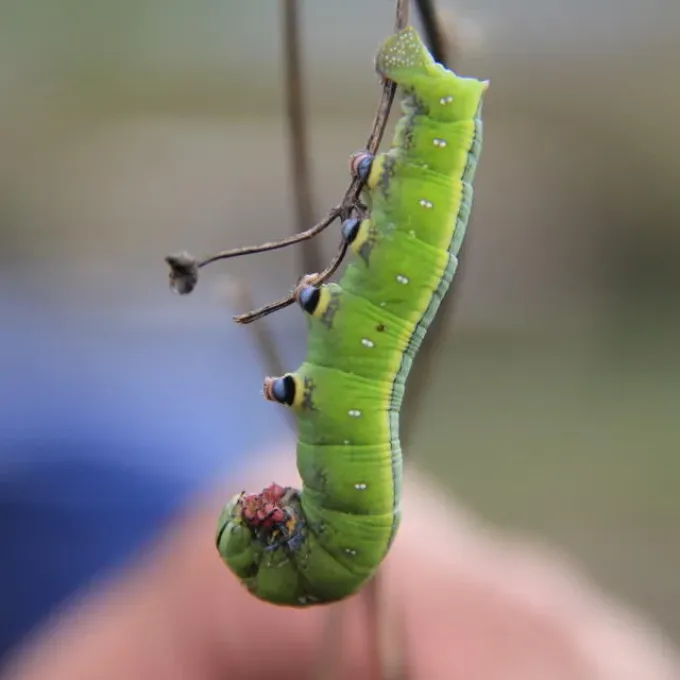
The larvae, or caterpillars, display significant variation in color, ranging from green to brown and black. A distinctive horn-like projection on the posterior end is the primary diagnostic feature for identification.
The life cycle is rapid, especially in tropical environments, allowing the species to produce multiple generations within a single year. Eggs are typically laid singly on the underside of leaves.
Pupation occurs in the soil, where the insects remain protected within a chamber. This stage is crucial for the insect to survive between cycles and during environmental fluctuations.
Understanding the biology of this pest is essential for timing interventions. Monitoring adult flight patterns is often the first step in effective population management programs.
What it damages
The primary host plant for Erinnyis ello is cassava (Manihot esculenta), which is a staple crop in many tropical countries. The larvae consume leaves at an alarming rate, often leading to total defoliation.
Rubber trees (Hevea brasiliensis) are also major targets, causing significant losses in the natural rubber industry. The economic impact on these commercial plantations can be devastating.
Larval feeding activity directly reduces the photosynthetic capacity of the plant. Without sufficient foliage, the plants cannot store energy, leading to significantly lower yields of tubers or latex.
During outbreaks, populations can explode, covering entire fields. The resulting damage can lead to plant mortality, especially in younger, more vulnerable nursery crops.
The loss of foliage does not only impact the current season's yield but also weakens the plants, making them more susceptible to drought and opportunistic pathogens in subsequent periods.
Signs of infestation
Early signs of infestation include irregular holes along the leaf margins. As the caterpillars grow, they consume the entire leaf lamina, leaving only the primary veins intact.
Accumulation of larval excrement (frass) under the canopy is a clear indicator of a significant infestation. This debris is often easy to spot on the ground during inspections.
Mass migration of caterpillars occurs when food sources become scarce. During this phase, you can often see larvae moving en masse across the ground or along the stems of plants.
Observing the canopy from a distance can reveal thinning or patchy leaves. In severe cases, the affected area will look completely stripped, exposing the branches to direct sunlight.
The presence of adult moths near the plantation at night or the finding of eggs on the undersides of leaves during scouting are early indicators that an outbreak may be starting.
Control measures
Integrated Pest Management (IPM) is the most effective approach for controlling the cassava hornworm. This includes using light traps to monitor adult moth populations and timing control measures accordingly.
Biological control using microbial insecticides, such as those derived from Bacillus thuringiensis (Bt), has proven to be highly effective and environmentally friendly against early-stage larvae.
Encouraging the presence of natural predators and parasitoids, such as specific wasp and fly species, is a key component of long-term sustainable management strategies.
Chemical control should be applied judiciously and only when thresholds are exceeded. It is important to target the larvae before they reach the late, most destructive stages of development.
Maintaining good field sanitation and weed control is essential to minimize breeding sites. Healthy, vigorous crops are better able to withstand defoliation pressure and recover more quickly.
Taxonomy
- Latin name
- Erinnyis ello
- Order
- Lepidoptera (butterflies)
- Family
- Sphingidae
- EPPO code
- ERINEL
Discussion
No discussions yet — be the first.