
Alope sphinx
Erinnyis alope
Description
How to identify
The Alope sphinx (Erinnyis alope) is a member of the Sphingidae family, widely known as hawk moths or sphinx moths, characterized by their robust bodies and rapid flight.
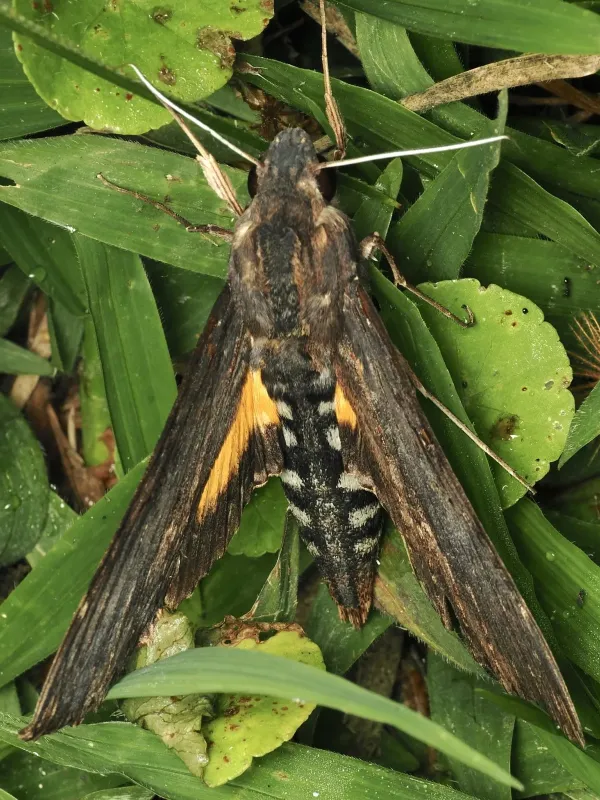
Adult moths are large with a wingspan reaching up to 10 centimeters. The forewings are typically brown, providing camouflage, while the hindwings feature vivid orange or yellow patches.
The larvae are large, thick caterpillars that possess a distinctive horn on the posterior segment, which is a classic feature of the Sphingidae family.
Caterpillar coloration can range from bright green to dark brown, allowing them to blend seamlessly with the foliage of their host plants.
The pupal stage occurs in the soil or ground debris, where the insect remains protected until it emerges as an adult moth to continue the reproductive cycle.
What it damages
The Alope sphinx is primarily known as a pest of plants in the Caricaceae family, with papaya (Carica papaya) being its most significant agricultural target.
Secondary host plants include various species from the Euphorbiaceae and Apocynaceae families, indicating a broad range of potential feeding hosts.
Larvae feed voraciously on the foliage, and in cases of heavy infestation, they can cause complete defoliation of the host plant in a very short period.
Severe defoliation negatively impacts the plant's ability to photosynthesize, resulting in stunted growth, reduced fruit yield, and poor fruit quality.
Young plants are particularly vulnerable, as the loss of leaf surface can lead to the death of the seedling if the caterpillar population is not managed in time.
Signs of infestation
The most noticeable symptom is the rapid disappearance of leaf blades, often leaving only the main veins or petioles behind on the affected branches.
Accumulation of large, dark frass pellets on the ground beneath the host plant is a strong indicator of active caterpillar feeding above.
Eggs are typically found on the undersides of leaves; they are small and pale, requiring close inspection during regular garden or orchard monitoring.
Since larvae are mostly nocturnal, they are rarely seen during the day, often hiding at the base of the plant or in dense leaf clusters to avoid predators.
One can also observe characteristic chew marks along the edges of leaves, which indicate the progression of feeding from the margin toward the midrib.
Control measures
Manual removal is a practical and highly effective control strategy for smaller papaya plantations or home gardens where infestation levels are low.
Biological control using Bacillus thuringiensis (Bt) sprays targets the larval stage effectively while remaining environmentally friendly and safe for beneficial insects.
Tilling the soil around the base of the host plants can disturb pupating larvae and pupae, exposing them to predators or causing their destruction.
Promoting a healthy environment for natural predators, such as wasps and predatory beetles, can help keep Alope sphinx populations in check naturally.
If chemical intervention is deemed necessary, use systemic or contact insecticides registered for fruit trees, strictly following the required pre-harvest intervals.
Taxonomy
- Latin name
- Erinnyis alope
- Order
- Lepidoptera (butterflies)
- Family
- Sphingidae
- EPPO code
- ERINAL
Discussion
No discussions yet — be the first.