
Silver-spotted skipper
Epargyreus clarus
Description
How to identify
The Silver-spotted skipper (Epargyreus clarus) is a large butterfly belonging to the Hesperiidae family. It is a well-known species frequently observed in meadows, forests, and agricultural fields where host plants are present.
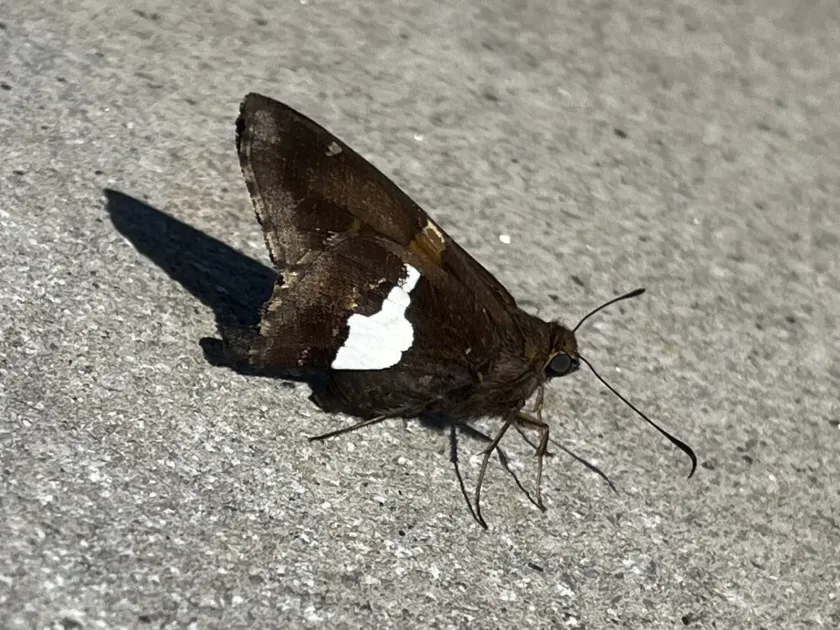
The adult butterfly is characterized by a wingspan of approximately 5–6 cm. Its wings are dark brown with prominent, translucent golden-yellow spots on the forewings.
The most distinctive feature of this species is a large, silvery-white spot located on the underside of the hindwings, which serves as a reliable diagnostic mark in the field.
The caterpillars are quite distinct, featuring a large, dark brown head with two striking orange spots that resemble eyes. The body is typically yellowish-green with fine hairs.
As they grow, the caterpillars transition through several instars, with the mature larvae reaching a significant size before pupation occurs.
What it damages
The Silver-spotted skipper primarily feeds on plants in the legume family (Fabaceae), including soybeans, alfalfa, clover, and various ornamental legumes.
Caterpillars feed on the foliage by chewing holes and consuming leaf margins. This defoliation reduces the photosynthetic capacity of the plants, potentially impacting overall crop yield.
The larvae are known for their leaf-rolling behavior. They use silk to pull leaves together or roll a single leaf into a protective shelter, which shields them from weather and predators.
In cases of high population density, significant defoliation can occur, stressing the plants and making them more susceptible to secondary infections or environmental stress.
While often considered a minor pest in many commercial crops, localized outbreaks can necessitate intervention to protect the canopy health of legumes.
When it appears
The life cycle of the Silver-spotted skipper typically includes one or two generations per year, depending on the latitude and local climate conditions.
Adult butterflies are active from late spring through mid-summer. Females lay eggs singly or in small groups on the underside of host plant leaves.
The larval stage occurs throughout the summer months. As they grow, they continue to create and abandon leaf shelters, moving to new leaves to feed as their requirements increase.
Overwintering occurs in the pupal or late-larval stage, usually within the protection of curled leaves or organic debris on the soil surface.
Peak activity generally follows warmer weather patterns, which accelerate the development of the caterpillars and influence the timing of emergence for the next generation.
Signs of infestation
The primary sign of infestation is the presence of folded or rolled leaves. Upon closer inspection, these structures reveal the caterpillar living inside a silken shelter.
Defoliation patterns, such as irregular holes in the middle of leaves or ragged edges, indicate active feeding by larvae in the vicinity.
The accumulation of frass (caterpillar droppings) inside the rolled leaves is a definitive indicator of an occupied shelter.
Webbing present between leaves or on the stem confirms the presence of the larva’s protective construction.
Early-season scouting for eggs on the undersides of leaves is a proactive way to detect the start of an infestation before visible damage appears.
Control measures
Managing the Silver-spotted skipper involves a combination of monitoring and integrated pest management (IPM) practices to minimize economic impact.
Biological controls, particularly the use of Bacillus thuringiensis (Bt) sprays, are highly effective against young larvae while preserving beneficial insect populations.
Chemical control should be timed correctly; contact insecticides are often less effective once the larvae have constructed their leaf shelters, so early application is essential.
Cultural practices, such as maintaining clean fields and removing legume-family weeds, can help break the lifecycle and reduce potential overwintering sites.
- Regular scouting for larval shelters;
- Application of B. thuringiensis during early larval stages;
- Encouragement of natural parasitoids (wasps);
- Field sanitation to remove overwintering debris.
Taxonomy
- Latin name
- Epargyreus clarus
- Order
- Lepidoptera (butterflies)
- Family
- Hesperiidae
- EPPO code
- EPARCL
Discussion
No discussions yet — be the first.