
Epargyreus
Epargyreus
Description
How to identify
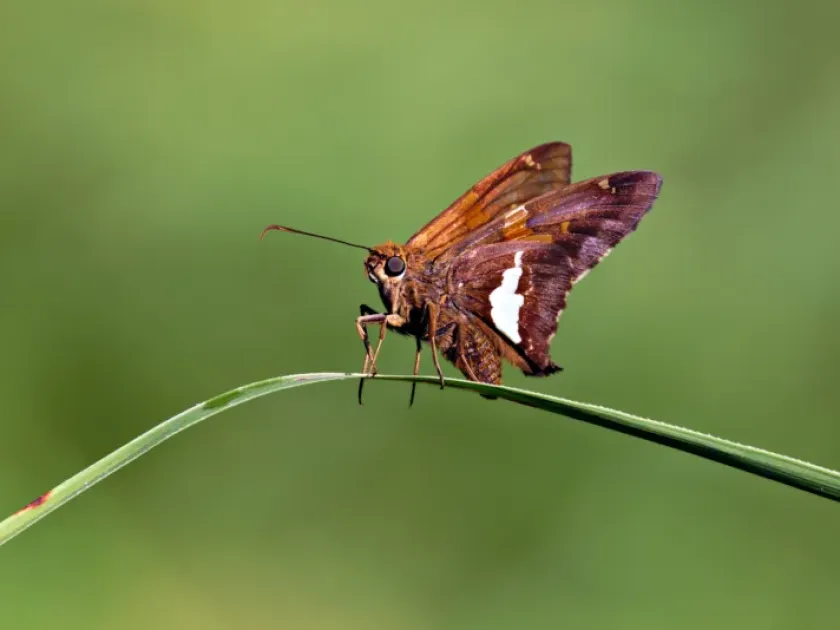
Epargyreus clarus, commonly known as the silver-spotted skipper, is a member of the Hesperiidae family. It is a large butterfly with a wingspan of up to 65 mm, featuring dark brown wings with prominent yellow-white spots.
The larva of this species is highly distinctive: it is bright green with a large, reddish-brown head and a characteristic dark collar behind the head, making it easy to identify.
Adult butterflies have a robust, hairy body. A key field mark is the large, irregular silvery-white patch on the underside of the hindwings, which gives the species its common name.
The life cycle involves complete metamorphosis, consisting of egg, larva, pupa, and adult stages. Depending on the climate, the species may have one or two generations per year.
The insect overwinters as a pupa within a silk-lined shelter formed from folded leaves or debris, which provides essential protection against winter temperatures.
What it damages
The larvae feed primarily on plants within the Fabaceae family. Their preferred hosts include wisteria, locust, various clovers, and licorice, which they consume to fuel their rapid growth.
In agricultural settings, they can become pests for garden beans and other legumes, especially if wild leguminous vegetation is abundant nearby.
Larvae damage plants by cutting portions of the leaf and folding them to create protective shelters. This activity reduces the leaf area available for photosynthesis, impacting plant health.
Mass infestations can cause severe defoliation of host plants, which is particularly detrimental for young plants or nursery stock where aesthetic or yield value is critical.
While often considered a minor pest, high densities of caterpillars in specific locations can cause significant localized damage requiring intervention.
When it appears
Adults emerge in late spring, usually around late May or early June. During this time, they mate and females begin laying eggs on suitable host plants.
Caterpillar activity is most intense during the summer months of June, July, and August, when larvae are actively feeding and constructing their shelters.
In southern regions, a second generation may emerge later in the summer, with the larvae developing throughout August before transitioning to the pupal stage for the winter.
Environmental factors like temperature and humidity play a major role in determining the speed of development and the timing of emergence for each generation.
Warm summer temperatures provide an optimal environment for rapid growth, allowing the larvae to reach maturity quickly and potentially causing more cycles of damage.
Signs of infestation
The most obvious sign of infestation is the presence of folded or rolled leaves, tied together with silk, which serve as protective habitats for the caterpillars.
Irregular bite marks or entire sections missing from leaf edges are clear indicators of larval feeding activity occurring in the vicinity of their shelters.
The presence of frass (caterpillar droppings) near the leaf shelters is a reliable secondary sign that the larva is currently inhabiting the leaf.
As the damaged leaves die and turn brown, they become highly visible, helping farmers identify infested patches within a field or garden during inspection.
Checking the underside of leaves for eggs or small, early-stage larvae is an effective way to detect an impending infestation before significant damage occurs.
Control measures
Mechanical control, such as hand-picking and destroying the leaf shelters, is a highly effective method for small-scale gardens or when pest density is low.
Biological control using formulations containing Bacillus thuringiensis is an excellent, environmentally friendly way to manage caterpillar populations without harming beneficial insects.
Agricultural management should focus on eliminating leguminous weeds from around the field borders to reduce the available habitat for the pest population.
Chemical intervention with insecticides should be reserved for cases where the economic threshold is exceeded and other non-chemical methods have failed.
Using pheromone traps can help monitor the arrival of adult butterflies, allowing for the precise timing of biological or chemical control measures to ensure maximum efficiency.
Taxonomy
- Latin name
- Epargyreus
- Order
- Lepidoptera (butterflies)
- Family
- Hesperiidae
- EPPO code
- EPARSP
Discussion
No discussions yet — be the first.