
Little egret
Egretta garzetta
Description
How to identify
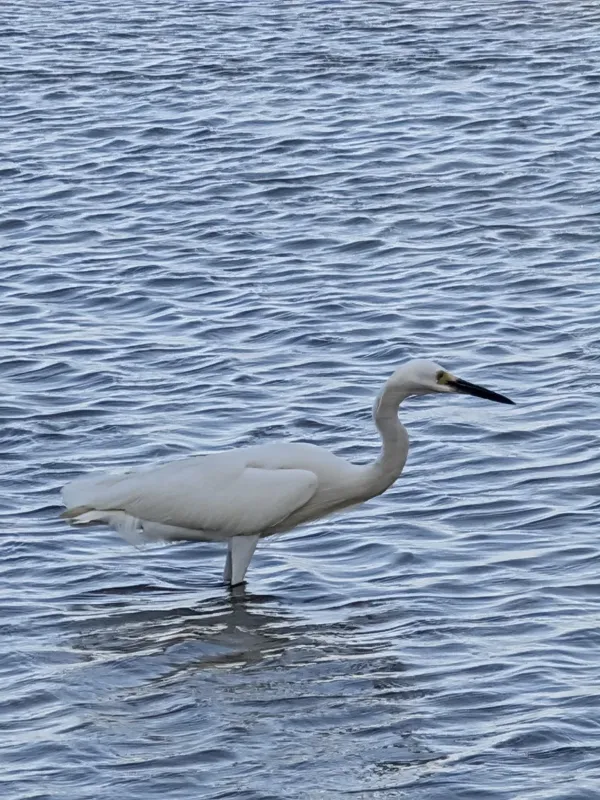
The little egret (Egretta garzetta) is a small species of heron in the Ardeidae family, characterized by its all-white plumage, black bill, and black legs with yellow feet.
They stand approximately 55-65 cm tall and develop long, delicate ornamental feathers on their head, chest, and back during the breeding season.
These birds are predominantly found in wetlands, marshy areas, and shallow agricultural water bodies where they forage by wading through water.
They are gregarious birds, often nesting in colonies with other heron species, which makes their local impact on the environment quite significant.
Identification is straightforward due to their distinct appearance, elegant posture, and the habit of standing motionless in shallow water for long periods.
What it damages
The little egret causes significant economic damage to fish farms by preying on juvenile fish, especially in intensive aquaculture systems where stocks are vulnerable.
In rice cultivation, they cause damage by trampling young seedlings and destabilizing the edges of irrigation channels or paddy dams while hunting for aquatic prey.
Frequent disturbances by these birds create stress in fish populations, leading to reduced feed conversion rates and overall lower productivity for the farm.
They also act as vectors for various parasitic diseases, potentially transmitting fish pathogens between different ponds as they move in search of food.
The cumulative loss from continuous predation by a colony of egrets can be substantial, often necessitating active intervention from the farm management.
When it appears
The activity of the little egret is most pronounced during the spring and summer months when they return to breeding grounds and raise their chicks.
During the summer, as water levels in artificial ponds fluctuate, the birds find more accessible hunting spots, leading to higher damage levels on fish stocks.
The period between April and August is critical, as the metabolic demand for feeding the brood is at its highest, leading to intensive hunting behavior.
As autumn approaches, the birds begin their migration to warmer regions, significantly reducing the pressure on agricultural water bodies in temperate zones.
Winter presence is limited to milder climates, where non-migratory populations may still pose a threat to indoor or heated water aquaculture systems.
Signs of infestation
Visible signs of little egret activity include characteristic footprints in the mud around pond edges and the presence of shed feathers near resting sites.
Regurgitated pellets and white droppings on infrastructure like sluice gates or drainage pipes are common indicators of their frequent presence in the area.
A noticeable decline in fish stock density, combined with visual observations of birds stalking along the shoreline, confirms their role as pests.
- Trampled aquatic vegetation near the edges of ponds or rice fields.
- Specific alarm calls or vocalizations heard during early morning hours.
- Erosion damage to the structural integrity of earthen dams and embankments.
The birds' presence is often accompanied by a lack of natural shy behavior if they have become accustomed to the proximity of human operations.
Control measures
Netting over ponds is the most effective physical barrier to prevent little egrets from accessing valuable fish stocks in small-scale aquaculture.
Acoustic deterrents that broadcast alarm calls or predator sounds can be effective, provided that the timing and location are rotated regularly to prevent habituation.
Visual scarecrows, such as predatory bird decoys or reflective surfaces, provide short-term relief but should be used in conjunction with other methods.
Land management, including clearing high vegetation and reed beds from the shoreline, reduces the cover birds need to hunt successfully.
Creating decoy ponds at a distance from the main production areas can help divert the egret population away from the primary harvest sites.
Taxonomy
- Latin name
- Egretta garzetta
- Family
- Ardeidae
- EPPO code
- EGREGA
Discussion
No discussions yet — be the first.