

Pest · Diptera (flies) · affects Field pea, Apple, Winter rapeseed
Especially harmful
Melon fly
Myiopardalis pardalina
Description
How to identify
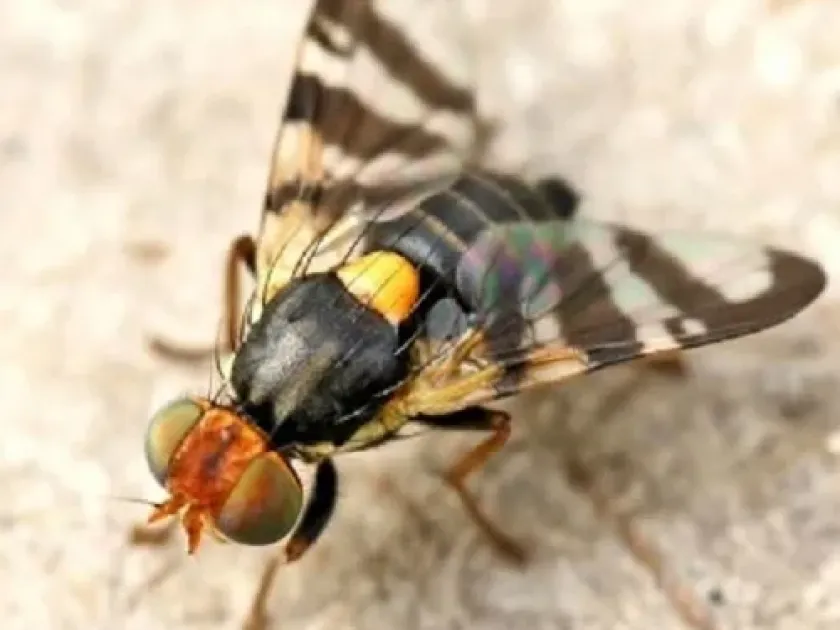
The melon fly belongs to the Tephritidae family, order Diptera. This small insect measures up to 7 mm in length and is characterized by a distinctive yellow body.
Its wings are transparent and feature a specific pattern of brownish-yellow transverse bands, which is the most reliable diagnostic feature for identification in the field.
The head is rounded with greenish-tinted eyes. The female is equipped with a long, sharp ovipositor, which is used to penetrate the fruit tissue for egg-laying.
The larvae are typical legless maggots, white to yellowish in color, growing up to 10 mm in the final instar stage.
The pupae are barrel-shaped and brown, usually located in the topsoil or inside the damaged, dried-out fruits.
What it damages
The primary hosts of this pest are plants of the Cucurbitaceae family, with melons, watermelons, and cucumbers being the most susceptible.
It is important to note that the melon fly does not attack crops such as fodder beet, oilseed rape, apple, pea, winter wheat, or grape; therefore, these crops are safe from this specific pest.
Economic damage is severe, as the pest can destroy a significant portion of the harvest on infested fields if not managed properly.
Damage occurs when the female lays eggs into the developing fruit, causing the tissue to deteriorate and leading to complete crop failure.
Infested fruits lose all commercial value, become deformed, and are prone to secondary infections from fungi and bacteria.
When it appears
The flight of adult flies begins during the ripening period of the fruits, typically triggered by rising summer temperatures in June and July.
The development cycle is synchronized with the phenology of cucurbits, as the flies require young fruit to sustain their reproductive cycle.
Multiple generations can occur throughout the growing season, which necessitates constant vigilance and monitoring during the summer months.
Pupation occurs in the soil, where the pupae can remain through the winter or during periods of unfavorable environmental conditions.
Adult activity is highest during evening hours or cloudy days, when the flies actively move across the fields to find suitable fruits for oviposition.
Signs of infestation
The first signs of infestation are small puncture marks on the surface of young fruit, created by the female's ovipositor during egg-laying.
As the larvae develop, the puncture sites often become discolored, and the fruit may show signs of soft rot or necrosis.
The internal tissue of the melon starts to decompose and develops a pungent, unpleasant odor due to the feeding activity of the larvae.
- Small puncture scars on the fruit skin.
- Deformation and uneven growth of the fruit.
- Presence of maggots within the seed chamber.
- Internal flesh turning into a rotting mass.
- Premature yellowing of the fruit on the vine.
Upon cutting an infested fruit, one can easily observe the white larvae actively consuming the seeds and the surrounding pulp.
Control measures
Deep autumn plowing is the primary agrotechnical measure, as it disrupts the pupation cycle and exposes pupae to predators and environmental factors.
Crop rotation is essential; planting cucurbits in the same location repeatedly significantly increases the population density of the pest.
Chemical control involves the application of registered insecticides during the adult flight stage, targeting the flies before they lay eggs.
Removing and destroying wild cucurbit weeds is vital, as these plants can serve as secondary hosts and reservoirs for the pest population.
Early-maturing varieties are highly recommended, as they allow for harvest before the peak population of the second or third fly generations occurs.
In brief
7
Damages crops
Content graph
Damages crops · 7
Content graph
Connections · Melon fly
Most often together:
Marketplace
Products · 1
Biology
Taxonomy
- Latin name
- Myiopardalis pardalina
- Order
- Diptera (flies)
- Family
- Tephritidae
- EPPO code
- CARYPA
Community
Discussion
No discussions yet — be the first.