
Chestnut gall wasp
Dryocosmus kuriphilus
Description
How to identify
The chestnut gall wasp (Dryocosmus kuriphilus) is a small hymenopteran insect belonging to the family Cynipidae. Adults are approximately 2.5–3 mm long with black bodies.
This species reproduces through thelytokous parthenogenesis, meaning that the entire population consists of females capable of laying fertile eggs without mating.
The life cycle is closely synchronized with the phenology of chestnut trees, with larvae overwintering inside the buds of the host plant.
Since the eggs are laid deep inside the bud tissue, the infestation remains invisible to the naked eye for several months until the galls start to form in the spring.
It is classified as a major quarantine pest globally due to its potential to severely damage chestnut production and threaten forestry resources.
What it damages
The primary hosts for this wasp are chestnut trees (genus Castanea), especially species like the sweet chestnut (Castanea sativa).
It is important to note that horse chestnut trees are not susceptible to this specific pest, which helps distinguish between different types of tree health issues.
The larvae induce the formation of galls by injecting substances that alter the plant's hormonal balance, redirecting energy from fruit production to gall growth.
This redirection of resources leads to a significant decrease in nut yield, which can be devastating for commercial nut orchards.
Heavy infestations lead to stunted growth, reduced photosynthetic area, and overall decline in tree vitality, eventually resulting in branch dieback.
When it appears
Adults emerge from galls in early summer, typically between June and July, to begin the mating-free cycle of egg-laying on new shoots.
Eggs are deposited in developing buds and remain dormant until the following spring, ensuring the pest survives the cold winter months.
Larval development begins as soon as the tree sap starts flowing and buds begin to swell, marking the onset of the spring growth phase.
The formation of visible galls is usually observed in late spring, coinciding with the rapid development of new leaves and shoots.
The entire life cycle is completed in one year, making annual monitoring a critical requirement for maintaining healthy orchard conditions.
Signs of infestation
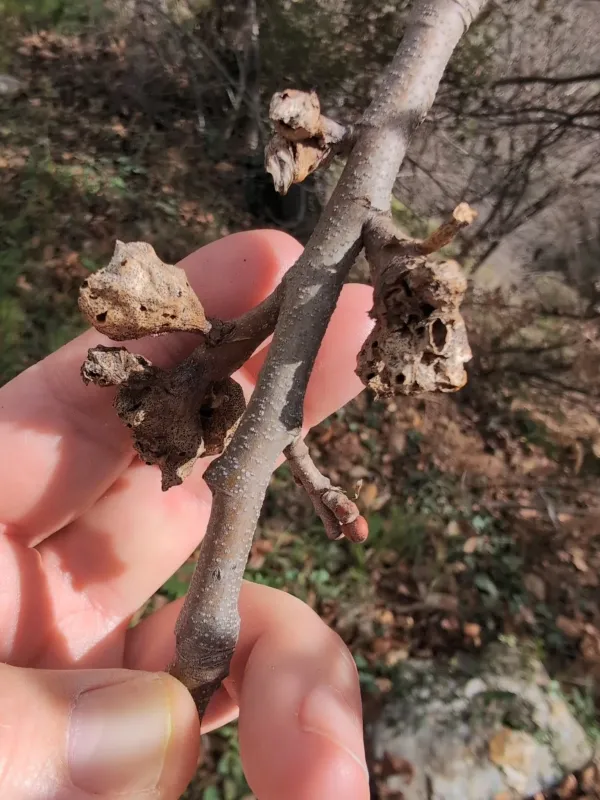
The most reliable sign of an infestation is the appearance of spherical or irregularly shaped galls on leaf petioles, buds, or stems.
Galls can vary in color from green to pink or reddish-brown, depending on their developmental stage and sun exposure.
Affected shoots often show abnormal twisting, and the leaves emerging from infested buds are usually distorted and chlorotic.
Once the adult wasps emerge, the galls will show small, round exit holes, confirming that the life cycle at that site has concluded.
Weakened branches are prone to secondary infections by various pathogens that thrive on the stressed tissue of the host plant.
Control measures
Biological control remains the most effective long-term strategy, particularly the introduction of the parasitoid wasp Torymus sinensis.
Cultural control involves the rigorous inspection of nursery stock to prevent the introduction of infested plant material into new areas.
In small orchards or home gardens, manually removing and destroying galls before adult emergence can help slow down local spread.
Chemical control is rarely effective for this species due to the protected nature of larvae inside the galls, limiting its use to specialized scenarios.
- Use resistant chestnut cultivars whenever possible.
- Monitor orchards regularly during the spring growth phase.
- Prune and burn infested twigs to reduce the localized pest population.
Taxonomy
- Latin name
- Dryocosmus kuriphilus
- Order
- Hymenoptera
- Family
- Cynipidae
- EPPO code
- DRYCKU
Discussion
No discussions yet — be the first.