
Oak gall wasp
Dryocosmus imbricariae
Description
How to identify
The oak gall wasp, scientifically known as Dryocosmus imbricariae, belongs to the family Cynipidae within the order Hymenoptera. These insects are generally tiny and often go unnoticed due to their cryptic behavior and subtle appearance.
This species is known for a complex life cycle, which often involves the alternation of generations, where distinct morphs of the wasp emerge at different times of the year.
Females are equipped with a specialized ovipositor, enabling them to inject eggs deep into the tissues of developing oak leaves or twigs.
The larvae develop inside protective plant structures called galls, which provide both a food source and a physical shield against many predators.
Identification is primarily achieved by analyzing the specific morphology and placement of the galls on the host tree rather than by observing the adult wasps themselves.
What it damages
The primary hosts for this wasp are various oak species (Quercus), with a particular preference for those belonging to the red oak group.
The wasp induces the formation of abnormal tissue growth known as galls, which redirect essential nutrients away from the healthy growth of the tree.
Severe infestations can lead to significant physiological stress, resulting in stunted shoot development and premature leaf senescence.
Weakened trees exhibit reduced growth rates and become much more vulnerable to secondary pests and various opportunistic fungal pathogens.
In nursery settings, a high density of galls can negatively impact the aesthetic and commercial value of young oak saplings.
When it appears
Adult activity typically begins in the spring, coinciding with the rapid development of oak buds and tender young foliage.
Following mating, females deposit their eggs, and the process of gall induction and subsequent development begins throughout the summer months.
Larval development proceeds inside the gall as it matures and hardens, reaching completion by the end of the season.
Depending on the climatic zone, the wasp may either emerge in the autumn or overwinter within the gall to emerge the following spring.
Overwintering stages often occur in protected locations on the branches or within the fallen leaf litter, depending on the specific gall type.
Signs of infestation
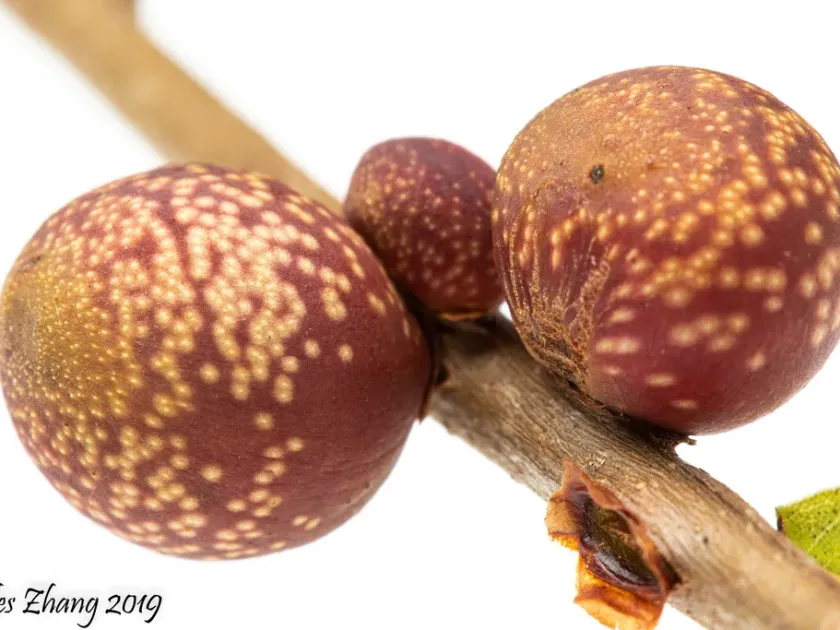
The most visible sign of an infestation is the presence of distinctive galls appearing on leaves, petioles, or small twigs.
Galls exhibit varied shapes and colors, ranging from small smooth bumps to elaborate, spikey structures that stand out against the green foliage.
Localized tissue swelling and abnormal leaf curling are common indicators that a wasp has successfully induced gall formation.
In mature infestations, one may observe tiny, perfectly circular exit holes on the surface of the galls where the adult wasps have emerged.
Defoliation or the appearance of necrotic spots around the gall clusters suggests a more advanced level of infestation within the tree canopy.
Control measures
The most effective management strategy for smaller trees is the physical removal and destruction of infested twigs and leaves before the adult wasps emerge.
Systemic insecticides can be applied by professionals in nurseries, provided the timing coincides with the spring emergence of the adult wasps.
Improving general tree health through proper fertilization and adequate watering helps the host plant withstand the stress caused by wasp activity.
Natural biological control, involving the encouragement of parasitoid wasps and other beneficial insects, is vital for long-term population suppression.
- Sanitation by pruning and destroying infested plant material.
- Monitoring emergence patterns to time treatments effectively.
- Promoting a diverse ecosystem to support natural predators.
Taxonomy
- Latin name
- Dryocosmus imbricariae
- Order
- Hymenoptera
- Family
- Cynipidae
- EPPO code
- DRYCIM
Discussion
No discussions yet — be the first.